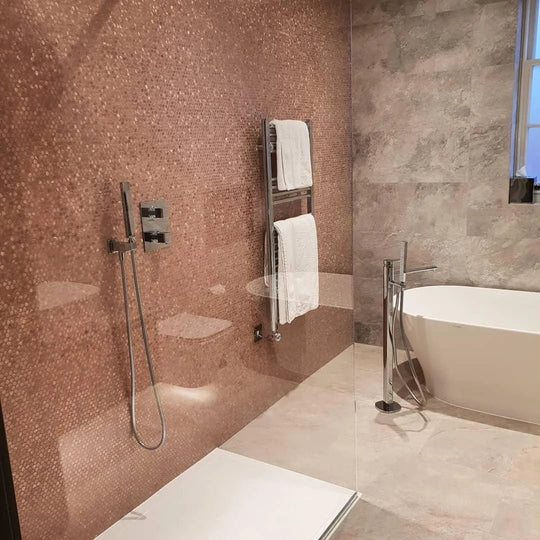
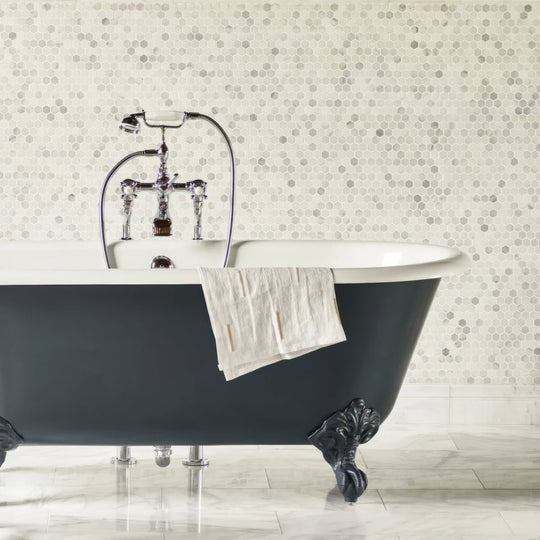
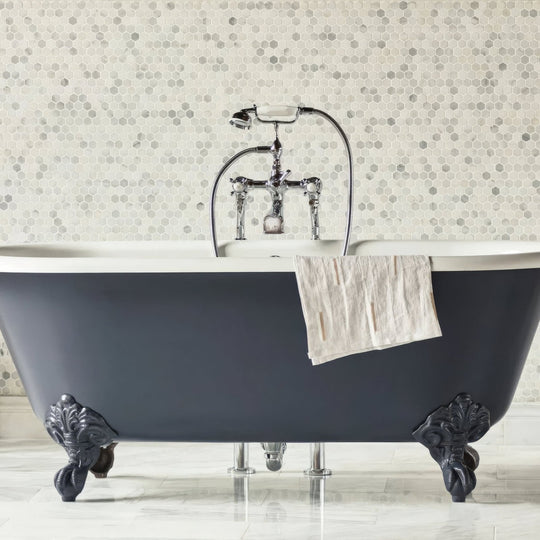
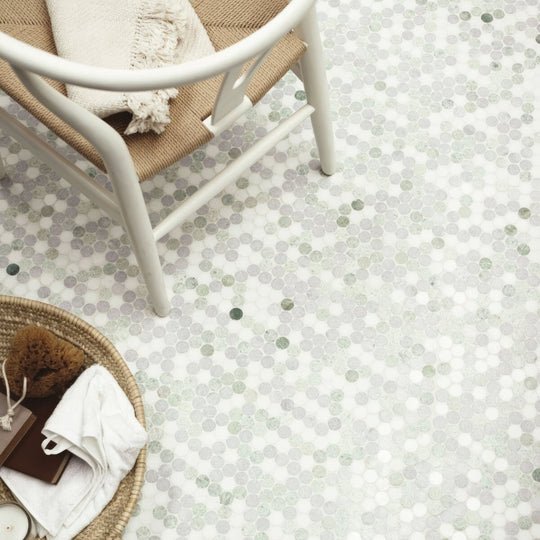
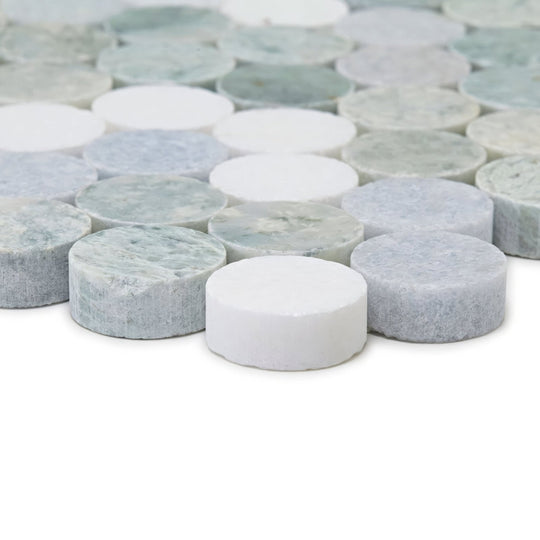
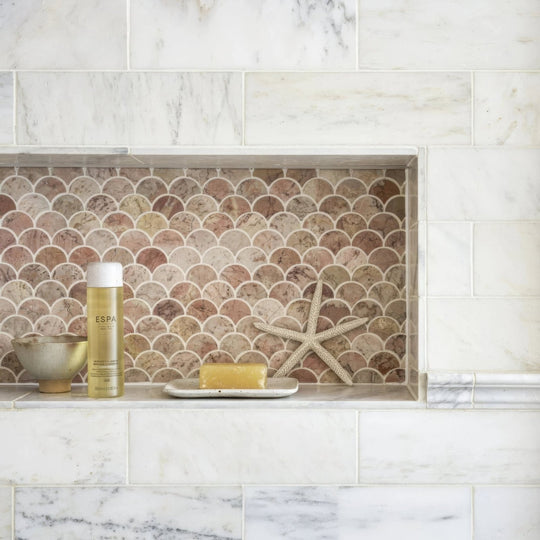
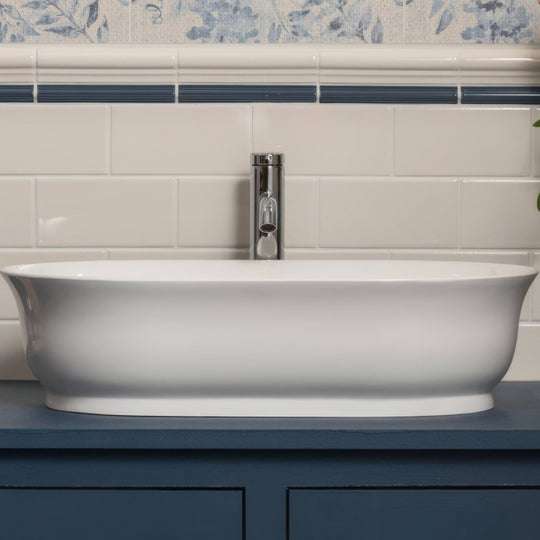
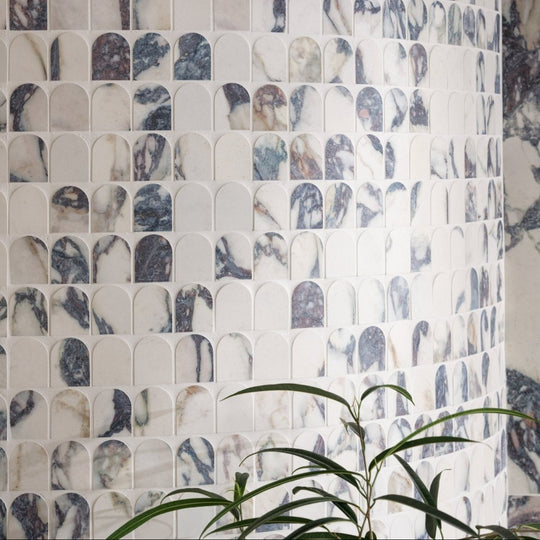
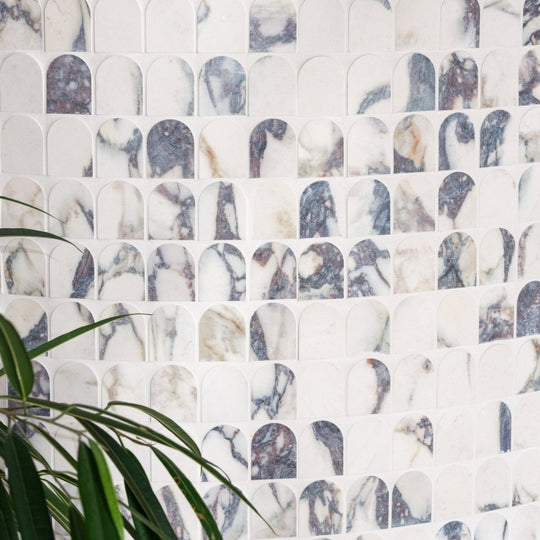
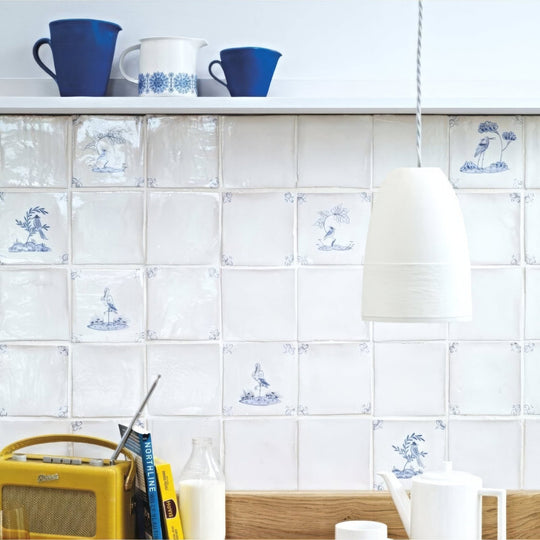
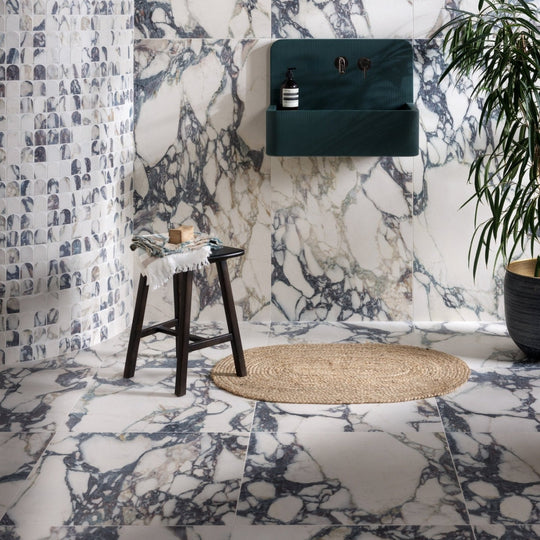
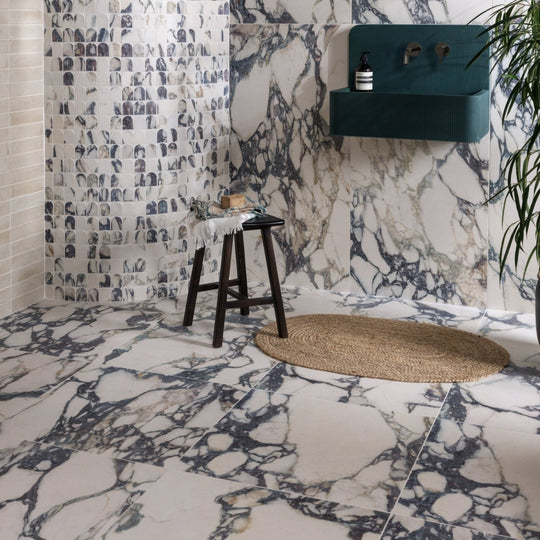
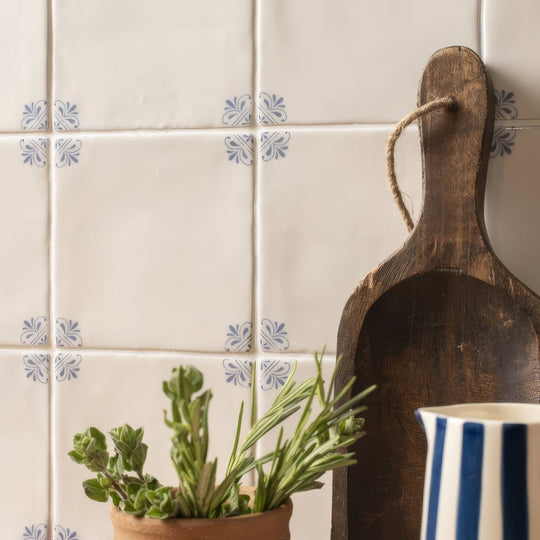
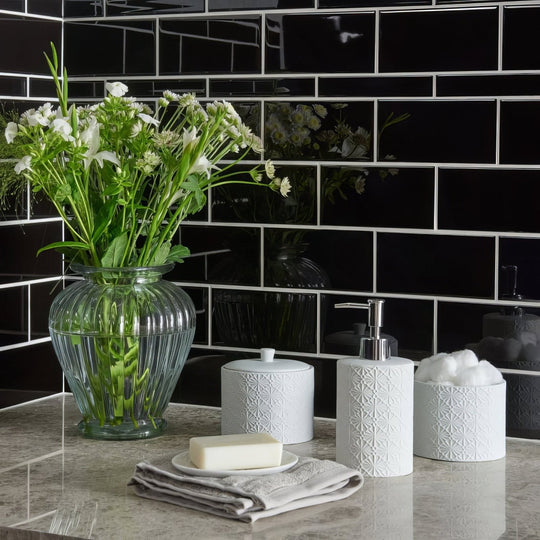
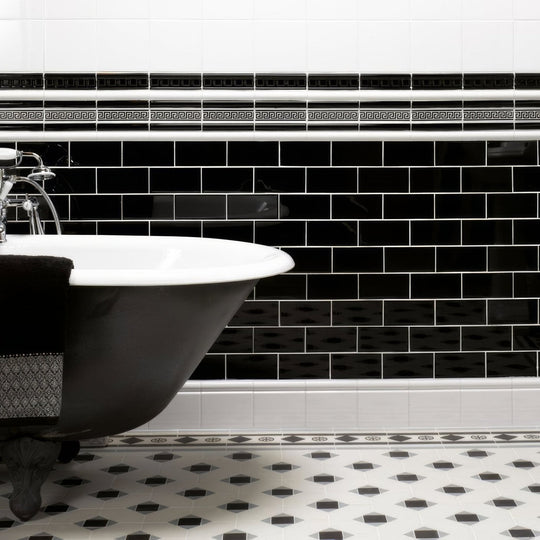
Why bother with marble effect when you can have the real thing? Our Aegean Pink Scallop Mosaic marble tiles are a great example of timeless classics. Suited to an extensive range of bathroom designs, it has transformed this shower area with a niche and feature wall
Key points
-
Porcelain and ceramic tiles are the most suitable materials for bathroom walls due to their water resistance and durability
-
Wall tiles typically range from 200x200mm to 600x300mm, with larger formats like 600x600mm creating fewer grout lines and easier cleaning
-
Light-coloured tiles such as white, cream, and light grey make small bathrooms appear larger and brighter
-
Proper waterproofing behind these tiles is essential, especially in shower areas and around bathtubs
-
Professional installation ensures proper alignment, waterproofing, and longevity of your bathroom tiles
Transform your bathroom into a stunning, practical space with the right tiles. Whether you’re renovating an existing room or designing a new one, choosing appropriate bathroom tiles is crucial for both moisture protection and aesthetic appeal. This comprehensive guide will help you navigate the extensive range of options available, from selecting the perfect material and size to understanding installation requirements and maintenance needs.
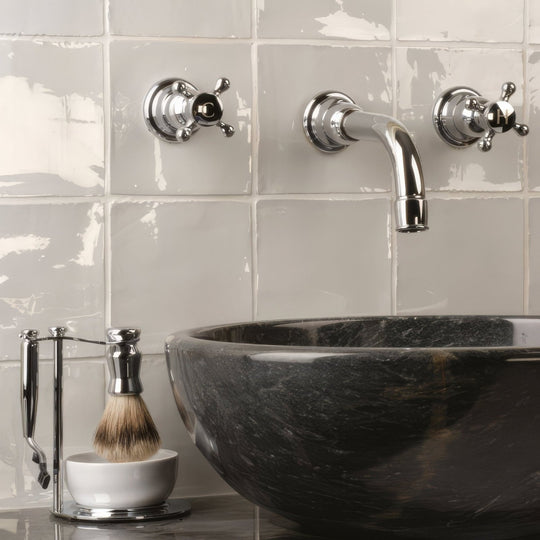
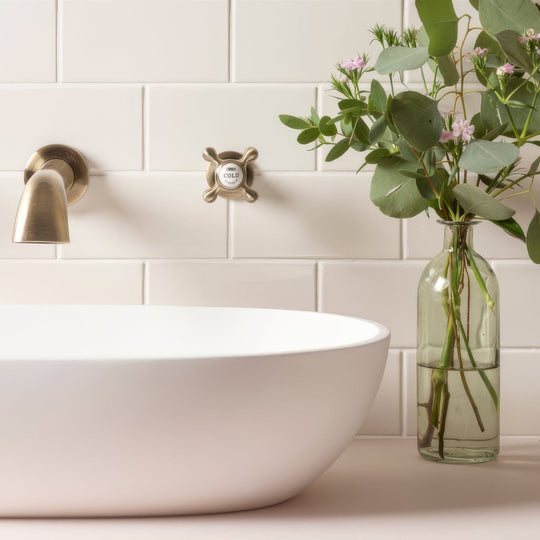
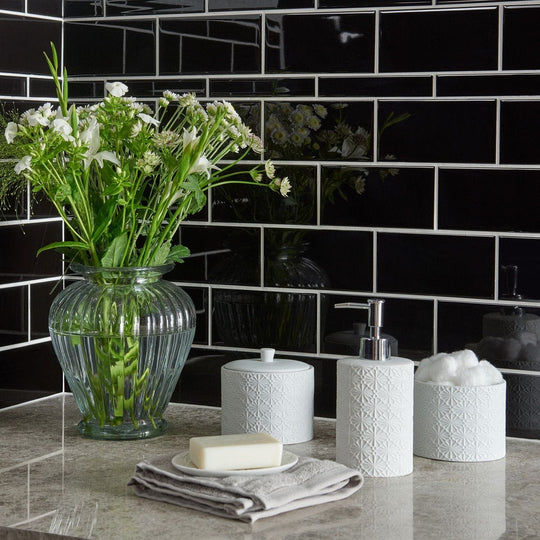
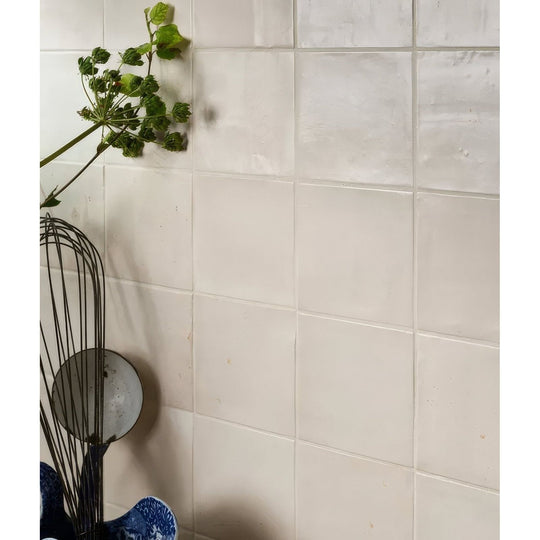
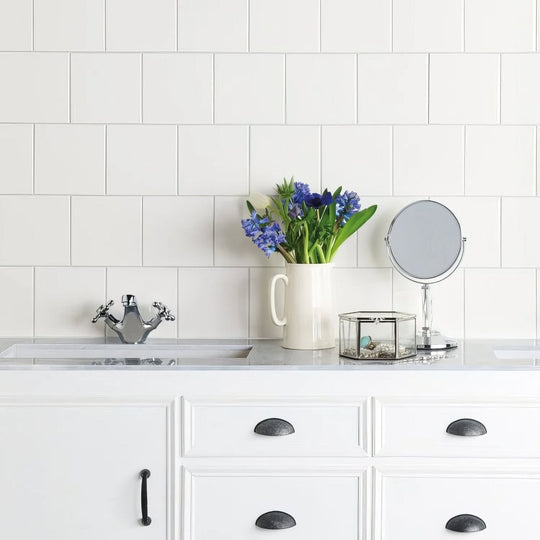
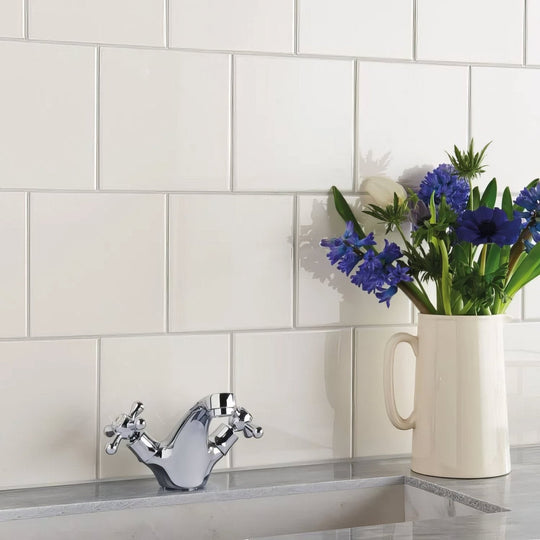
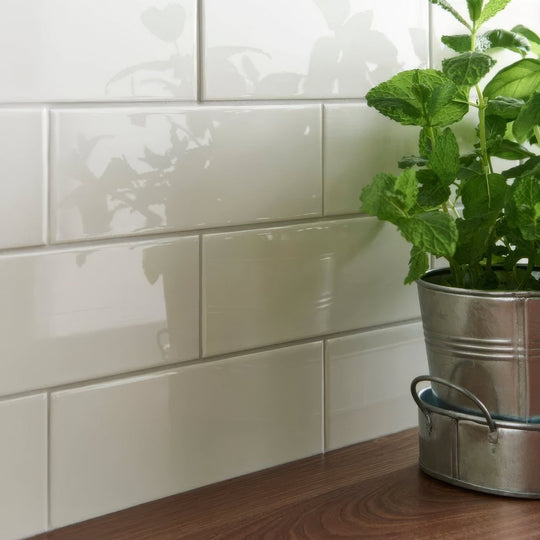
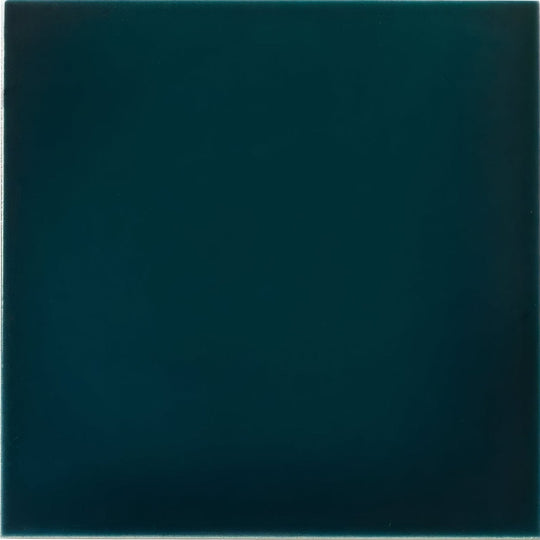
If you're looking for contemporary bathroom tiles, our Tunstall Ceramic Deep White versions are perfect. In a modern square shape, ceramic tiles are a popular choice for walls and this style offers a fresh gloss finish in this bathroom
The right tiles can completely transform bathroom spaces, creating everything from serene spa-like retreats to bold, contemporary statements. With proper planning and quality materials, your bathroom tiles will provide years of beauty and functionality while protecting your walls from moisture damage.
Understanding bathroom tiles
Our Onyx Green Polished 60 x 120cm tiles are made from porcelain but will give you a gorgeous marble effect finish. Ideal if you're looking for a low-maintenance option, this style looks elegant and can be used on floors too
Bathroom wall tiles serve dual purposes in creating functional and beautiful bathroom spaces. Unlike floor tiles, these tiles don’t need to support weight or provide slip resistant surfaces, allowing for different design considerations and material choices. The primary function of these tiles is protecting walls from moisture, steam, and splashing water while creating an attractive, easy-to-clean surface.
Wall tiles differ significantly from floor tiles in several key ways. They’re typically thinner (6-10mm compared to 10-20mm for floor tiles), lighter in weight, and don’t require the same slip resistance ratings. This allows for a wider selection of finishes, including glossy surfaces that would be unsuitable for floors but create stunning, light-reflecting walls.
The benefits of using bathroom tiles for walls extend beyond moisture protection. These tiles offer exceptional design flexibility, with an extensive range of colours, patterns, and textures available to suit any style preference. They’re also remarkably low maintenance compared to painted walls, requiring only regular cleaning to maintain their appearance. Quality ceramic tiles or porcelain tiles can last decades when properly installed.
Critical areas for wall tiles include shower enclosures, where complete wall coverage to the ceiling is essential, and around bathtubs where splashing occurs regularly. Behind vanities and around basins, tiles provide easy-to-clean surfaces that resist water damage and staining. Even in areas with minimal water exposure, these tiles can create striking feature walls that enhance your bathroom’s overall design.
Best types of tiles for your walls
Ceramic remains a popular wall choice for bathroom tiles due to their affordability, versatility, and excellent water resistance when glazed. Made from clay fired at moderate temperatures, ceramic tiles offer lightweight installation and easy cutting for DIY projects. They’re available in countless colours, patterns, and finishes, making them suitable for any design preference. Ceramic tiles typically cost £15-£45 per square metre, making them accessible for most budgets.
Porcelain tiles represent the premium end of ceramic technology, created by firing refined clay at extremely high temperatures. This process produces denser, harder tiles with water absorption rates of 0.5% or less, making them virtually impermeable. Porcelain and ceramic tiles both work well for walls, but porcelain offers superior durability and longevity. Large format porcelain tiles (up to 600x600mm or larger) create seamless, modern looks with minimal grout lines. Expect to pay £35-£100 per square metre for quality porcelain tiles.
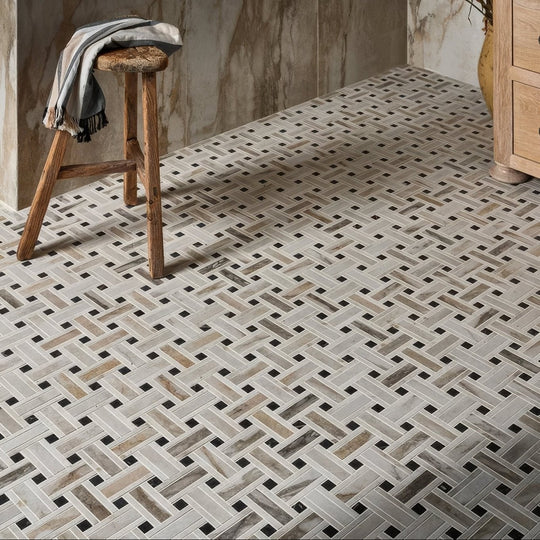
Enhance your wall with our East Java Hummingbird Marble Plume Mosaic bathroom tiles —scalloped elegance in honed marble for a refined, textured statement
Natural stone tiles bring unique character and timeless appeal to a bathroom. Marble effect tiles in porcelain offer the beauty of natural stone without the maintenance requirements, while genuine marble, limestone, and travertine create luxurious, one-of-a-kind surfaces. Natural stone requires sealing and careful maintenance but can significantly enhance property value. Prices range from £60-£200+ per square metre depending on the stone type and quality.
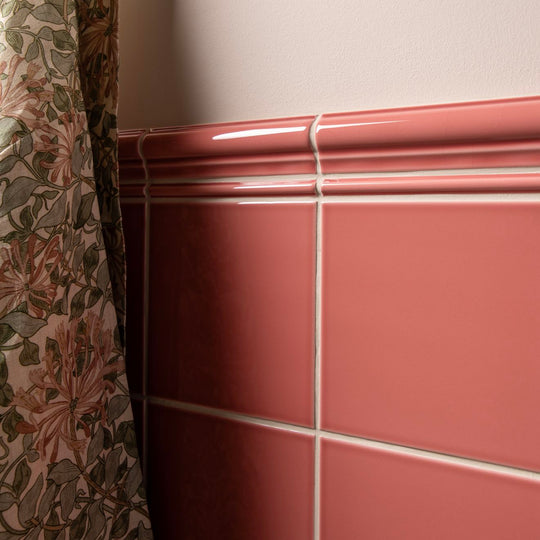
Glass tiles excel at creating bright, reflective surfaces that maximise light on walls in smaller bathrooms. They’re completely non-porous, making them ideal for wet areas, and available in stunning colours and finishes. Glass mosaics work particularly well for accent walls or shower niches, adding sparkle and visual interest. Installation requires specialist adhesive and careful handling, typically costing £60-£120 per square metre including fitting.
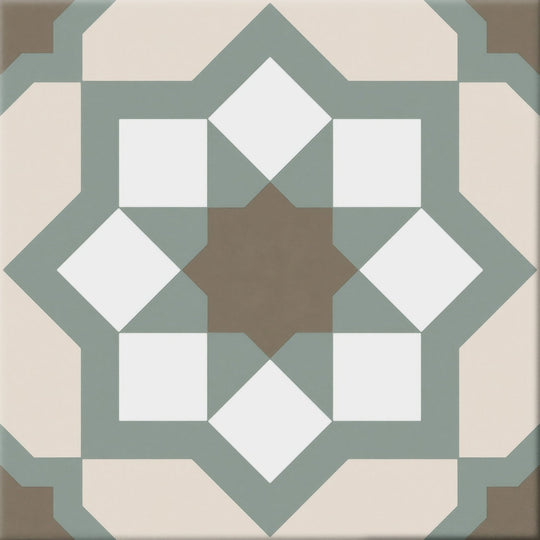
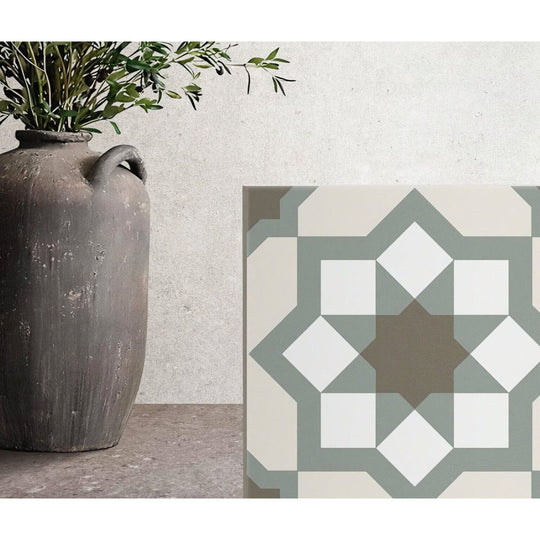
Transform your walls (and floor) with the timeless charm of our Nina Campbell Udaipur Blue tiles. Blending aqua and soft brown tones, this pretty pattern creates a cohesive look in this bathroom
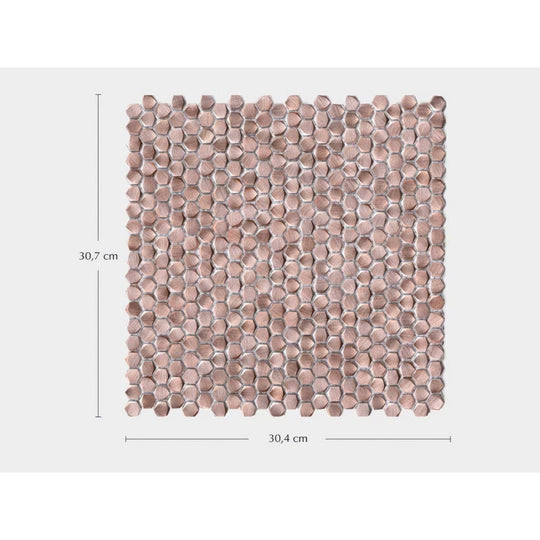
Mosaic tiles, whether ceramic, porcelain, glass, or stone, offer incredible design flexibility for bathroom walls. Small format tiles create textural interest and work excellently for curved surfaces or intricate patterns. Patterned tiles and geometric mosaics can create stunning feature walls without overwhelming smaller spaces. The increased grout lines require more maintenance but provide excellent grip in wet areas.
Choosing the right size tiles for your walls
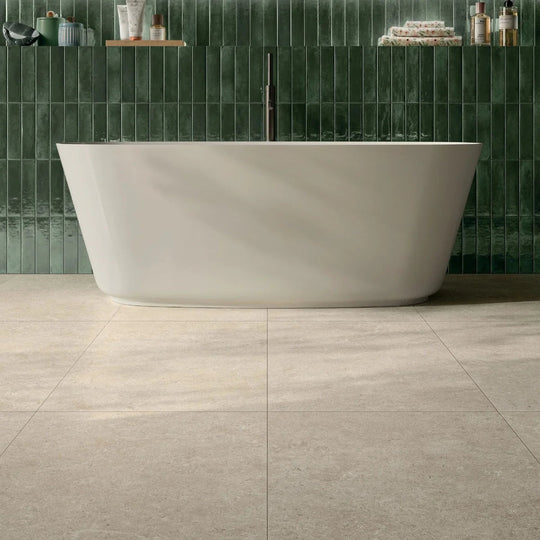
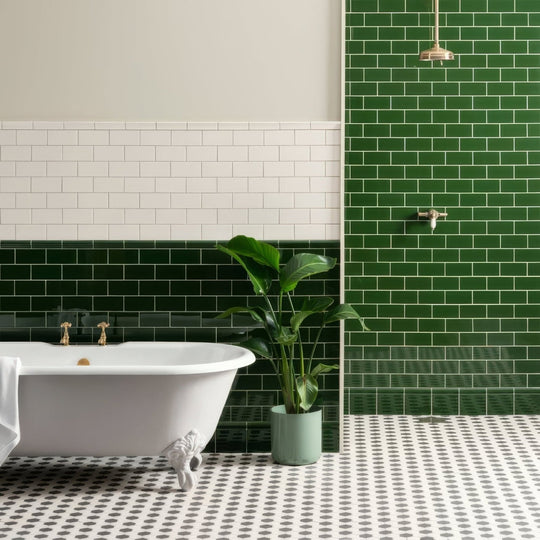
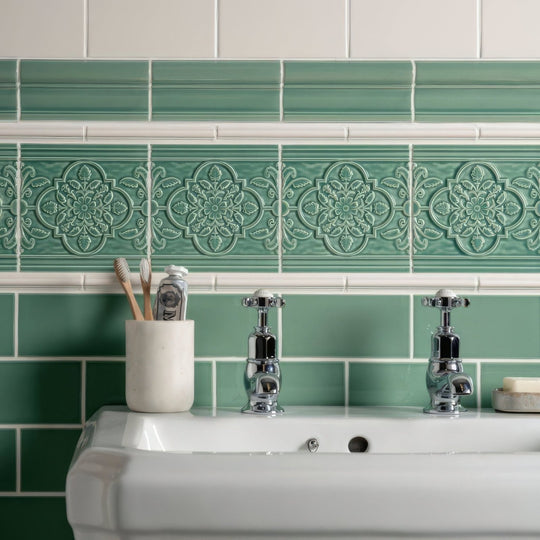
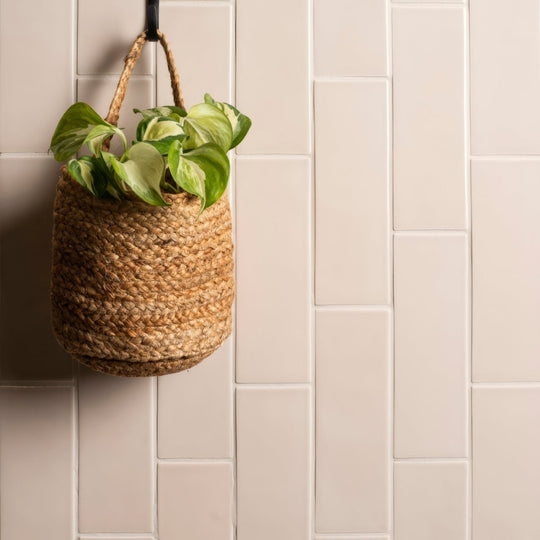
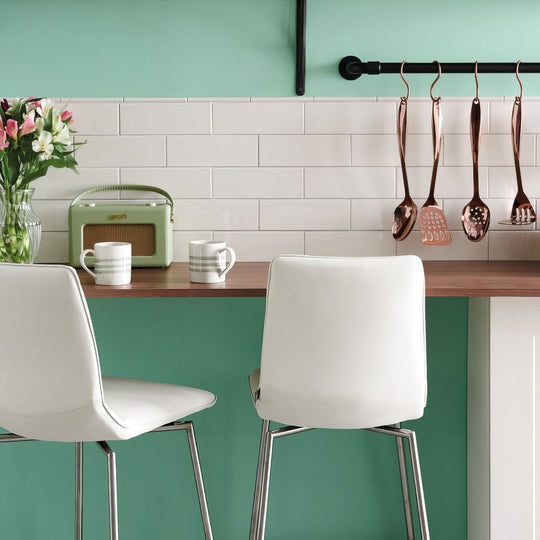
Love the metro style? Then we think you'll adore these tiles from our Montblanc Brick range of bathroom tiles. Available in a variety of colours, these green ceramic tiles are called Sage and they offer a sleek, gloss finish
Small format tiles (such as 100x100mm to 200x200mm) create classic, traditional looks with plenty of grout lines that provide texture and visual interest. These sizes work particularly well for period property bathrooms or when creating vintage-inspired designs. Metro tiles (such as 75x150mm) and subway-style rectangular formats remain timeless classics that suit both traditional and contemporary interiors. However, smaller tiles require more grout, increasing both installation time and ongoing maintenance.
Medium format tiles (such as 300x300mm to 400x400mm) offer a balanced approach that works well in most bathroom sizes. These dimensions provide manageable installation while reducing grout lines compared to smaller formats. They’re particularly suitable for family bathrooms where classic proportions are desired without the maintenance intensity of very small tiles.
Large format tiles (such as 600x300mm to 600x600mm and beyond) create clean, contemporary appearances with minimal grout lines. Fewer grout joints mean easier cleaning and reduced maintenance, making them increasingly popular for busy family bathrooms. Large tiles also help small bathrooms appear more spacious by reducing visual breaks across wall surfaces. However, they require perfectly prepared walls and professional installation to achieve the best results.
The perception of space is significantly affected by tile size. Larger tiles generally make rooms appear bigger, while smaller tiles can make spaces feel cosier but potentially cramped in tiny bathrooms. Consider your room’s proportions: very large tiles might overwhelm small powder rooms, while tiny mosaics could look busy in spacious bathrooms.
Installation considerations also vary with size. Large format tiles require additional support during installation and perfectly flat wall surfaces. Small tiles are more forgiving of minor wall imperfections but take considerably longer to install. Medium-sized tiles often provide the best balance of impact and practicality for most bathroom projects.
Colour and design considerations for wall tiles
Our Portare Illusion Whisper Onyx Polished 60 x 120cm tiles come from a striking range of porcelain tiles and are showcased here in Mist (walls) and Lagoon (walls and floor). Ultra-durable, these marble effect tiles offer a realistic stone effect with veining details for classic styling
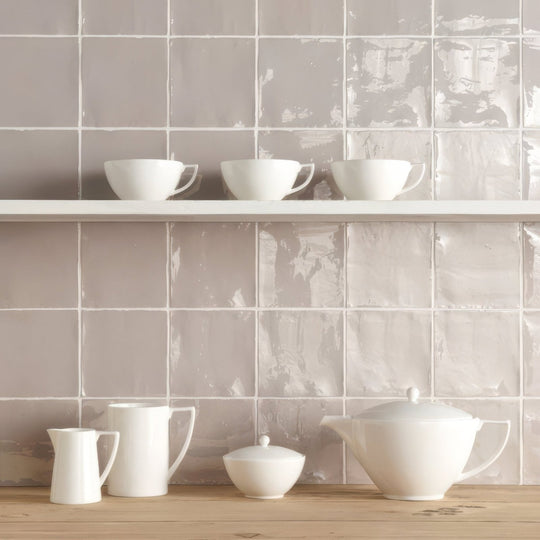
Light colours remain the foundation of successful bathroom design, particularly in smaller spaces. White, cream, and light grey tiles maximise natural light reflection, creating bright, airy atmospheres that make bathrooms feel larger and more welcoming. These neutral tones also provide timeless appeal that won’t date quickly, protecting your investment for years to come. Light-coloured tiles work particularly well in bathrooms with limited natural light, helping to create fresh, clean environments.
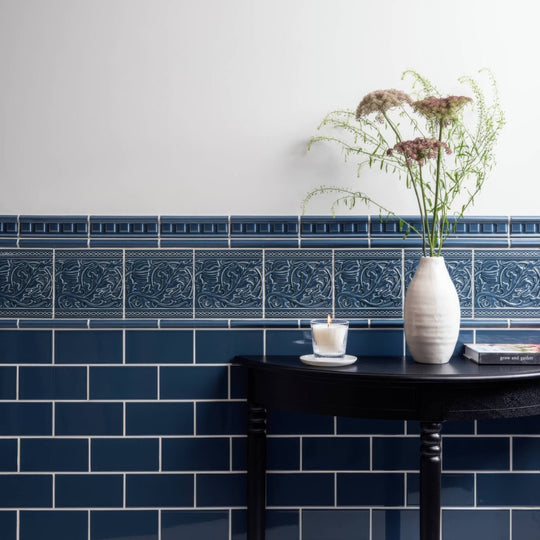
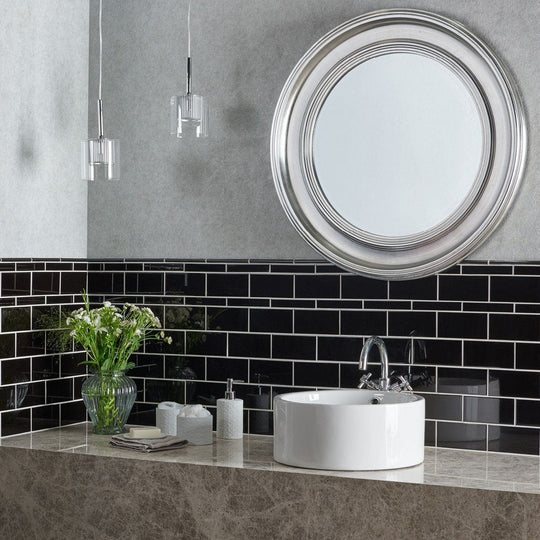
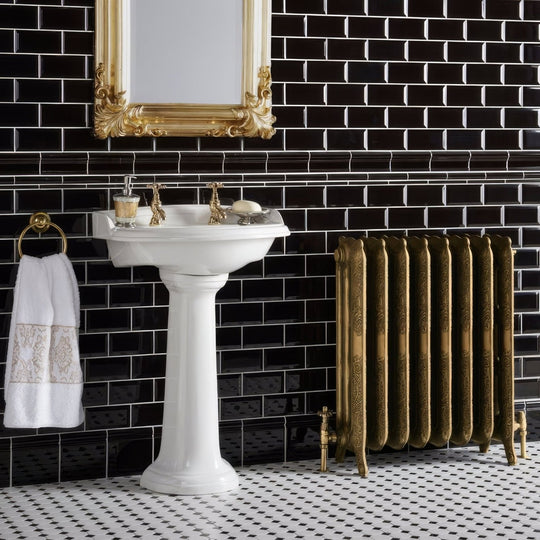
Bold colours like navy blue, forest green, or dramatic black can create striking accent walls that add personality without overwhelming the space. These darker tones work best when balanced with plenty of light colours elsewhere, perhaps covering just one feature wall behind a vanity or creating a dramatic shower enclosure. When using bold colours, ensure adequate lighting to prevent the space feeling too enclosed.
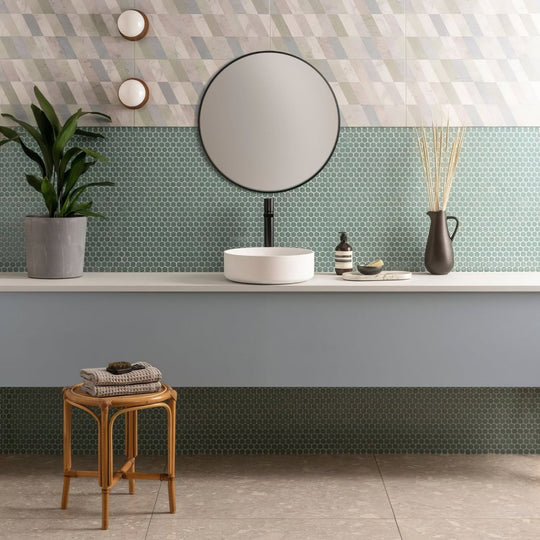
With a contemporary matt finish, our Woodland Glade Porcelain Hexagon tiles will brighten up any neutral colour palette. In a distinctive shape, these are designed to withstand wear and tear in a bathroom and they offer a unique look too
Neutral tones including beige, warm grey, and soft taupe offer versatile foundations that work with changing décor trends. These colours provide warmth while maintaining the space-enhancing qualities of lighter tones. Terrazzo effect and stone effect tiles in neutral palettes bring subtle texture and interest without dominating the design.
Patterned perfection with bathroom tiles
Patterned and geometric designs add visual interest and personality on bathroom tiles. However, use them judiciously in smaller spaces where they might overwhelm. Consider using patterned tiles as accent strips, behind mirrors, or in larger bathrooms where they won’t dominate. Marble effect tiles provide pattern through natural veining while maintaining sophisticated elegance.
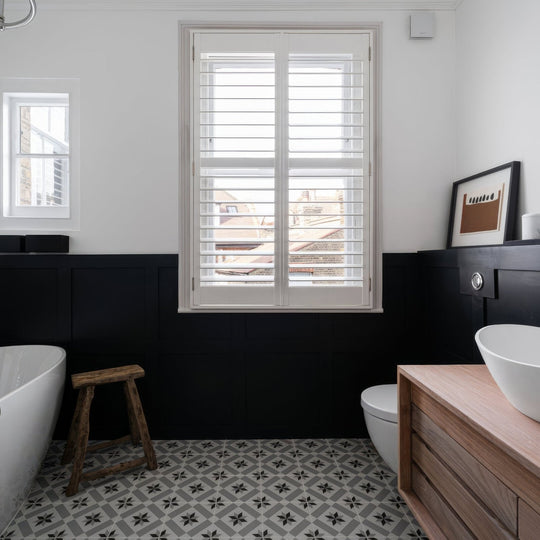
Coordinating wall and floor tiles creates cohesive design schemes that feel intentional and professional. This doesn’t mean identical tiles throughout – instead, choose complementary colours and styles that work harmoniously. Many tile ranges include both wall and floor options designed to coordinate perfectly, simplifying the selection process while ensuring beautiful results.
Tile installation considerations
If you're looking for a durable tile with plenty of punch, our Portare Rio Porcelain wall (and floor) tiles could be ideal. With a matt finish for a sleek style, these will suit a backsplash on a bathroom wall
Proper wall preparation forms the foundation of successful tile installation. Walls must be level, clean, and structurally sound before tiling begins. This often involves filling holes, sanding rough areas, and applying primer to ensure proper adhesive bonding. Uneven walls will show through large format tiles, making professional preparation crucial for quality results.
Waterproofing represents the most critical aspect of bathroom tile installation. Behind shower areas and around bathtubs, waterproof membranes or tanking systems must be installed before tiles. This invisible layer prevents water penetration that could damage wall structures or create mould problems. Skipping proper waterproofing is one of the most costly mistakes in bathroom renovation.
Tile adhesive tips
Choosing appropriate tile adhesive ensures long-term durability of your tile installation. Flexible, waterproof adhesives designed specifically for bathroom use provide the best performance in high-moisture environments. The adhesive must suit both your chosen tile material and the wall substrate – different products work best with ceramic, porcelain, or natural stone tiles.
Grout selection impacts both appearance and maintenance requirements. Waterproof grout formulations prevent moisture penetration while epoxy grouts offer superior stain resistance. Consider grout colour carefully – lighter grouts show dirt more readily but help tiles appear larger, while darker grouts hide stains better but may make spaces feel smaller.
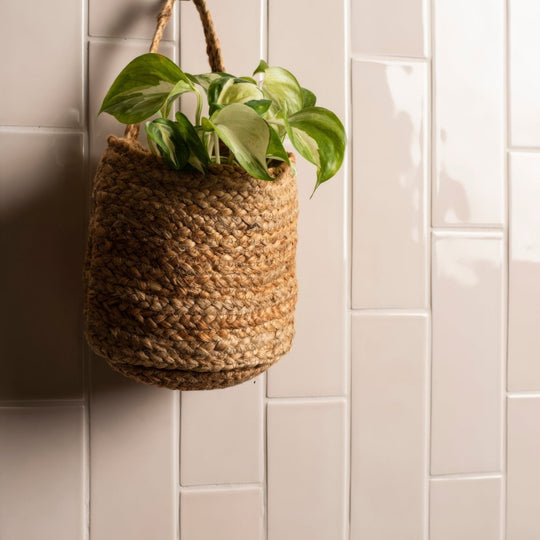
Our Seaton Ceramic Sea Cabbage tiles feature a gloss finish in a pretty brick-shaped design which will instantly add style and glamour to any shower room. From the Seaton range, choose from 13 other colours to add distinctive decor to your bathroom design
Professional installation versus DIY depends on project complexity and your skill level. Simple ceramic tile installations on straight walls might suit confident DIYers, but large format porcelain tiles, natural stone, or complex patterns typically require professional expertise. Professional installation ensures proper waterproofing, alignment, and long-term durability, often proving cost-effective when considering potential mistakes and repairs.
Maintenance and care of bathroom tiles
Daily cleaning routines keep bathroom wall tiles looking their best with minimal effort. Simply wiping down tiles after shower use prevents soap scum buildup and reduces the need for intensive cleaning later. A squeegee or microfibre cloth removes water droplets that can leave spots on tiles; this is particularly important with glass tiles or dark-coloured surfaces.
Weekly deep cleaning maintains hygiene and appearance using appropriate cleaners for your tile material. Most ceramic and porcelain tiles respond well to mild alkaline cleaners, while natural stone requires pH-neutral products to prevent damage. Avoid abrasive cleaners that might scratch tile surfaces or damage grout lines.
Grouting tips
Grout maintenance requires regular attention to prevent discolouration and moisture damage. Clean grout lines weekly with appropriate cleaners and reseal annually in wet areas. Quality grout sealers prevent staining and moisture penetration, extending the life of your installation significantly. Address any cracks or gaps immediately to prevent water penetration behind tiles.
Common issues like cracked tiles or failing grout should be addressed promptly to prevent larger problems. Individual tiles can usually be replaced without affecting surrounding areas, while grout lines can be refreshed to restore appearance and water resistance. Keep spare tiles from your original installation for future repairs.
Long-term maintenance schedules help preserve your tiles’ appearance and functionality. Annual grout sealing, periodic deep cleaning, and prompt attention to any damage will keep your tiles looking stunning for decades. Natural stone tiles may require more frequent sealing and specialised care, but the investment in proper maintenance pays dividends in longevity and beauty.
Creating your dream bathroom starts with selecting the right wall tiles for your space, needs, and style preferences. Whether you choose classic ceramic tiles, durable porcelain, luxurious natural stone, or contemporary glass options, proper installation and maintenance will ensure years of beauty and functionality. Take time to plan carefully, invest in quality materials and professional installation where needed, and enjoy the transformation that stunning tiles can bring to your bathroom spaces.


Share:
Ceramic flooring tile: your complete guide to durable and stylish floor solutions
Bathroom ceramic tiles: follow our top tips and expert advice for your perfect bathroom