


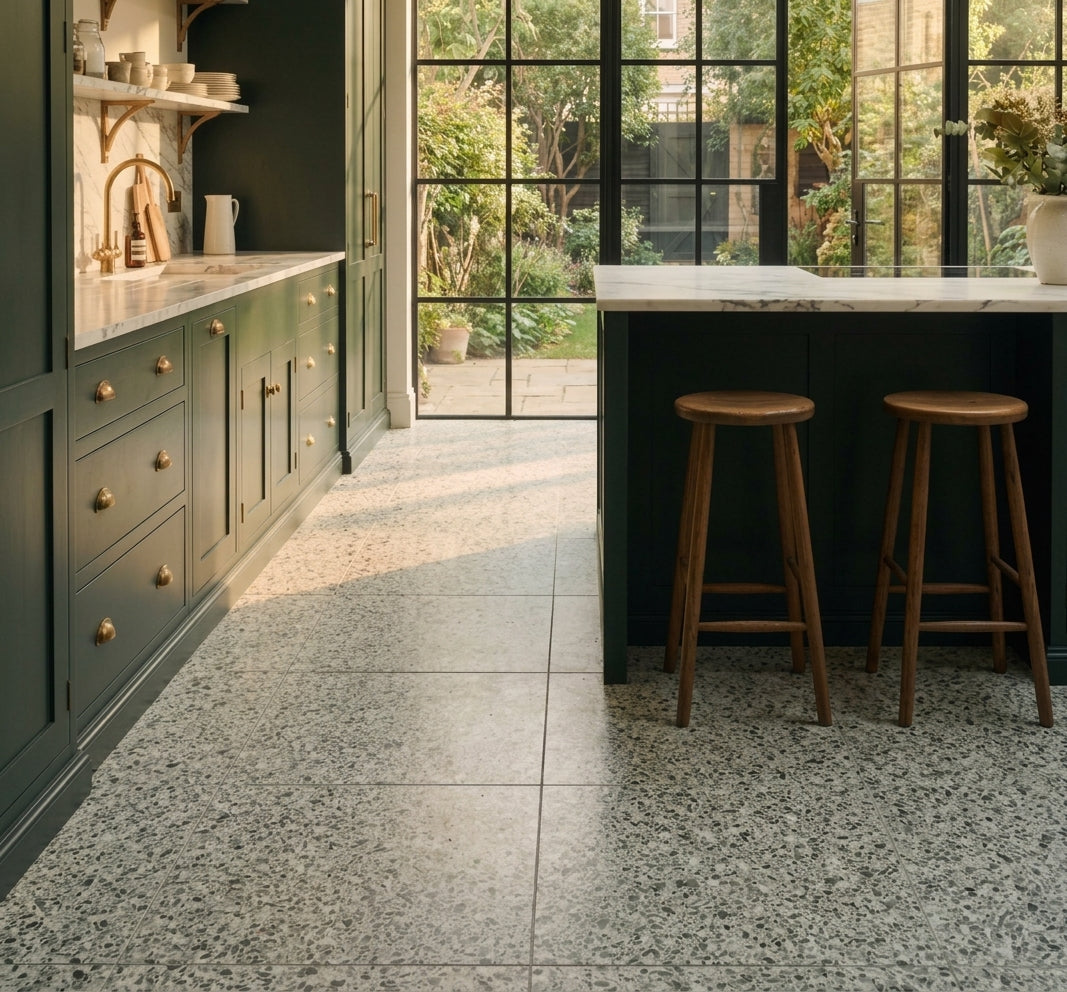
Tile installation costs can catch even the savviest homeowners off guard. Did you know that installation prices in London and the South East are an astonishing 20-30% higher than the national average? Many also forget to factor in the hidden fees that can drastically inflate a budget — from surface preparation to unexpected waste removal costs. Being aware of these potential financial pitfalls can save you from a budget nightmare.
Key Points
- Average tile installation in the UK costs £100–£130 per square metre including labour and materials, though this baseline rarely tells the full story.
- Labour typically accounts for 60–70% of the total cost — and is influenced by tile type, room complexity, pattern, and surface preparation.
- London and the South East command prices 20–30% above the national average; rates in the Midlands, North, Scotland and Wales are generally more competitive.
- Hidden fees — including subfloor preparation, specialist underlays, and waste removal — can add significantly to the quoted price.
- Always include a contingency budget of 15–20% and request itemised quotes to avoid unpleasant surprises mid-project.
Table of Contents
- Tile Installation Cost Factors
- Labour and Material Expenses
- Budgeting and Hidden Fees
- Regional Market Price Variations
Quick Summary
| Takeaway | Explanation |
|---|---|
| Understand Cost Factors | Budgeting for tile installation requires knowledge of key factors such as labour rates, tile materials, and room complexity that directly influence the final cost. |
| Consider Regional Variations | Installation costs differ significantly across the UK, with London and the South East often being 20–30% higher than the national average due to living costs and demand. |
| Account for Hidden Fees | Beyond the quoted price, additional expenses like substrate preparation, waste removal, and special adhesives can substantially increase your budget. |
| Plan for Contingencies | Include a buffer of 15–20% in your budget to cover unexpected issues such as damaged subfloors or moisture problems during installation. |
| Gather Multiple Quotes | To ensure you’re getting value for money, collect several quotes from different tilers, as prices can vary widely even within the same area. |
Tile Installation Cost Factors
When planning a tiling project for your home, understanding what influences the final bill is crucial. The cost to lay tiles isn’t a simple flat rate — numerous variables come into play that can significantly impact your budget.

Our Cordoba Drift and Cordoba Lagoon glazed tiles offer a luxurious, detailed finish — their individual tile format means installation can take longer than larger formats, which may influence overall labour costs.
Base Labour Costs
The foundation of any tile installation quote is the basic labour cost. According to Checkatrade, the average tiling cost in the UK is approximately £110 per square metre including both materials and labour, with labour-only costs typically ranging from £40 per square metre. Geographical location plays a significant role — if you’re based in London or the South East, expect to pay up to 20% more.
Tile Type and Material

Our Ixworth Mulberry Bar tiles create a striking decorative feature — installing smaller individual tiles can take longer than working with larger formats, which may increase labour costs.
Ceramic tiles are generally less expensive to install than porcelain, natural stone, or glass tiles. Larger tiles often require more precise installation, while mosaic tiles are labour-intensive due to the number of pieces involved. Heavier tiles may also require stronger adhesives and additional subfloor preparation.
Room Complexity and Surface Preparation

Our Rialto Porcelain Vert tiles are made from durable porcelain — their larger format can create a seamless contemporary look, although careful surface preparation and cutting remain important cost considerations.
Rooms with many corners, awkward spaces, or decorative patterns require more cutting and time — all of which translate to higher labour costs. Existing surface conditions are equally important: a floor that needs levelling or waterproofing will add to your overall bill. According to MyBuilder, preparation work often accounts for a substantial portion of the overall cost.
Pattern and Design Complexity
Straight layouts are the least labour-intensive and most affordable. Diagonal patterns, herringbone designs, or custom patterns require more precision cutting and planning, pushing costs higher. More valuable or delicate tiles also require more careful handling and longer installation time.
Additional Considerations

Our Hazlebury Limestone Tumbled and Etched tiles are made from natural limestone — additional preparation, careful cutting and specialist installation techniques are all worth factoring in when budgeting.
- Accessibility: Difficult-to-reach areas may incur additional charges.
- Tile size and shape: Irregular shapes require more cutting and planning.
- Special requirements: Underfloor heating, waterproofing, or sound insulation needs.
- Time constraints: Rush jobs often come with premium pricing.
- Sealants and finishes: Some tiles require special sealants or finishing techniques.
Calculating Your Project Cost

Our Varana Almond Deco tiles feature a decorative surface that adds depth and movement to a wall — precise alignment is required to achieve a seamless finish, which can affect installation time.
Measure your space accurately and multiply by the average cost per sq.m in your area. Remember to add 10–15% extra for wastage and cuts, then factor in the relevant variables above.
💡 Design Tip: Before requesting quotes, take time to understand the specific requirements of your chosen tile — whether natural stone, large-format porcelain, or mosaic. Knowing the material’s installation demands helps you ask the right questions and compare quotes on a like-for-like basis, rather than being surprised by additional charges later.
Labour and Material Expenses
Labour Costs Breakdown

Our Palazzo Valentini tiles are crafted from natural stone and create an intricate decorative finish — careful setting, alignment and cutting can make installation more time-consuming and affect the overall project cost.
According to Checkatrade, labour costs typically range from £200–£350 per day, with an average of £300 per day or approximately £40 per hour — translating to £30–£60 per square metre for labour alone. Labour typically makes up 60–70% of the total project cost.
The labour portion typically includes: surface preparation, setting out and measuring, cutting tiles, applying adhesive and laying, grouting, cleaning and finishing, and applying sealants where required.
Material Expenses to Consider

Our Calacatta Viola Honed Marble tiles bring distinctive colour and character to interiors — the material’s weight, cutting requirements and careful handling all influence installation costs.
Additional materials typically cost around £10 per sq.m. Tile adhesive, grout, underlay or backer boards, and specialist membranes all add to the bill. Don’t forget smaller essentials: tile trims, waterproofing membranes, crack isolation membranes, sealants for natural stone, and spacers for consistent grout lines.
For porcelain tile flooring — increasingly popular in the UK — the average cost is around £90 per sq.m in 2025, including roughly £10 for materials like adhesive and grout.
Hidden Expenses to Anticipate

Our Lumier Taco Blue tiles feature a decorative pattern that creates a distinctive finish — careful planning and precise positioning help achieve the best results and can add to installation time.
- Waste factor: Always purchase 10–15% more tiles than your measurements indicate.
- Substrate preparation: Uneven floors may require self-levelling compound.
- Removal and disposal: Factor in costs for removal and proper disposal of old materials.
- Furniture moving: Professional tilers may charge extra for moving heavy furniture or appliances.
Balancing Quality and Budget
Invest more in waterproofing in wet areas, quality adhesives for high-traffic zones, and professional installation for complex patterns. If investing in premium tiles for focal areas, designer ranges such as our Fired Earth tiles and Ca’ Pietra tiles are worth considering.
Budgeting and Hidden Fees

Our Windsor Osborne Caramel and Antique White tiles in ceramic offer plenty of layout possibilities — more individual tiles, cuts and grout lines can mean additional time is needed to achieve a professional finish.
Many homeowners focus exclusively on the advertised cost per square metre, only to be surprised when the final bill arrives higher than expected. Average tile installation costs typically range between £100 and £130 per sq.m, but this baseline figure rarely tells the complete story.
Common Hidden Costs

Our Nusa Sapphire tiles are made from porcelain and their rich glazed finish adds depth and character — installation costs are influenced by area size, layout and surface preparation required.
Subfloor preparation can add £10–£40 per sq.m. Specialist underlays — uncoupling membranes, waterproofing, acoustic, or anti-fracture — can add up to 15% to the total. Waste removal is frequently excluded from standard quotes, adding £50–£200 depending on volume.
Large-format porcelain tiles demand special levelling systems and premium adhesives, increasing material costs by 20–30%. Natural stone typically has a waste factor of 15–20% versus 10% for ceramic.
Contingency Planning
Always add 15–20% to your calculated budget as contingency — for damaged subfloors, moisture issues, structural complications, or plumbing/electrical surprises.
Protecting Your Budget
- Request itemised quotes specifying exactly what’s included and excluded.
- Ask for a written assessment of your existing floor condition before work begins.
- Discuss potential complications and how they would impact costs.
- Clarify whether waste removal is included in the quote.
- Understand the specific requirements of your chosen tile type.
Value Engineering Options
- Use premium tiles in focal areas and more economical options elsewhere.
- Simplify the installation pattern in less visible areas.
- Phase the project to spread costs over time.
- Handle certain preparation or finishing tasks yourself.
Regional Market Price Variations

Our Topaz Gold Decor tiles are made from porcelain — their large-format design can create a dramatic feature wall, although careful handling, preparation and cutting all need factoring into installation costs.
The UK’s diverse economic landscape means installation costs aren’t uniform across the country. Regional factors create notable price variations that savvy homeowners should consider.
London and the South East Premium
London and the South East command prices often 20–30% above the national average. According to PriceYourJob, hourly rates can reach £30–£40 per hour with daily rates often exceeding £250–£300, compared to rates 30–40% lower in other regions.
Midlands and Northern England
Tilers in these regions commonly charge £20–£25 per hour or £150–£200 per day. Cities like Birmingham, Manchester, and Leeds have slightly higher rates than surrounding areas but remain considerably more affordable than the South East.
Scotland and Wales
Costs generally fall at the lower end of the national spectrum. Edinburgh and Cardiff command higher prices within their countries, while rural areas may see additional travel charges that offset the lower hourly rates.
Economic Factors and Seasonal Fluctuations
Local competition, property values, material availability, and regional wage differences all contribute to price variations. Winter months (January and February) often offer better value as demand drops; summer and early autumn see peak demand and premium rates.
Finding Value in Your Region
- Time projects strategically: Schedule during off-peak seasons when possible.
- Gather multiple quotes: Rates vary widely even within the same town.
- Consider travel zones: In London, crossing into a different zone can reduce costs significantly.
- Package projects: Some tilers offer better rates for larger or multi-room projects.
The lowest price rarely correlates with the best long-term value. Seek tilers whose rates align with the regional average while offering appropriate credentials and positive reviews. According to Checkatrade, tiling costs average around £110 per sq.m nationally but fluctuate by 15–25% between regions.
Frequently Asked Questions
What factors influence the cost of tile installation?
Numerous factors can affect tile installation costs, including labour rates, type of tile and material, room complexity, surface preparation needs, and design intricacies.
Are there hidden fees associated with tile installation?
Yes — common hidden fees include surface preparation, waste removal, and complications such as moisture issues or damaged subfloors that may not be included in the initial quote.
How much should I budget for tile installation per square metre?
The average cost for tile installation in the UK typically ranges from £100 to £130 per square metre, with geographical location and project complexity affecting the final price.
Why are installation costs higher in London and the South East?
Costs in London and the South East can be 20–30% higher than the national average due to the increased cost of living, demand for services, and higher operating expenses for tradespeople.
Transform Your Tiling Project with Hyperion Tiles
Our extensive range of tiles — from floor tiles to mosaics — ensures you’re covered for both style and every installation requirement. Experience a curated shopping experience with free shipping on qualifying orders, exclusive trade discounts, and a price match guarantee. Visit Hyperion Tiles and start your project off right today.
Share:
How to clean grout (and keep it white)