BEAUTY IN EVERY DETAIL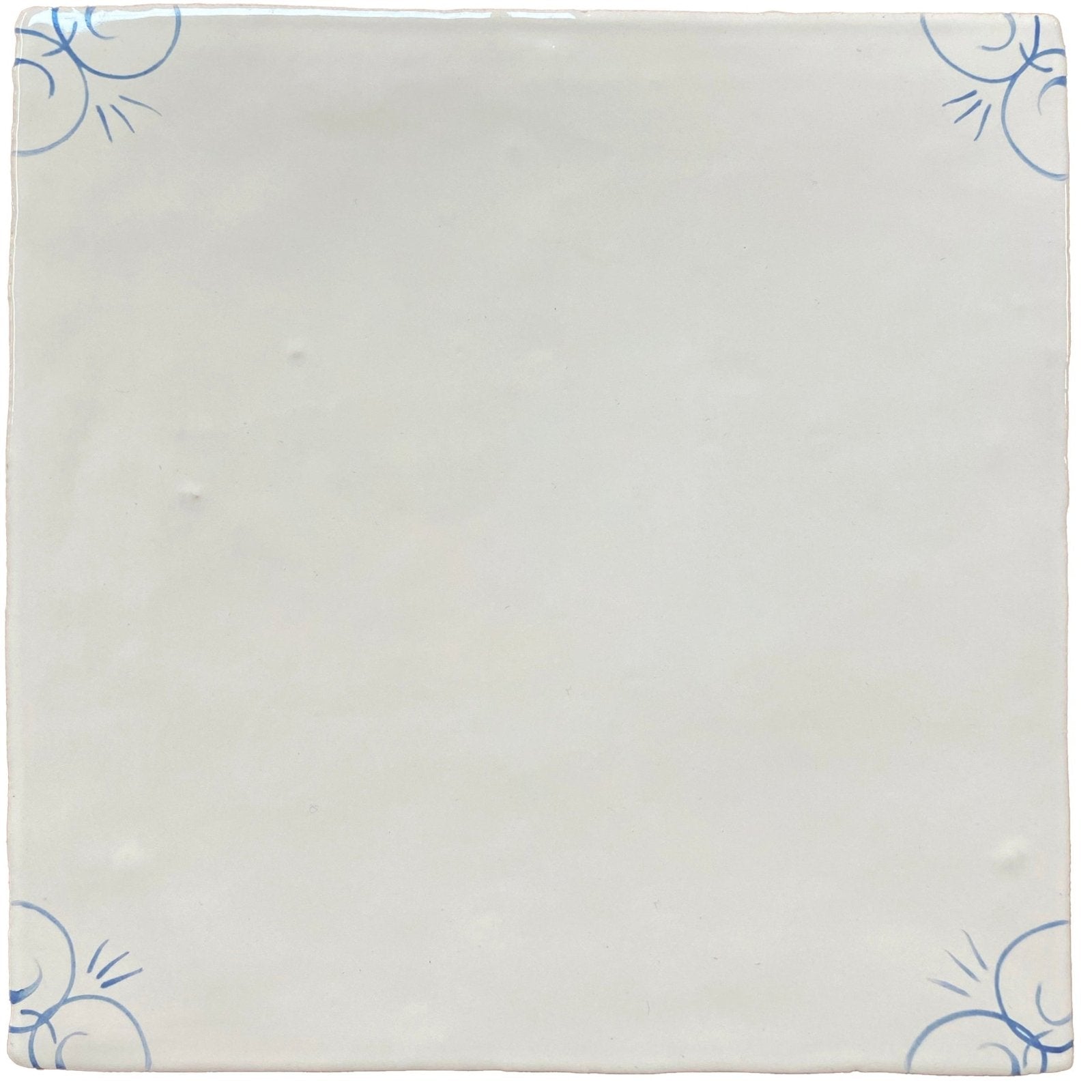
Need to return this item? Contact Hyperion within 14 days of delivery. We’ll check the supplier-specific return terms for this product and confirm eligibility, the return destination and any applicable restocking charge before you send anything back. Special-order and made-to-order goods may be non-returnable unless damaged or faulty.
If you are unsure before ordering, our team can check quantities, suitability and the return terms for this exact product.
Pre-order. Your quantity is reserved against the incoming batch with expected dispatch in 2–4 weeks. We’ll confirm the indicative date when you order.
Delivery: the exact cost is calculated at checkout from your order and postcode, and UK delivery is free over £1,000 on most ranges. Pallet or specialist deliveries are booked with you in advance.
Traditional English Delft Corner Wall Tile
- Finish
- Handmade
- Suitable for
- Interior walls
Explore more options from this collection
16 coordinated options · compare shape, size and finish before you decide
 Base
View option
Base
View option
 Current
Corner
Selected
Current
Corner
Selected
 Bee
View option
Bee
View option
 Butterfly 1
View option
Butterfly 1
View option
 Butterfly 2
View option
Butterfly 2
View option
 Chapel
View option
Chapel
View option
 Church
View option
Church
View option
 Cottage
View option
Cottage
View option
 Dove
View option
Dove
View option
 Kingfisher
View option
Kingfisher
View option
 Lighthouse
View option
Lighthouse
View option
 Mill
View option
Mill
View option
 Observatory
View option
Observatory
View option
 Swallow
View option
Swallow
View option
 Swift
View option
Swift
View option
 Windmill
View option
Windmill
View option
VISUALISE
Try this tile in your room
Upload a room photo, choose the surface and adjust the tile scale. This is a quick planning preview, not a photorealistic installation render.
HPTEDS51
Product details
Product story
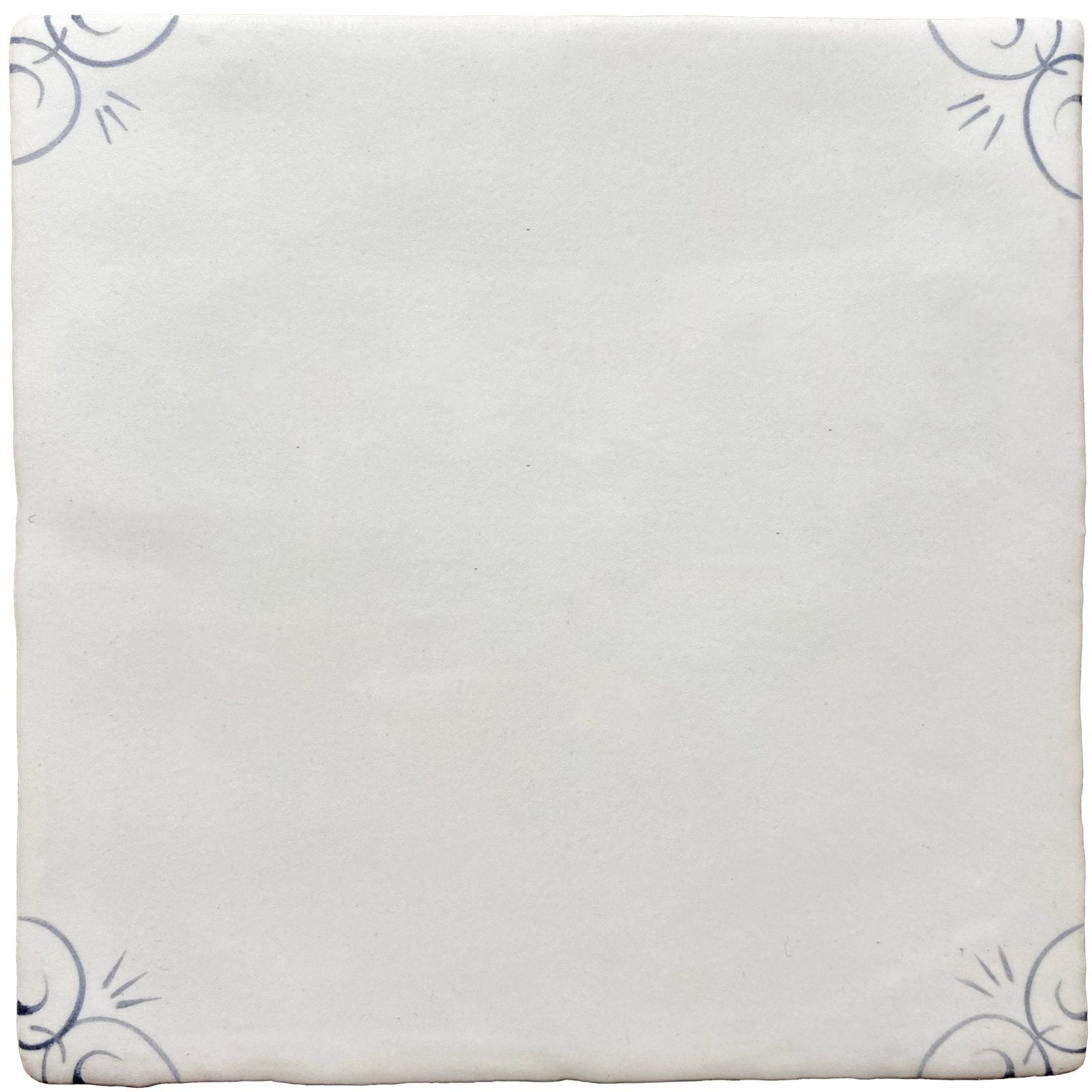
Traditional English Delft Corner 13 x 13cm Wall Tiles - Hand Painted in Delft Blue or Charcoal
Complete your English Delft installations with our Traditional Corner tiles, where decorative flourishes meet practical finishing in creating perfectly framed ceramic narratives. Each 13 x 13cm corner tile is individually painted by our talented in-house artists in Devon, featuring classic corner motifs—delicate florals, elegant scrollwork, or geometric patterns—that transform functional edge pieces into decorative elements worthy of the scenes they frame. Available in classic Delft Blue or contemporary Charcoal on pristine white backgrounds, these essential tiles provide the professional finishing touch that elevates English Delft installations from simple tile arrangements to complete artistic compositions. These hand-painted corners ensure your cottage scenes, bird flights, and architectural vignettes are properly presented with the decorative borders they deserve.
Why Choose Traditional English Delft Corner Tiles?
The English Delft Corner tile represents centuries of ceramic tradition where even functional elements receive artistic attention. In historical Delft installations, corner tiles were never afterthoughts but integral design elements that demonstrated the tiler's skill and the owner's attention to detail. These pieces solve the practical challenge of tile edges while adding decorative flourish, featuring traditional motifs that complement without competing with central designs. Our corners transform potentially awkward transitions into celebrated features, whether framing a kingfisher vignette, defining a village scene, or creating decorative borders around plain tile fields.
What distinguishes our Delft Corner tiles is the authentic hand-painted process that ensures each corner piece matches the quality of your feature tiles. Unlike mass-produced edge solutions, every corner receives the same artistic attention as our figurative tiles. Traditional motifs include quartered flowers (each petal pointing to a corner), radiating scrollwork, geometric stars, or simplified leaf designs. The 13 x 13cm format matches our entire English Delft collection perfectly, ensuring seamless integration. No two corners are identical—brushwork varies, pattern intensity fluctuates, creating organic frames that enhance rather than constrain.
The corner design philosophy follows historical precedent where corners marked transitions and boundaries with appropriate ceremony. Traditional Delft Blue maintains four centuries of ceramic tradition, while contemporary Charcoal offers modern sophistication. Both colourways coordinate perfectly with the full English Delft range. Whether used to frame single decorative tiles, define larger installations, or create continuous borders, these corners provide the architectural punctuation that transforms tile arrangement into composed design.
Perfect Applications for English Delft Corner Tiles
Framing Bathroom Vignettes
Create properly finished installations where corner tiles frame your English Delft scenes with appropriate ceremony. Use corners to define shower niche displays—a single cottage or kingfisher deserves proper presentation. Frame mirror splashbacks where corners add professional finishing to functional areas. In shower enclosures, corners soften hard edges while maintaining water-tight installation. The glazed surface handles bathroom humidity while preserving delicate painted details. Corner tiles eliminate the raw edge problem that can diminish even beautiful installations. Browse our bathroom wall tiles for central designs to frame.
Kitchen Splashback Definition
Transform kitchen splashbacks from simple functional surfaces into properly framed decorative features. Corner tiles create defined panels behind hobs or sinks, turning utility areas into focal points. Use corners to transition between decorative English Delft scenes and plain tile fields, creating visual hierarchy. Frame window splashbacks where corners solve the tile-to-window junction elegantly. The hand-painted quality ensures corners complement rather than compromise your kitchen's artisan character. Perfect with our metro tiles for mixed installations.
Creating Tile 'Paintings'
Use corner tiles to create framed tile paintings—complete scenes properly presented as wall art. Four corners define a rectangular field for village scenes mixing cottages, mills, and birds. This framing approach allows English Delft installations in any room, not just bathrooms or kitchens. Living rooms, bedrooms, and hallways can feature properly framed ceramic art. The corners provide visual boundary that makes decorative tiles read as intentional art rather than incomplete installation. Explore our decorative tiles collection for centrepieces.
Defining Dado Rails
Create continuous decorative dados where corner tiles handle the critical junction points. Use corners at regular intervals along horizontal installations, providing rhythm and structure. At room corners, special corner pairs create seamless 90-degree transitions. This approach brings Victorian tile tradition into contemporary spaces with sophistication. Corner tiles at dado height add architectural interest to plain walls. Mix with plain field tiles above and below for balanced decoration.
Panel & Border Creation
Design complex installations where corner tiles define multiple panels or borders within larger tiled areas. Create a grid of framed panels, each containing different English Delft scenes. Use corners to mark transitions between different tile types or patterns. In large installations, corners provide necessary visual breaks preventing monotony. They work as punctuation marks in ceramic sentences, clarifying design intent. Perfect for feature walls requiring structure and hierarchy.
Commercial & Heritage Applications
Essential for heritage properties, museums, and traditional establishments requiring historically accurate tile installations. Corner tiles demonstrate commitment to proper traditional technique. In commercial settings, corners provide professional finishing that justifies premium pricing. Hotels and restaurants use corners to create authentic period atmosphere. The hand-painted quality signals attention to detail that discerning customers appreciate. Corners often determine whether installation appears amateur or professional.
Design & Styling Ideas
Corner Motif Variations:
Traditional Patterns:
- Quartered flowers with petals pointing to each corner
- Radiating scrollwork creating movement from centre
- Geometric stars providing structured decoration
- Simplified acanthus leaves suggesting classical architecture
- Abstract flourishes maintaining decorative presence
Style Combinations:
- Floral corners with bird centrepieces for nature themes
- Geometric corners with architectural tiles for structure
- Scrollwork corners with cottage scenes for movement
- Simple corners with complex centres for balance
- Elaborate corners with plain fields for border focus
Colour Coordination:
For Delft Blue Version:
- Match with blue English Delft scenes for consistency
- Contrast with white tiles for definition
- Combine with blue plains for tonal variation
- Mix with other blues for depth
- Use with gold accents for luxury
For Charcoal Version:
- Coordinate with charcoal English Delft for modern look
- Contrast with white for graphic impact
- Combine with greys for subtle sophistication
- Mix with black for drama
- Use with copper or brass for warmth
Installation Patterns:
- Picture Frame: Four corners creating complete border
- Continuous Border: Corners at regular intervals
- Panel Grid: Multiple framed sections
- L-Shaped: Two corners defining shelf or niche edges
- Diamond Setting: Corners rotated 45 degrees
- Mixed Rhythm: Alternating corner styles
Complementary Materials:
- Plain white tiles for breathing space - see white tiles
- Field tiles in coordinating colours - browse plain tiles
- Border strips for linear elements - explore border tiles
- Natural stone for contrast - view natural stone tiles
Installation & Care
Installation Requirements
- Interior Walls Only: Designed for wall applications
- Match 13 x 13cm format of English Delft collection
- Professional installation recommended for alignment
- White adhesive essential for clean backgrounds
- Precise 2-3mm joints matching feature tiles
- Careful planning for corner placement
- Order extra for selective pattern matching
- Consider sight lines for corner visibility
Corner Tile Placement Strategy
Corner tiles require strategic positioning for maximum impact. At external corners (projecting edges), position decoratively painted corners for visibility from multiple angles. At internal corners (room corners), use corner pairs designed to meet at 90 degrees. For framing applications, ensure corner orientation creates balanced compositions—flowers or patterns should radiate correctly. In continuous borders, space corners regularly for rhythm. Consider how patterns flow into adjacent tiles—corners should enhance, not interrupt, overall design flow.
Matching Corner Patterns
When selecting corner tiles, consider their relationship with central tiles. Busy central scenes benefit from simpler corner motifs that don't compete. Plain central fields allow elaborate corner decoration. Match the painting style—corners painted by the same artist as feature tiles create cohesive installations. The hand-painted variation means each corner is unique, so dry-lay to ensure pleasing distribution of pattern intensity.
Creating Professional Edges
Corner tiles solve multiple edge challenges. At splashback edges, they provide finished appearance without raw tile edges or trim strips. Around windows and doors, corners handle the transition elegantly. For partial wall installations, corners clearly define intended boundaries. In niches and alcoves, corners emphasise architectural features. They eliminate the need for metal trim in traditional installations, maintaining ceramic authenticity.
Easy Maintenance
The glazed surface protects painted corner motifs while allowing simple cleaning. Corner tiles often accumulate more dirt at wall junctions—regular cleaning maintains appearance. Use soft cloths preserving delicate painted patterns. pH-neutral cleaners protect both glaze and artwork. The sealed surface resists moisture important at vulnerable corner positions. No additional sealing required beyond standard tile care.
Grout Considerations
- Matching Grout: Use same colour as main installation
- White: Traditional choice maintaining clean lines
- Contrasting: Can emphasise corner patterns
- Sealed Corners: Pay attention to corner joint sealing
- Consistent Width: Match joint width throughout
Frequently Asked Questions
Do I need corner tiles for English Delft installations? While not absolutely necessary, corner tiles significantly improve installation appearance. They solve the edge problem—raw tile edges look unfinished. Corner tiles provide professional finishing that elevates entire installations. For single decorative tiles, four corners create proper framing. For larger installations, corners provide necessary structure and rhythm. They're particularly important in period properties where traditional techniques matter. Consider them investment in installation quality.
How do corner patterns relate to main tiles? Corner patterns traditionally complement rather than compete with central designs. If your central tiles feature birds or buildings (figurative), corners typically use abstract or floral motifs. This creates hierarchy—corners frame but don't distract. However, matching is flexible—some prefer uniform decoration throughout. Our corners work with any English Delft design. The key is intentional selection rather than random mixing.
Can I use corners with non-Delft tiles? Absolutely! English Delft corners work beautifully with plain tiles, creating decorated borders around simple fields. They add interest to subway tile installations, providing traditional accent to contemporary layouts. Use corners to add personality to rental property bathrooms without complete retiling. They work with any 13 x 13cm tile format. The hand-painted quality adds artisan touch to any installation.
How many corner tiles do I need? For framing single tiles: 4 corners minimum. For framing panels: 4 corners per panel. For continuous borders: corners every 3-5 tiles creates good rhythm. For dados: calculate room perimeter, place corners every 60-90cm. For complex installations: our design team calculates requirements. Order 10-15% extra for selection and future repairs. Remember internal and external corners need different orientations.
What if my walls aren't perfectly square? Hand-painted corner tiles are forgiving of slight irregularities. The organic pattern and painted variation disguise minor alignment issues that would be obvious with geometric printed tiles. Professional installers can adjust installation to accommodate out-of-square corners. The decorative patterns draw attention away from structural imperfections. This makes them ideal for period properties where walls are rarely perfectly square.
Can corners work as standalone decoration? Yes! Four corners arranged in a square create attractive decorative motifs without central tiles. Use corners at regular intervals as accent tiles in plain installations. Single corners work as small decorative punctuation marks. Some customers create patterns using only corners—diagonal grids or scattered accents. Their complete decorative nature means they're not dependent on additional English Delft tiles for impact.
Complete the Look
English Delft Collection:
- Feature Tiles: Birds, buildings, and florals to frame
- Plain Fields: Create framed panels with corners
- Border Tiles: Combine with corners for complex designs
- Mixed Sets: Curated combinations including corners
- Complete Collection: See all designs needing corner finishing
Coordinating Blues:
- Blue wall tiles for field areas
- Blue mosaic tiles for accents
- Pattern tiles for variety
Traditional Combinations:
- Victorian floor tiles for period schemes
- Patterned tiles for structured designs
- Black and white tiles for contrast
Installation Elements:
- Border tiles for linear elements
- Decorative tiles for centrepieces
- Plain tiles for fields
Installation Essentials:
- White tile adhesive for clarity
- Precision spacers for alignment
- Corner-specific installation guides
- pH-neutral cleaners
- Design consultation for complex layouts
- Professional installation service
Why Buy From Hyperion Tiles?
✓ Hand-painted in Devon with authentic craftsmanship
✓ Complete installations - corners for professional finishing
✓ Pattern variety - multiple corner motifs available
✓ Sample service - see corner quality before ordering
✓ Free UK delivery on orders over £1,000
✓ Design expertise - corner placement consultation
✓ 451+ five-star Trustpilot reviews
✓ Matches collection - seamless integration with English Delft
✓ Traditional techniques - historical accuracy
✓ Delft Blue or Charcoal - coordinating colourways
✓ Ascot showroom - see complete installations
✓ Beaconsfield showroom - view corner options
Ready to complete your English Delft installation?
Order your corner tile samples today to appreciate the decorative patterns, hand-painted quality, and finishing capability of our English Delft Corner tiles. Each sample showcases how proper corners transform basic tile installations into professionally framed ceramic art. Contact our expert team for advice on corner selection, placement strategies, and creating complete installations. Visit our showrooms in Ascot (67 High Street, Ascot, SL5 7HP) or Beaconsfield to see how corner tiles complete our English Delft and decorative tile collections, where every detail receives artistic attention.
Specification details, delivery information, and returns policy remain standard as per Hyperion Tiles terms and conditions. Hand-painted tiles made to order with 2-3 week lead times. Due to artisan nature, corner patterns show individual variation. Each corner tile is unique, providing authentic hand-painted frames for your English Delft installations.
Product specification
Tile size 13 x 13 x 0.9 cm (5 x 5 x 0.4") approx
Tiles per m2: 59
Weight (gm) 280
Material White body glazed ceramic
Grout width 2 - 3mm
Samples
See the whole tile before you decide. A full-tile sample is available for this product, so you can judge the complete pattern, colour and finish in your own light.
The sample is £8.50. Sample postage from £4.99 per supplier. Eligible sample buyers receive a fixed £4.99 credit on a £50+ tile order, once per customer. This is not a refund of combined multi-supplier postage.
Use the sample option in the buying panel above to add it to your basket. Review your samples and the combined postage at checkout before paying.
Delivery
In-stock orders are dispatched within 3–5 working days, with express options available. Special-order and made-to-order ranges carry their own lead time, shown on the product page and confirmed when you order. Pallet, slab, large-format and bathware orders travel on a specialist off-load service — we confirm the timescale and book a date that suits you before dispatch.
Delivery is calculated at checkout from your order and postcode (we do not offer showroom collection) and UK delivery is free on orders over £1,000 on most ranges. For pallet deliveries please tell us about access issues in advance — low trees or bridges, narrow roads or gateways, gravel drives, or no turning or unloading space — as a re-delivery charge may apply if we cannot complete delivery.
When your order arrives
Please check your delivery as soon as it arrives. Once goods are unloaded they become the responsibility of the receiver, so if anything isn’t right, contact us within three working days and we’ll put it right quickly.
Returns
To request a return, contact Hyperion within 14 days of delivery. For eligible online consumer cancellations, you have a further 14 days after telling us to send the goods back. Contact us for the correct return address; your statutory cancellation does not depend on our authorisation.
Additional supplier returns have their own eligibility rules, charges and exclusions. These do not override statutory cancellation rights or rights for faulty goods. See our refund policy and supplier return guidance before arranging a return.