 BEAUTY IN EVERY DETAIL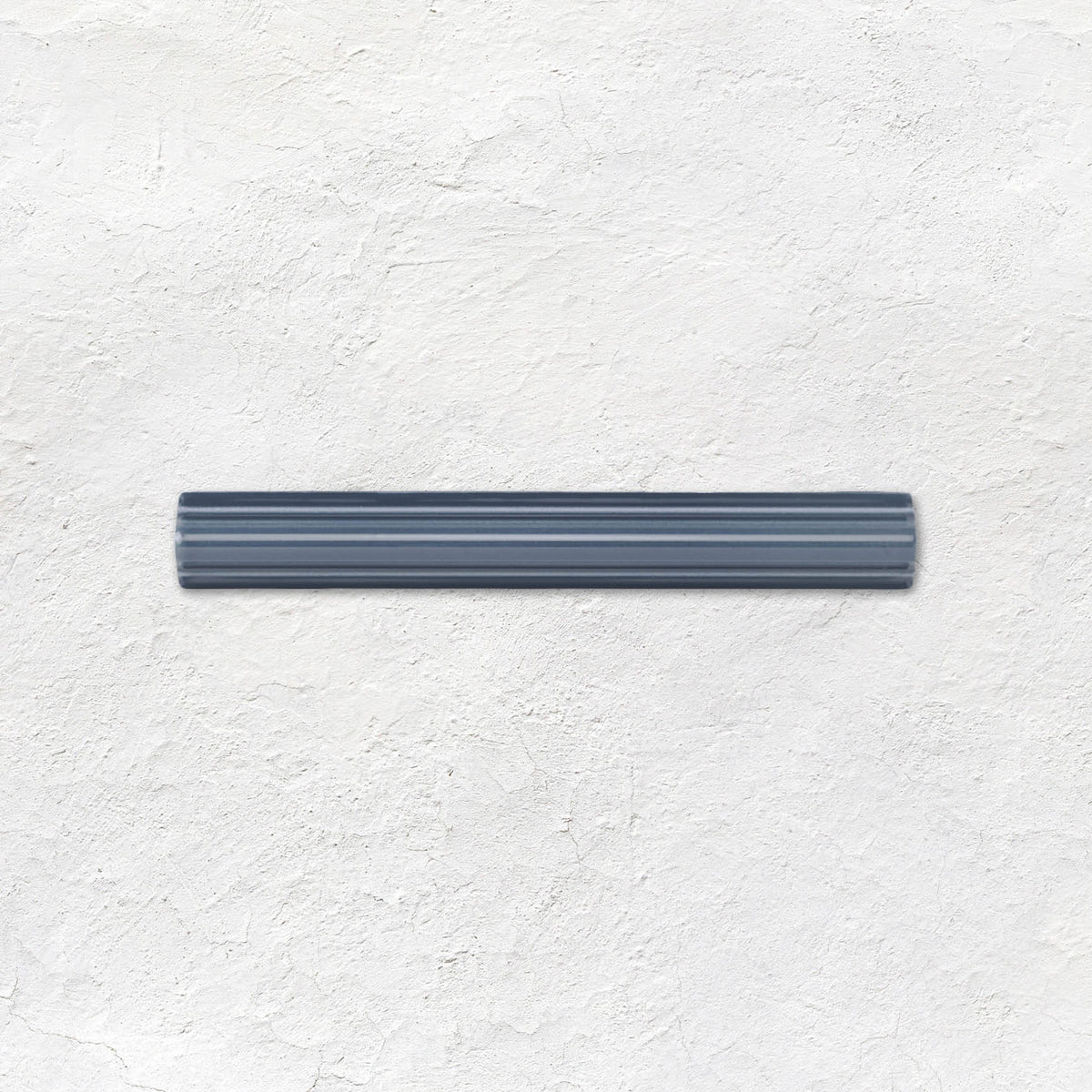

Original Style returns: contact Hyperion within 14 days of delivery. Unused, complete standard-stock goods in their original packaging may be eligible for return once authorised. Accepted returns carry a 25% restocking charge. Special-order, bespoke, clearance and end-of-line goods may be excluded.
If you are unsure before ordering, our team can check quantities, suitability and the return terms for this exact product.
In stock. Standard: Estimated 3–5 working days. Express: Estimated 1–2 working days where offered at checkout. In-stock delivery estimates apply to orders placed before 2pm UK time on a working day. Orders placed from 2pm, at weekends or on bank holidays are processed from the next working day. Working days exclude weekends and bank holidays. Estimates are not guaranteed; express does not shorten backorder or special-order lead times. Regional holidays and specialist freight can affect the final date.
Delivery: the exact cost is calculated at checkout from your order and postcode, and UK delivery is free over £1,000 on most ranges. If your order needs a pallet or specialist vehicle, we’ll contact you to confirm the delivery arrangement before dispatch.
On arrival: please check the order promptly. If anything has been damaged in transit, contact us within three working days and we’ll help put it right.
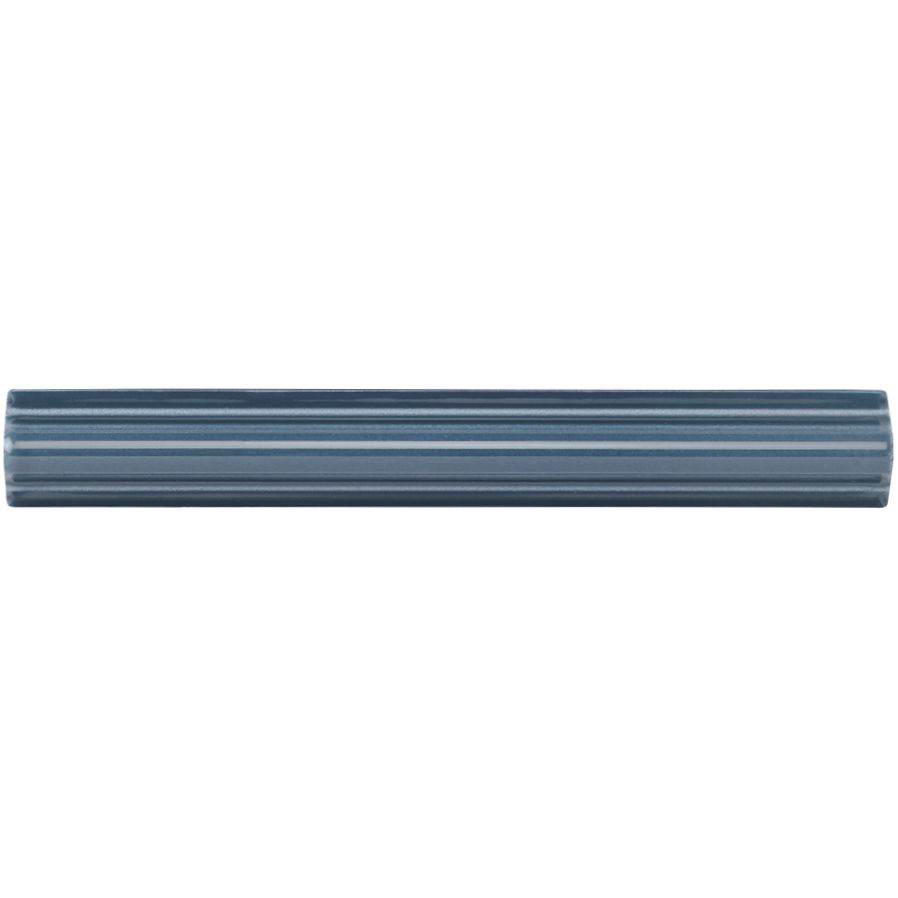
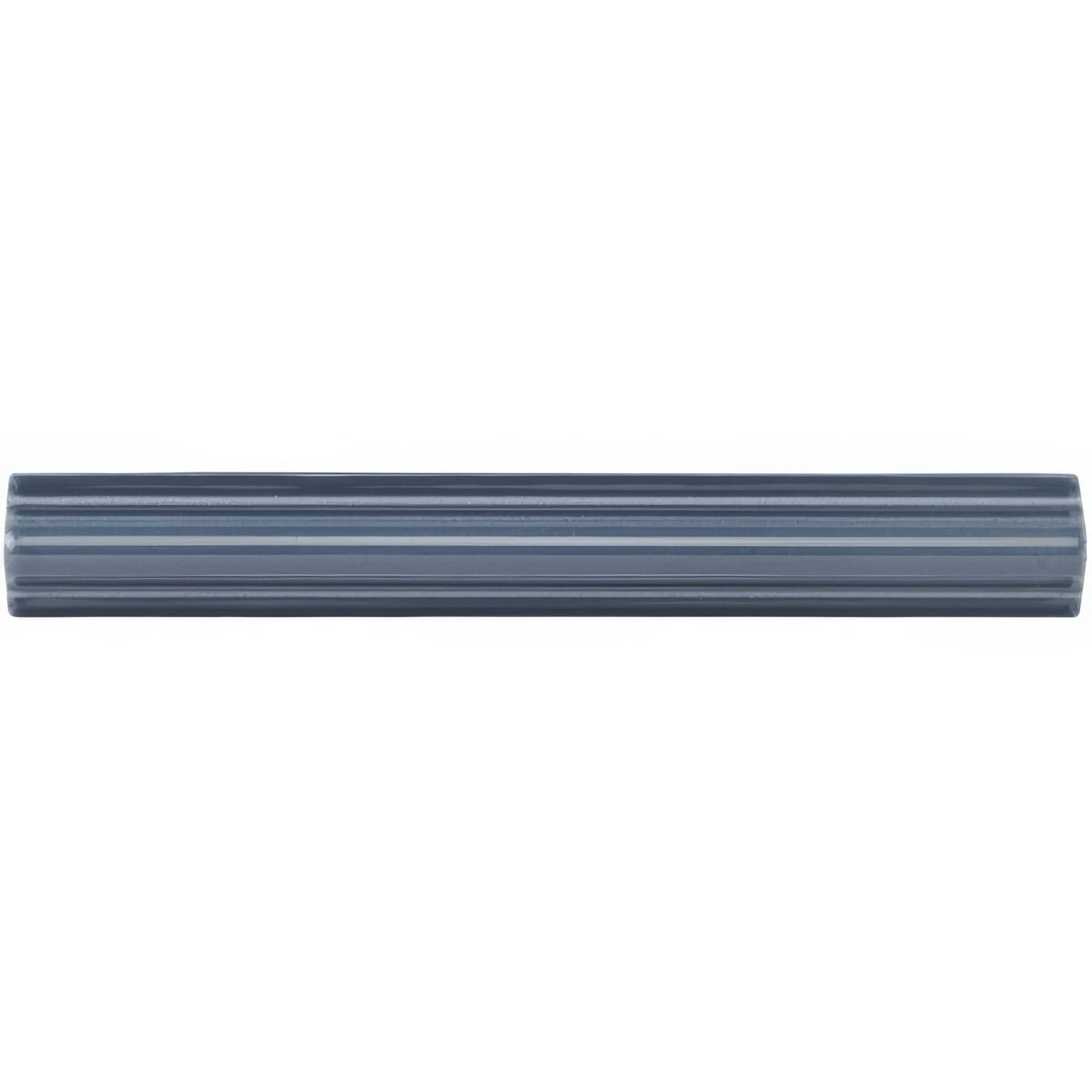
Ascot Blue Astragal Moulding Ceramic Wall Tile 152x21mm
- Material
- Ceramic
- Finish
- Gloss
- Suitable for
- Interior walls
Explore more options from this collection
23 coordinated options · compare shape, size and finish before you decide
 Current
Ascot Blue Astragal Moulding
Selected
Current
Ascot Blue Astragal Moulding
Selected
 Baroque Blue Astragal Moulding
View option
Baroque Blue Astragal Moulding
View option
 Brilliant White Astragal Moulding
View option
Brilliant White Astragal Moulding
View option
 Burgundy
View option
Burgundy
View option
 Chancel Grey Astragal Moulding
View option
Chancel Grey Astragal Moulding
View option
 Charcoal Grey Astragal Moulding
View option
Charcoal Grey Astragal Moulding
View option
 County White Astragal Moulding
View option
County White Astragal Moulding
View option
 Duchy Pink Astragal Moulding
View option
Duchy Pink Astragal Moulding
View option
 Edwardian Green Astragal Moulding
View option
Edwardian Green Astragal Moulding
View option
 Ivory Astragal Moulding
View option
Ivory Astragal Moulding
View option
 Jade Breeze Astragal Moulding
View option
Jade Breeze Astragal Moulding
View option
 Jet Black Astragal Moulding
View option
Jet Black Astragal Moulding
View option
 London Stone Astragal Moulding
View option
London Stone Astragal Moulding
View option
 Ochre Astragal Moulding
View option
Ochre Astragal Moulding
View option
 Palladian Beige Astragal Moulding
View option
Palladian Beige Astragal Moulding
View option
 Palm Green Astragal Moulding
View option
Palm Green Astragal Moulding
View option
 Pavillion Green Astragal Moulding
View option
Pavillion Green Astragal Moulding
View option
 Royal Blue Astragal Moulding
View option
Royal Blue Astragal Moulding
View option
 Teapot Brown Astragal Moulding
View option
Teapot Brown Astragal Moulding
View option
 Victorian Green Astragal Moulding
View option
Victorian Green Astragal Moulding
View option
 Vintage White Astragal Moulding
View option
Vintage White Astragal Moulding
View option
 Westminster Grey Astragal Moulding
View option
Westminster Grey Astragal Moulding
View option
 Windsor Blue Astragal Moulding
View option
Windsor Blue Astragal Moulding
View option
VISUALISE
Try this tile in your room
Upload a room photo, choose the surface and adjust the tile scale. This is a quick planning preview, not a photorealistic installation render.
IM-0030081
Product details
Product story
The Classical Bead, At Twenty-One Millimetres
Classical architecture's half-round bead, drawn down to 152 x 21mm of blue-grey glazed ceramic: the Artworks Ascot Blue Astragal Moulding, from Hyperion Tiles, your official Original Style stockist.
The astragal is a half-round bead, and it has belonged to architectural language for a very long time. In the Doric and Ionic orders it is the small convex moulding beneath the capital, marking the point where the shaft ends and the capital begins. Joiners later took it up for the reason the architects had: a rounded section handles a change of plane cleanly. This ceramic version keeps that classical profile at 21mm on the face and 152mm long.
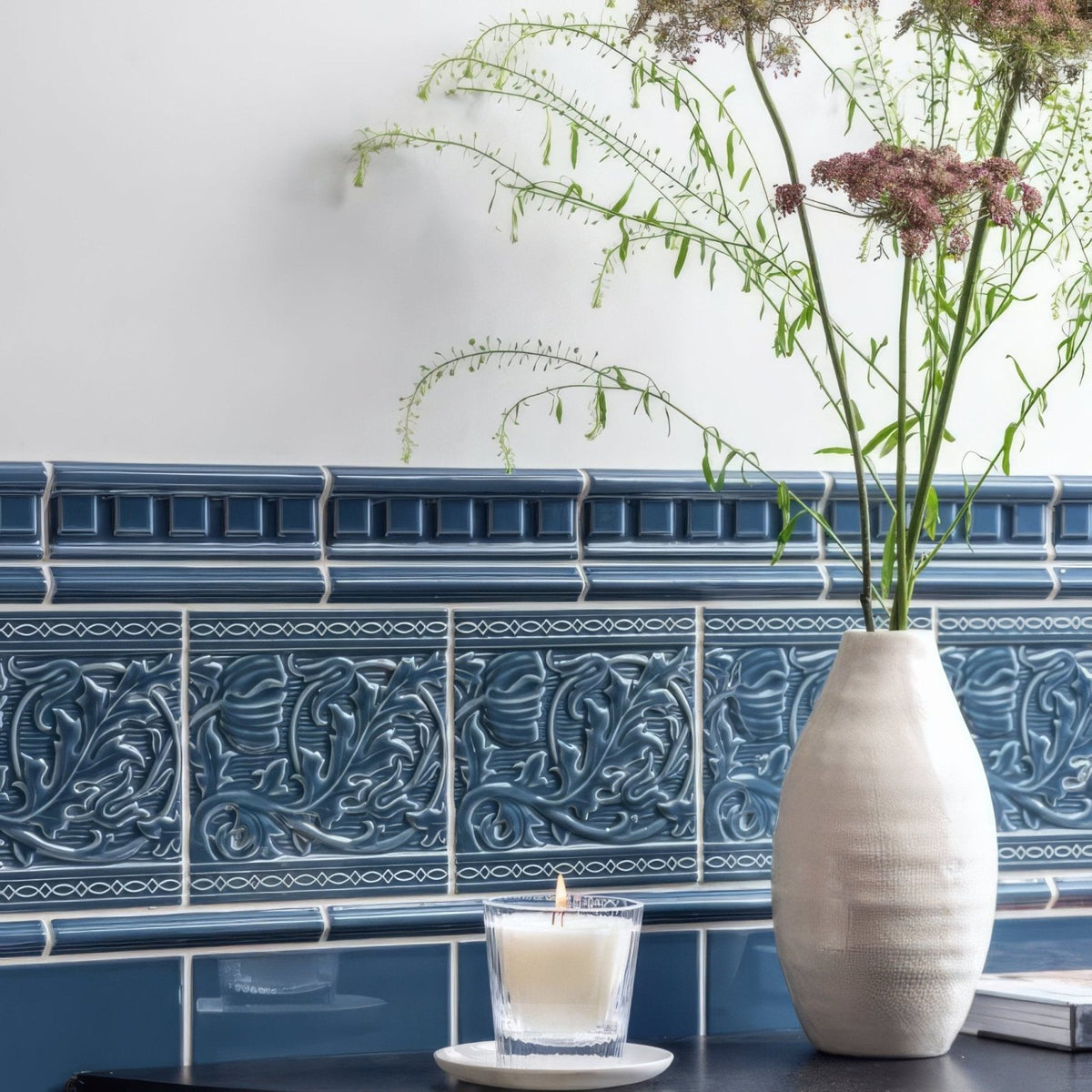
It earns its place wherever tiling changes direction or comes to a stop - rounding the edge of a reveal, closing the top of a low tiled run, or forming a slim border above a splashback. Ascot Blue suits the job, because a bead of this scale works as a line of colour rather than a feature, and a blue-grey this understated reads almost as a tone rather than a hue, so it will sit happily beneath paint, timber or paper above it.
Product specification
Product Name: Artworks Ascot Blue Astragal Moulding
Brand: Original Style
Collection: Artworks
Material: Glazed Ceramic
Finish: Gloss
Colour: Ascot Blue
Tile Size: 152 x 21mm (15.2 x 2.1cm)
Edge Finish: Moulded - half-round bead profile, straight edges
Suitability: Internal Walls — wet and dry areas
Frostproof: No — internal use only
Sealing: Not required
Sold By: The Box — 4 pieces per box, covering 0.6 linear metres
Box Weight: 0.24kg
Matching Pieces: Eighteen pieces in Ascot Blue altogether. The flat tiling comes in five sizes - metro 75 x 75mm, metro 150 x 75mm, half 152 x 76mm, large brick 228 x 75mm and field 152 x 152mm. Edges and tops are handled by the skirting tile, the plain cornice and the external corner. Then ten moulding profiles, Astragal included, complete the set: Sigma, Omega Dado, Hogarth, Albert, Victoria, Egg & Dart, Dentil, Rope and Scroll.
Samples
See the whole tile before you decide. A full-tile sample is available for this product, so you can judge the complete pattern, colour and finish in your own light.
The sample is £9.49. Sample postage from £8 per supplier. Eligible sample buyers receive a fixed £8 credit on a £50+ tile order, once per customer. This is not a refund of combined multi-supplier postage.
Use the sample option in the buying panel above to add it to your basket. Review your samples and the combined postage at checkout before paying.
Delivery
In-stock orders are dispatched within 3–5 working days, with express options available. Special-order and made-to-order ranges carry their own lead time, shown on the product page and confirmed when you order. Pallet, slab, large-format and bathware orders travel on a specialist off-load service — we confirm the timescale and book a date that suits you before dispatch.
Delivery is calculated at checkout from your order and postcode (we do not offer showroom collection) and UK delivery is free on orders over £1,000 on most ranges. For pallet deliveries please tell us about access issues in advance — low trees or bridges, narrow roads or gateways, gravel drives, or no turning or unloading space — as a re-delivery charge may apply if we cannot complete delivery.
When your order arrives
Please check your delivery as soon as it arrives. Once goods are unloaded they become the responsibility of the receiver, so if anything isn’t right, contact us within three working days and we’ll put it right quickly.
Returns
To request a return, contact Hyperion within 14 days of delivery. For eligible online consumer cancellations, you have a further 14 days after telling us to send the goods back. Contact us for the correct return address; your statutory cancellation does not depend on our authorisation.
Additional supplier returns have their own eligibility rules, charges and exclusions. These do not override statutory cancellation rights or rights for faulty goods. See our refund policy and supplier return guidance before arranging a return.
Product Frequently Asked Questions
Can Ascot Blue tiles be used in a shower or wet room?
Can I use these on the floor?
Will the colour be consistent across my order?
What adhesive and grout should I use with Ascot Blue?
Is Ascot Blue in stock, and how quickly can I have it?
How does Ascot Blue compare with the other blues in the Artworks range?
Can I see a sample before I order?
How much extra should I order for cuts and wastage?
Why does Ascot Blue look different at different times of day?
How do I finish the top of a half-height tiled wall?
The Hyperion Family Promise
Our family-run Ascot team is here to help you choose with confidence, check the practical details and plan your project.
Ask us about available samples, quantities and delivery before you commit. Returns and delivery terms depend on the product and supplier.
Installation & Care Tips
Installation & care
- Adhesive & Grout: Use white flexible adhesive. A joint beside a 21mm half-round is read as part of the profile rather than as a gap, which is worth bearing in mind when you pick the colour: a cooler grey pulls the blue up out of the glaze, a warm grey or greige lets the grey take precedence, and a close tonal match holds the balance so the light in the room can keep deciding. Brilliant white is best avoided, since it carries far more weight than the glaze does and undoes the softness of a bead. Point the two joints in one pass so they cure together, and lift any haze from the rounded face with a damp chamois before it has a chance to set hard.
- Layout: Because the section is small, set it out with care - a bead reads as one continuous line, so the joints want to be tight and the run true. Where it meets an outside corner, the matching External Corner (152 x 30mm, four to a box) is stocked alongside it.
- Cleaning: The gloss glaze is non-porous and needs no sealing. Wipe with warm water and a mild detergent; avoid abrasive pads and acidic limescale removers, which will dull the surface over time.
More like this
Explore the collection, compare your favourites and ask our Ascot team for help choosing.
If you have any questions, you are always welcome to contact us. We'll get back to you as soon as possible, within 24 hours on weekdays.
-
Our Price Promise
As an official stockist of the brands we carry, every tile is the genuine article — expertly specified and fully supported by our Ascot team. If you find the same product for less elsewhere, talk to us and we'll do our best to match it.
-
Customer Support
Chat with us live.
Call us on 01344-620211
Email us sales@hyperiontiles.com
-
Shipping Information
Once an order has been placed, goods that are in stock can normally be dispatched within 3–5 working days. Delivery of special orders, slabs, large-format tiles, some bathware and sizeable orders is best carried out on one of our specialist off-load vehicles, so timescales will be advised before any tiles are ordered. A specific delivery date will be arranged to suit you.
Express delivery: 1–2 working days.
