 BEAUTY IN EVERY DETAIL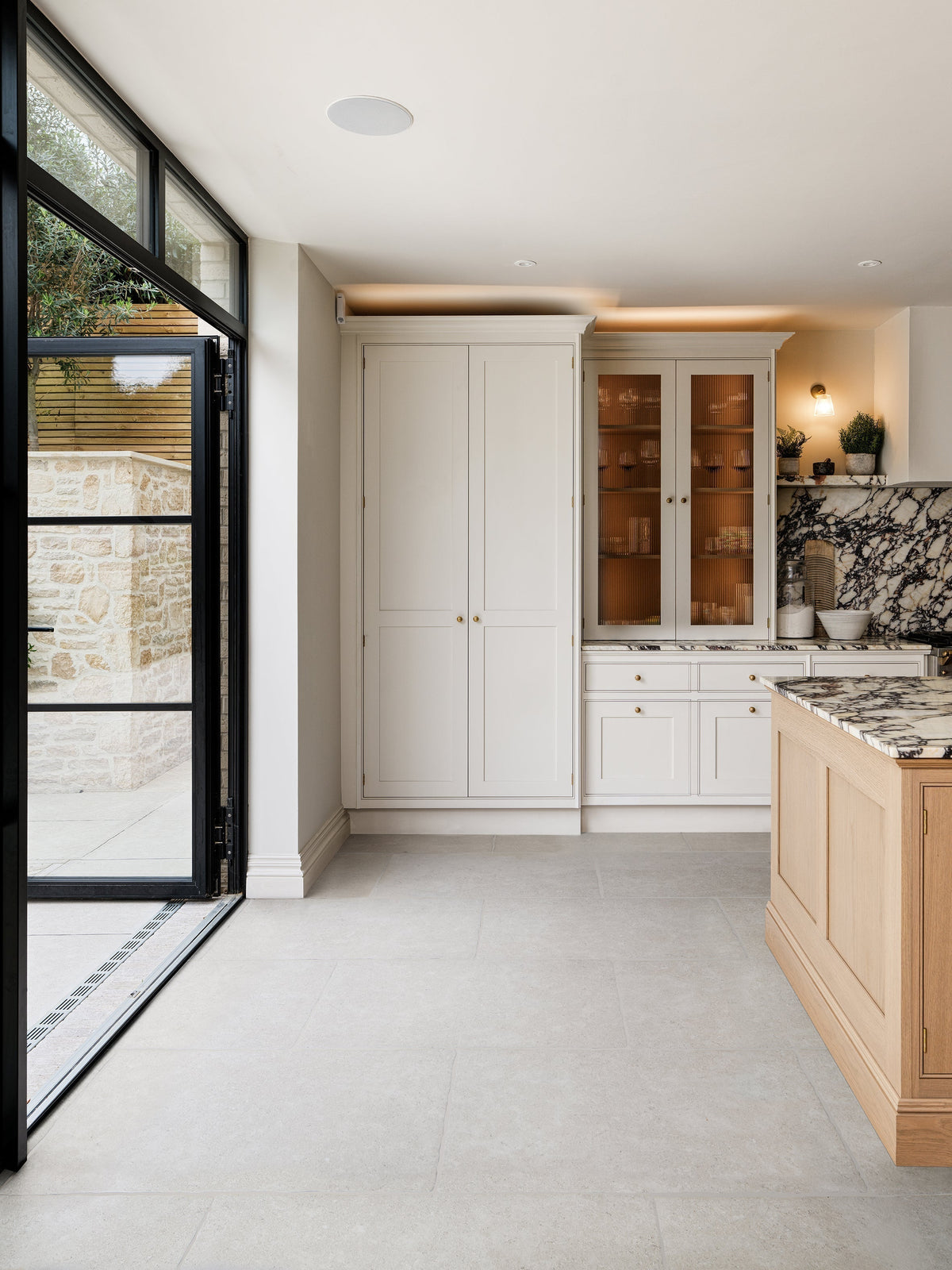
Key Points
- Floor tiles in kitchen spaces cover one of the largest visible surfaces in the room — your choice of material, colour and format directly controls how spacious, bright and practical the space feels day to day.
- Large-format porcelain floor tiles with rectified edges and minimal grout joints are among the most effective ways to visually expand even compact UK kitchens.
- Running the same kitchen floor tiles through open-plan areas and out to the patio creates seamless flow — a strategy increasingly popular in 2026 renovation projects.
- Kitchen floor tiles are durable and easy to clean, making them an ideal choice for busy households with children, pets and frequent entertaining.
- Hyperion Tiles offers porcelain, natural stone, patterned and wood effect floor tiles, plus expert advice in its Ascot showroom to help you turn inspiration into a finished scheme.
Why Floor Tiles in Kitchen Design Matter So Much
The kitchen floor is one of the largest continuous surfaces in any home, yet it is often one of the last decisions made during a renovation. That is a missed opportunity. The right floor tiles in kitchen design can make a cramped galley feel open, lift a north-facing room with warmth and light, and shrug off years of spills, grease and heavy footfall without losing their beauty.
Ceramic and porcelain tiles are popular for kitchens because they cope with moisture, work beautifully over underfloor heating, and suit every style from rustic farmhouse to sleek modern kitchen flooring. Hyperion Tiles is a specialist UK retailer based in Ascot, curating premium porcelain, ceramic and natural stone floor tiles for every type of kitchen.
1. Use Large Floor Tiles to Make Your Kitchen Feel Bigger

Create a convincing illusion of space inside and out with our Wychwood Claire Porcelain Matt (60x90cm). The large format minimises visual breaks, perfect for making compact kitchens feel expansive.
Large format tiles can create a spacious feel in kitchens by reducing grout lines and presenting a near-continuous surface. An 800×800mm or 600×1200mm porcelain slab offers far fewer visual breaks than a mosaic or small-format alternative. Rectified porcelain — precisely cut after firing — allows grout joints as narrow as 2mm, enhancing that seamless, contemporary look.
- A cream stone-effect large floor tile in a compact terrace kitchen, paired with painted Shaker units.
- A soft beige porcelain for a new-build open-plan home, flowing from the cooking zone into the dining area.
💡 Installation Tip: Very large tiles demand a level subfloor. In older properties, professional preparation is essential to avoid lippage and cracking — always budget for this before ordering.
2. Create Seamless Flow in Open-Plan Kitchen Living Spaces

Establish a seamless transition with real terrazzo for creative impact. Combine our Ca’ Pietra Rialto Terrazzo San Polo and Santa Croce Honed tiles to carry a beautiful, unified design across open-plan living areas.
Instead of changing materials between kitchen, dining and living zones, one continuous tiled kitchen floor makes the whole ground floor feel calm, cohesive and more luxurious. Take this further by continuing a stone-effect tile through bifold doors onto the patio — matching indoor and outdoor porcelain blurs the boundary between house and garden.
- Include movement joints at thresholds so the floor stays technically sound over large continuous areas.
- Choose a slip-resistant finish (R10 or R11) for the outdoor section while keeping the same colour and tone indoors.
- Think about how the floor looks from the front door or hallway — in open-plan homes the kitchen floor is visible from every other room.
3. Match Your Kitchen Flooring to the Way You Live
The best kitchen floor tiles are chosen not just for looks but for life. Sunlight levels, pets, children, cooking habits and entertaining frequency should all guide your decision.
| Lifestyle | Recommended Flooring | Why It Works |
|---|---|---|
| Busy family with children | Mid-tone stone-effect porcelain, matt finish | Hides crumbs, resists scratch and wear, easy to mop |
| Keen cooks | Stain-resistant porcelain, minimal grout joints | Copes with oil splash, grease and red wine; wipes clean fast |
| Homes with dogs | Structured porcelain or subtle wood effect floor tiles | Disguises muddy prints, improved grip when wet |
| Regular entertainers | Polished or marble-effect porcelain with underfloor heating | Reflects light, feels glamorous and cosy underfoot |
| Downsizers or holiday homes | Timeless neutral porcelain, low maintenance | Stays fresh for a decade, handles periods of low heating |
4. Don't Overlook Texture and Finish Underfoot

Prioritise texture underfoot with natural stone. Our Ca’ Pietra Wychwood Limestone Velvet provides exceptional character and a gentle, natural finish that works beautifully against rich, painted cabinetry.
- Matt porcelain: Forgiving for everyday marks, hides smudges, suitable for most kitchens.
- Satin or soft-sheen: A gentle light bounce without the maintenance demands of high polish.
- Polished porcelain: Reflects light beautifully in formal kitchens, but can be slippery when wet — pair with rugs or mats near the sink.
- Structured stone-effect: Adds texture and improves grip, ideal for zones near external doors.
Tile slip resistance is essential in kitchens with frequent spills — aim for R10 or above in working zones. Wood effect floor tiles add texture and warmth through grain patterns and knot details, softening minimalist cabinetry without the upkeep of real timber.
5. Think Beyond Grey: Warmer Alternatives for Today's Kitchens

Step away from cold grey. The warm, inviting tones of our new Bord Sand (60x120cm) porcelain tiles completely lift this space, reflecting natural light beautifully while maintaining a contemporary edge.
- Limestone-look and travertine-look porcelain in soft beige and cream — natural warmth, none of the sealing.
- Terracotta-inspired porcelain in muted clay tones, equally at home in rustic country kitchens and urban apartments.
- Warm brown stone-effect floor tiles and soft cream marble-effect designs for homeowners who want a light kitchen floor with a gentler tone than pure white or blue-grey.
Choose lighter shades for modest-sized rooms to brighten them — a principle that holds especially true in north-facing kitchens where daylight can be limited in winter. Pairing warm stone-effect floor tiles with oak cabinets creates a classic family kitchen, while combining them with handleless white units stops a minimalist scheme from feeling cold.
6. Coordinate Kitchen Floor Tiles with Cabinets and Worktops

Coordinate warm cabinetry with organic textures like our Medina Raw Rectangle Handmade Moroccan Zellige. The careful pairing of timber and handcrafted terracotta creates a holistic, inviting atmosphere.
- Shaker kitchens: Soft stone-effect or wood-effect floor tiles in warm neutrals complement painted doors in shades like off-white, pale grey or French navy.
- Handleless contemporary kitchens: Large-format porcelain in concrete or marble-effect finishes enhances sleek, clean lines.
- Dark navy or charcoal cabinetry: Light or mid-tone kitchen floor tiles prevent the room from feeling enclosed.
- Sage green kitchens: Warm beige stone-effect tiles or subtle wood-look planks reinforce a calm, organic palette.
- Oak or walnut cabinets: Balance wood-effect floor tiles carefully so grains and tones harmonise rather than clash.
💡 Showroom Tip: Bring cabinet door samples and worktop swatches when visiting Hyperion Tiles so combinations can be checked under showroom lighting. What looks perfect on a phone screen can shift dramatically next to real furniture and finishes.
7. Use Patterned Kitchen Floor Tiles with Careful Intention

Use pattern carefully to create dedicated zones. Our beautiful new Star Sand (20x20cm) porcelain tile acts like an intentional rug layout, grounding the dining space without dominating the entire room.
- Beneath a kitchen island to create a “rug” effect.
- Inside a concealed pantry or larder for a moment of surprise.
- In a boot room or utility room connected to the main kitchen floor, allowing pattern to make a statement without dominating the cooking zone.

Introduce moments of surprise in transitional spaces. Our new botanical-inspired Tahoe Canem Decor Five (20x20cm) adds incredible character to spaces leading out to patios or in connected utility rooms.

For a more subtle pattern that still brings dynamic energy, our Frammento Multi Terrazzo Effect Porcelain pairs perfectly with deep, bold cabinet colours.
8. Plan for the Future: Timeless, Durable Kitchen Floor Tiles
Kitchen floor tiles face daily wear and tear, so think at least ten to fifteen years ahead. A tile’s PEI rating indicates its durability against foot traffic and impacts — domestic kitchens should aim for PEI 3 or above. Porcelain delivers outstanding durability: high resistance to scratch marks, stains and fading, making it the ideal option for long-term family homes and holiday properties.
Choose timeless colours — soft neutrals, warm stone effects and classic wood tones — that will complement different cabinet colours if you refresh the kitchen later. A well-installed, neutral tiled kitchen floor adds resale appeal in the property market, often perceived by buyers as a “ready to enjoy” feature.
💡 Longevity Tip: Hyperion Tiles can advise on ranges with strong long-term availability, making it easier to source extra tiles for future extensions or repairs — always order 10% more than your measured area to account for cuts and future replacements.
9. Pay Attention to the Small Details for a Premium Finish
- Grout colour: Closely matched grout creates a seamless, larger-looking floor. Contrasting grout emphasises patterns like herringbone or chequerboard. Choose an epoxy or high-quality flexible grout in high-traffic kitchens.
- Tile direction: Straight lay reads as calm and orderly; brick bond adds subtle interest; herringbone brings energy to wood-effect planks.
- Thresholds: Slim, colour-matched trims or recessed profiles look far more refined than bulky metal bars between the kitchen and any adjoining room.
- Skirting details: Matching tile skirtings give a sleek, contemporary look, while painted timber skirting suits more traditional schemes.
10. Visit a Showroom and Order Samples Before You Decide
Screens cannot reliably convey true colour, texture or scale. At the Hyperion Tiles showroom in Ascot, you can compare porcelain, stone-effect and wood effect tiles under realistic lighting. Bring cabinet doors, worktop samples, paint charts and measurements so staff can help mock up combinations for your specific layout.
- Order physical samples to view at home at different times of day.
- Lay samples on your existing tiles or subfloor to judge scale and tone.
- Check how the tile looks from adjoining rooms — especially in open-plan designs.
- Ask about slip ratings, underfloor heating compatibility and adhesive recommendations for your subfloor type.
Five Designer Tips for Choosing Floor Tiles in Kitchen Spaces
- Take samples with you. Bring cabinet doors, worktop offcuts and paint swatches when comparing tiles — undertones that look fine alone can clash next to real finishes.
- Check tiles in different lights. Place samples in daylight and under evening artificial light. LED colour temperature (warm vs cool) can completely change how stone-effect and wood effect tiles appear.
- Stand back and view from other rooms. Walk into the hallway or garden and look at the floor from a distance. In open-plan homes the kitchen floor is highly visible, so it must work from every angle.
- Be honest about cleaning. If you rarely mop, avoid very dark or very white finishes that show every mark. Mid-tones in a matt or satin finish are the ideal choice for busy households with pets.
- Prioritise longevity over trends. Use highly fashionable colours in changeable elements like paint, textiles and accessories. Keep the floor classic and neutral — it will reward you for years.
Investing in the Right Floor Tiles for Your Kitchen
Thoughtfully chosen floor tiles in kitchen spaces make rooms feel larger, brighter and more practical, while supporting the way your household lives day to day. Combining large-format porcelain, carefully considered textures, warm colour palettes and well-planned details creates modern kitchen flooring that will look current well into the 2030s.
Explore our huge range of porcelain, natural stone, marble-effect, wood-effect and patterned kitchen floor tiles, available to view online and in the Ascot showroom. Order free samples, book a showroom visit, or speak to the team for tailored recommendations for your next kitchen project.
Share:
Bathroom Tiles: 12 designer secrets for creating a design that lasts
Flooring tiles for your bathroom: The complete guide to choosing stylish, durable floors