


Key Points
- Tiles around a bath do far more than protect surfaces - they define the bathing zone and can enhance the aesthetic appeal of the entire room.
- The best bathroom tiles for a bath depend on the bath type, room size and the mood you want to create, from dramatic dark feature walls to calm tonal schemes.
- Bathroom tiles are usually made from porcelain, ceramic, or natural stone, each offering different benefits around a bath.
- Porcelain tiles absorb almost no water, making them ideal for wet areas right next to baths and showers.
- Hyperion Tiles offers an extensive range of premium wall tiles, floor tiles and decorative finishes through our showroom in Ascot, with nationwide delivery. You can order a sample and get expert advice to bring these ideas to life.
Should You Tile Around a Bath?

Yes - and for reasons that perfectly balance high-end style with serious practicality. Bath surround tiles rigorously protect the plaster and substrate from splashes, steam, and everyday wear. Tiles are inherently waterproof and exceptionally easy to maintain: they resist steam condensation and make cleaning significantly easier, which matters greatly in busy family bathrooms.
Furthermore, they visually define the bathing zone, helping the bath feel like a deliberate, tailored design feature rather than an appliance dropped into a room. Low-porosity materials like porcelain are strongly preferred for high-moisture zones because they shrug off water entirely rather than absorbing it. Waterproof membranes (tanking) should ideally be installed behind tiles in wet areas, and properly applied flexible adhesive, silicone, and high-grade grout will prevent leaks without turning your project into a headache down the line. Professional installation typically adds £40 to £70 per sqm, but the long-term protection is well worth the investment.
Slip resistance ratings of R10 or R11 are ideal for bathroom floors directly adjacent to the bath to prevent accidents. We can actively advise on suitable porcelain tiles, classic ceramic options, and waterproof decorative wall panels for different levels of water exposure in your specific bathroom.
10 Ways to Use Bathroom Tiles Around Your Bath
We have carefully curated ten concrete, designer-approved styling ideas specifically focused on the bath area. Whether you are shopping for freestanding bath tiles, shower bath tiles, tiled bath panels, or searching for inspiration for a small bathroom, the following ideas cover a broad range of aesthetics and budgets.
1. Create a Statement Wall Behind a Freestanding Bath
 Create a striking feature wall behind your tub using our National Trust Wightwick Ceramic Emerald 10 x 30cm tiles. Formed from high-quality ceramic with a rich gloss finish, our tiles deliver unmatched heritage character.
A full-height wall of bathroom wall tiles running directly behind a freestanding bath instantly anchors the room. Also consider large-format marble-effect porcelain in a Calacatta-style white with bold grey veining, or opt for textured porcelain with fluted, ribbed, or 3D relief finishes that add sophisticated depth without relying on bold colour. Marble effect tiles can exceed £40 per sqm, and the visual payoff is immense. Keep your floor tiles discreet so the eye is naturally drawn straight to the bath and its stunning backdrop.
2. Match the Bath Wall to the Floor
 Layer subtle, organic textures around your bathing space with our Nusa Taupe Botanic Decor 25 x 25cm. Made from dense porcelain with a soft matt finish, our tiles offer a restorative, spa-like sanctuary that flows seamlessly.
Running the same porcelain tiles or same collection across the bathroom floors and straight up the wall behind the bath creates an incredibly seamless, spa-like feel. A soft beige stone-effect tile in a matt finish works beautifully with underfloor heating and everyday barefoot traffic. This approach can visually elongate a smaller room and perfectly suits low-profile built-in baths paired with minimalist brassware. A normal bathroom floor should have an R10 slip rating at least - always check product pages for suitability before using the same collection on both surfaces.
3. Use Contrasting Tiles to Frame the Bath

Choosing entirely different tiles behind the bath compared with the rest of the room frames the tub exactly like a picture. Try light concrete-effect floor tiles with brightly patterned wall tiles behind the bath, or warm wood-effect planks on the floor paired with pale, reflective marble-effect bathroom walls. This contrast can come from colour, tile size, or laying pattern - such as vertical stack versus traditional brick bond - not just dark versus light.
4. Tile the Bath Panel

For fitted and built-in baths, tiling the actual bath panel helps the tub feel beautifully integrated with the bathroom floors and walls rather than like a cheap, bolt-on acrylic fixture. A purpose-built, tile-ready panel system (such as waterproof backer board) is absolutely essential - not all standard panels can support the weight of tiling. Run the same tile from the floor directly up the bath panel for a monolithic look, or use a patterned tile on the panel with plain surroundings for subtle, bespoke character. We can advise on suitable substrates and tile formats for bath panel tiles, especially when working with large-format porcelain.
5. Take Tiles from Floor to Ceiling
Full-height tiling behind the bath heavily suits contemporary, hotel-inspired spaces. Large-format tiles dramatically reduce the number of grout lines and create a much cleaner appearance, making ceilings feel higher and actively wrapping the bather in a seamless, protective surface. Picture floor-to-ceiling stone-effect tiles sitting behind a sleek freestanding bath, paired perfectly with brushed bronze fixtures. In a very small bathroom, it is wise to keep the side walls slightly lighter or simply painted to avoid the space feeling too enclosed.
6. Add a Decorative Border or Trim

Decorative borders, classic dados, and pencil trims add immense detail without forcing you to commit to fully patterned walls. Place a horizontal mosaic border right at the top of a half-height tiled surround, or meticulously frame the bath outline with slim pencil trims in brushed brass, polished chrome, or matt black. This precise approach suits classic or transitional bathrooms where historic mouldings and panelling are already part of the wider architectural design.
7. Create a Half-Height Tiled Bath Surround
Tiles running from the floor to roughly 1.2 metres high around the bath, finished with moisture-resistant paint or bathroom-safe wallpaper above, strike a perfect balance between practicality and design flexibility. Pair crisp white metro tiles with deep navy blue paint, or use warm stone-effect tiles grounded by botanical wallpaper. Installing a slightly deeper tiled ledge at the top of the surround offers practical space for candles, trailing plants, or bath products - an incredibly easy way to add a sense of luxury and comfort.
8. Use Small-Format Tiles for Curves and Skinny Metro Tiles for Detail

Mosaics and small-format tiles are highly ideal for curving around awkward bath panels, ascending steps, or lining built-in shower niches. Fan-shaped mosaics wrapping fluidly around a rounded bath front, or 50 × 50 mm porcelain mosaics detailing a ledge behind the tub, introduce subtle pattern without overwhelming compact areas. Mosaic tiles also provide exceptional extra slip resistance due to the much higher frequency of their grout lines. Choose mesh-mounted sheets explicitly designed for wet areas and pick a grout colour that perfectly complements the tile.
For a subtle yet stylish way to introduce pattern and texture, consider laying skinny metro wall tiles in a herringbone format. The slim proportions of these tiles create a more delicate take on the classic herringbone design, adding visual interest without overwhelming the room. Use them across a feature wall, within a shower enclosure or as a statement splashback, and consider contrasting grout to emphasise the pattern. For a more refined, seamless look, choose a grout shade close to the tile colour. This versatile layout works beautifully in both contemporary and traditional bathrooms, bringing an extra layer of detail and personality to your space.
9. Go Dark and Dramatic

Deep, highly saturated tiles situated behind a pristine white or pale stone bath create incredible dramatic contrast and a deeply intimate atmosphere. Explore rich colours such as charcoal, deep navy, or forest green in matt or soft satin finishes - remember, textured finishes on tiles naturally improve slip resistance in bathrooms while adding brilliant visual depth. Dark tiles work especially well with warm metallic taps, dimmable wall sconces, and natural materials like solid timber stools. In a small bathroom, you can confine the darkest tiles to the immediate bath area and keep the rest of the room lighter to prevent it from feeling cave-like.
10. Keep It Subtle with Tonal Tiles
Using tiles in slightly different tones of the exact same colour family creates a beautifully calm, layered look. Pale grey floor tiles flowing into mid-grey bath wall tiles, or warm cream stone-effect tiles on the floor transitioning into slightly deeper beige behind the bath - this subtle variation suits bathrooms that need to feel immensely restful and timeless. Order several tile samples from us to accurately compare the tones under your actual bathroom lighting before you make your final purchase.
What Style of Tile Works Best Behind a Bath?
Several distinct styles work beautifully around a bath; the choice should ultimately match the exact mood you want to create within the space.
| Style | Effect | Best for |
|---|---|---|
| Marble-effect porcelain | Luxurious, hotel-like | Elegant, light-filled bathrooms |
| Stone-effect | Calm, spa-like | Warm, natural, restorative schemes |
| Handmade-look / Zellige | Characterful, highly tactile | Period homes, eclectic & rustic interiors |
| Patterned (encaustic, geometric) | Bold, personality-driven | Feature panels, tiling bath panels, focal walls |
| Textured (fluted, 3D relief) | Depth without strong colour | Neutral contemporary rooms & tactile showers |
| Large-format porcelain | Sleek, minimal, monolithic | Modern, space-maximising designs with low maintenance |
Ceramic tiles generally cost between £14 and £20 per sqm, while high-density porcelain tiles typically range from £20 to £40+ per sqm. Ceramic tiles are significantly lighter and easier to cut than porcelain tiles, making them highly practical for simpler wall projects. Natural stone tiles like marble need sealing every 12 to 18 months, and regular maintenance is absolutely crucial for long-lasting results. Ceramic and porcelain tiles, however, do not require any sealing, which makes them far easier to maintain over their lifespan. Gloss finishes in tiles effectively reflect light and can brighten compact spaces, while matt and satin finishes are excellent for hiding dried water spots. Discover more in Hyperion's extensive guide to which tiles are best for the bathroom.
Should Your Bath Tiles Match Your Floor?

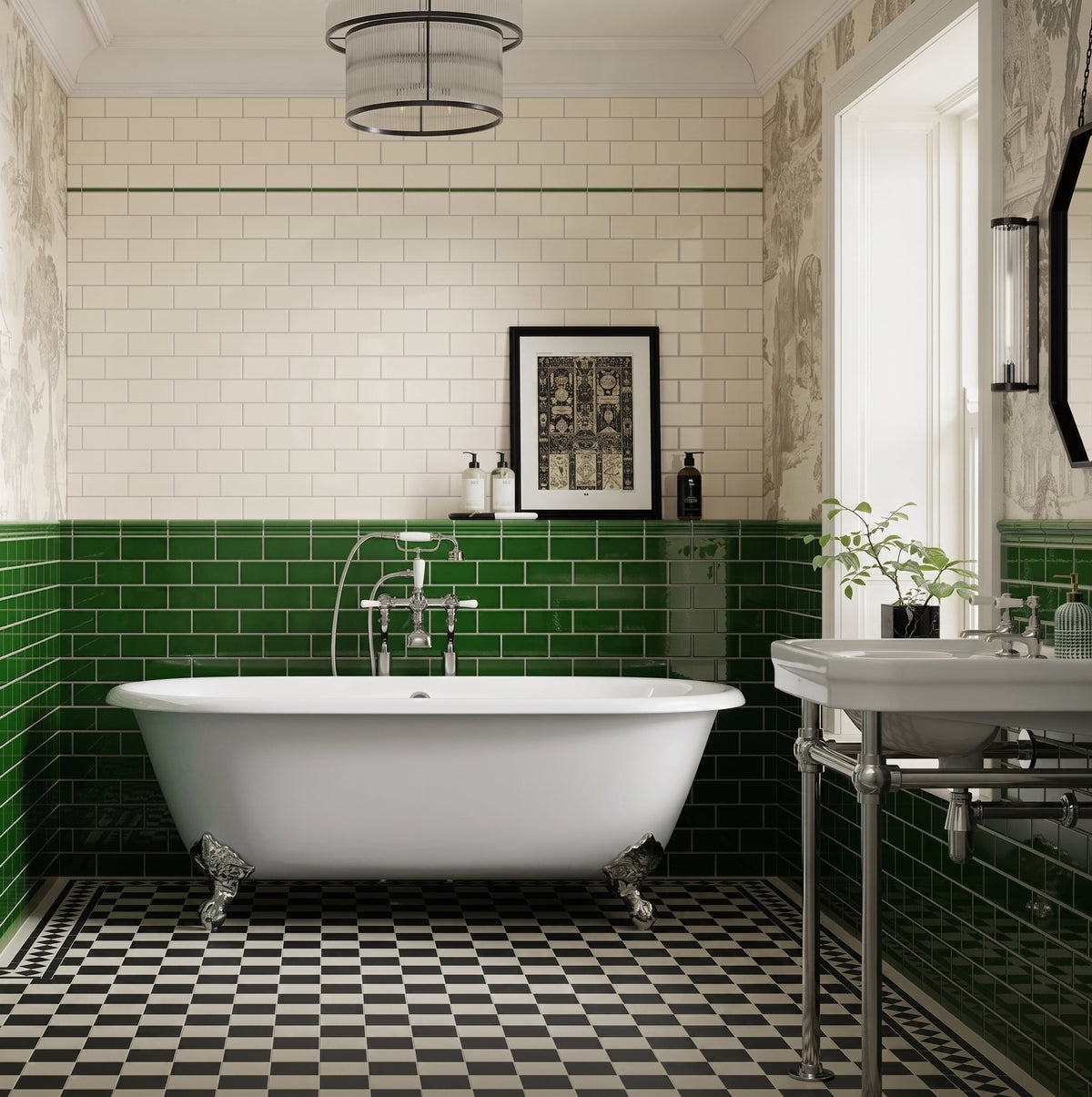
Design an opulent half-height surround using our new Windsor Balmoral Green 7.5 x 15cm tiles topped with Windsor Antique White. These are our tiles engineered from traditional ceramic with a deep, historical gloss finish that perfectly grounds a freestanding tub.
There is no single hard-and-fast rule. However, three main approaches work exceptionally well:
- Match: Use the exact same porcelain tiles on your bathroom floors and the bath wall for a seamless, spa-inspired effect - pale greige stone-effect tiles flowing under a crisp white freestanding bath with brushed nickel taps, for instance.
- Coordinate: Use related colours but in different sizes or finishes. Matt stone-effect floor tiles paired harmoniously with much smaller, glossy subway tiles in a slightly deeper beige add essential interest without creating a clash.
- Contrast: A highly patterned or deeply dark tile behind the bath set against much quieter floor tiles turns the bath wall into a highly deliberate feature - think light grey concrete-effect flooring contrasting with a navy herringbone wall and matching black accessories.
Don't Forget Grout and Trim
Grout colour and edge trims are relatively small details that pack an outsized visual impact. Matching your grout directly to the tile creates a much softer, highly seamless appearance; conversely, using contrasting grout heavily emphasises the tile's geometric shape and can look particularly striking behind a bath. High-grade, moisture-resistant and mould-resistant grout is highly recommended for these wet areas, and careful, colour-matched silicone work keeps all internal joints clean and completely watertight for much longer. Metal tile trims in brushed brass, matt black, or polished chrome beautifully cap any raw tile edges around bath surrounds, window niches, and step details. Browse Hyperion Tiles' extensive array of decorative trims and profiles to find options that perfectly suit your scheme.
How to Make Your Bath Area Feel Luxurious
Tiles are merely one part of a grander composition. Pair your beautifully tiled bath surrounds with a statement freestanding bath - such as double-ended slipper baths or sleek modern oval tubs - acting as your main focal point. Coordinate your brassware in brushed brass, antique bronze, or matt black precisely with your grout and trim colours to pull the entire aesthetic together seamlessly. Add natural timber elements like solid oak stools, rustic bath caddies, or warm vanity units to soften the hard, tiled surfaces.
Layered lighting matters immensely: install wall lights or recessed ceiling spots that gently wash down the tile textures, plus use dimmable circuits for evening soaks to create true atmosphere. Finish the space with oversized mirrors, leafy plants that genuinely thrive in humid rooms, and plush, high-quality towels. Visit Hyperion Tiles' Ascot showroom to view complete, immersive bathroom vignettes combining tiles, wall panels, and styling - it is the best way to help you discover and properly visualise the end result before you fully commit to your project.
Share:
Grey bathroom tile ideas: How to create a stylish & sophisticated scheme