


Key Points
- Long-lasting bathroom tile schemes balance mood (colour, texture) with function (slip resistance, moisture resistance, and easy maintenance).
- Designers typically limit themselves to 2–3 tile styles — for example, large porcelain floor tiles paired with a feature wall tile — to keep the look timeless.
- Colour confidence, mixed shapes, strategic focal points, and considered lighting matter more than chasing trends.
- Bathroom tiles cost between £25 and £80 per square metre, with tiling labour ranging from £80 to £130 per square metre — most homeowners spend between £800 and £1,500 on bathroom tiling.
- Hyperion Tiles supplies samples and expert advice across the UK for both wall tiles and floor tiles.
Introduction: Why Bathroom Tiles Matter More Than You Think
Choosing bathroom tiles is about shaping light, space, and mood — not simply picking a pretty white tile or a trending pattern. The right tiles can make a compact bathroom feel like a calm spa retreat, while the wrong ones can leave a room feeling cold or dated within a year. Bathroom wall tiles influence how tall and bright the room appears; bathroom floor tiles anchor the scheme and affect safety and maintenance. Professional recommendations suggest porcelain for high-traffic bathroom floors, thanks to its durable, low-porosity surface.
Hyperion Tiles is a UK specialist retailer with a showroom in Ascot, helping homeowners, designers, and developers create bathrooms they'll still love a decade from now. This article shares 12 designer-approved bathroom tile ideas, grouped into practical sections on colour, layout, focal points, texture, lighting, small-space tricks, coordination, and common mistakes.

1. Think Beyond White: Choosing a Colour Palette with Confidence
White remains a classic starting point, but modern bathroom tiles now lean towards warmer, more layered palettes that age gracefully. The real design shift is towards warm neutrals: greige, oatmeal, sand, and stone tones replacing the cool greys that dominated recent years. Tile colour influences room brightness — light colours open up small spaces, while earth-inspired shades such as clay, terracotta, and soft taupe add warmth as feature tiles behind a vanity or around a freestanding bath.
Deep green tiles — olive, forest, bottle green — and soft blue tiles create a spa-like feel, especially paired with brushed brass fittings. Even pink tiles and warm orange accents work beautifully in guest cloakrooms where bolder taste suits a smaller room. When using white, opt for warm-white rather than icy-white and consider coloured grout for definition.
Colour combinations to try:
- Clay-toned wall tiles with chalky white floor tiles.
- Deep green herringbone wall with pale stone-look porcelain floor tiles.
- Order samples from Hyperion Tiles and view them under daylight and evening lighting — colours shift dramatically.

2. Mix Tile Shapes for a Bespoke Designer Finish
High-end bathroom tile design is less about loud patterned surfaces and more about interesting shapes and scale. Large format tiles can create a seamless look — a 1200 × 600mm porcelain slab reduces grout lines, and fewer grout lines generally result in less maintenance. Pair these with a mosaic niche for intricate contrast. Mosaic tiles offer extra traction due to their high density of grout lines, making them practical for shower floors.
Slim "Kit Kat" finger tiles laid vertically in a shower recess deliver a sleek, modern finish. Hexagon tiles suit floors or feature panels — keep colours tonal (soft grey or muted green) so the shape does the talking. Herringbone and chevron layouts add movement with plank-style porcelain, while vertical stack bond creates contemporary height and basketweave offers subtle pattern underfoot.

3. Create Focal Points Instead of Tiling Every Wall
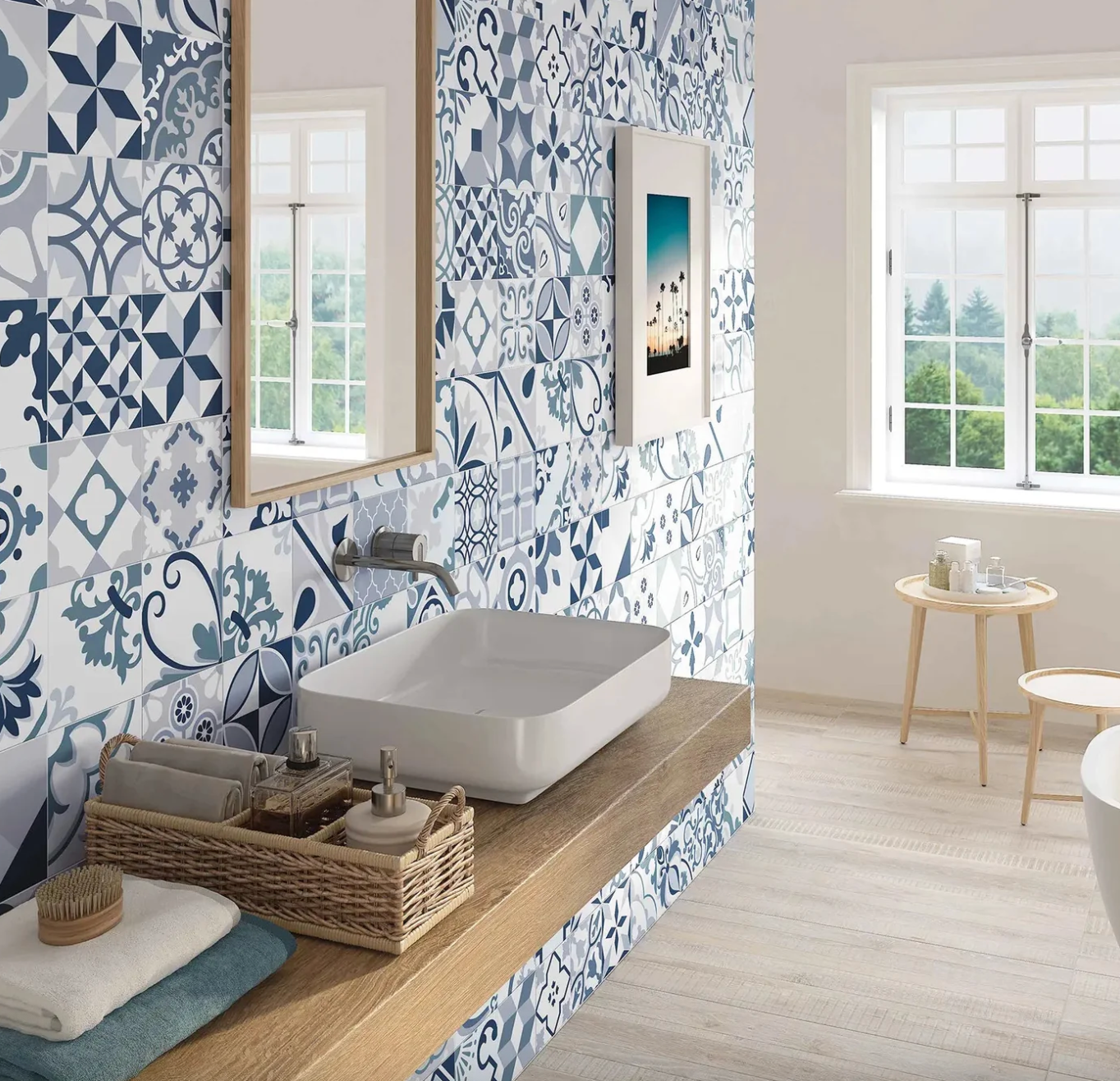
Many luxury bathrooms use tiles selectively, creating focal points rather than covering every surface. A tiled feature wall behind the vanity, a statement shower enclosure with contrasting wall tiles, or a tiled backdrop to a bath — these create depth without overwhelming the room.
Waterproof tiles are essential for wet and steamy bathroom areas, but dry zones can be covered with waterproof wall panels or paint above a half-height tiled wall (around 1200mm). Tiled alcoves and niches — fully lined with a contrasting mosaic or darker shade — frame toiletries and add visual interest.

4. Texture Is Becoming as Important as Colour
Bathroom tile trends have shifted away from flat, high-gloss finishes towards tactile surfaces that catch light and shadow. Fluted and ribbed tiles on a feature wall behind the mirror make ceilings feel taller. Handmade-look ceramic tiles and zellige-inspired finishes offer gentle variation in glaze — use them on smaller areas so their character shines without becoming busy.
Matt textures and natural stone-effect porcelain bathroom tiles echo marble, limestone, or terrazzo, often proving easier to maintain than real natural stone in busy family bathrooms. Combining textures effectively: pair a soft-matt stone-look floor with a slightly glossy handmade-style wall tile to keep the room from feeling flat.
Design Tip: Natural stone tiles require specific cleaners to avoid damage — porcelain alternatives offer similar beauty with far greater practicality for busy family bathrooms.

5. How Lighting Changes the Appearance of Bathroom Tiles
Lighting can completely change how bathroom tiles look. North-facing UK bathrooms benefit from warmer tiles, while south-facing rooms handle cooler grey or crisp white comfortably. Glass tiles are non-porous and reflect light beautifully, but can be slippery — consider glass mosaic on walls rather than floors.
Glossy tile finishes can show water spots and fingerprints more easily than matt finishes, so gloss works best on wall tiles and splashes rather than floors. Matt bathroom floor tiles reduce glare and improve slip resistance. Concealed LED strips inside niches pick up texture on fluted or zellige-style tiles, adding atmosphere after dark.

6. Small Bathroom? Use Clever Tile Tricks
In a small bathroom under 4m² — common in Victorian terraces and modern flats — every tile choice affects how spacious the room feels. Running the same tiles across walls and floor, or at least keeping them in a similar tone, blurs boundaries and visually expands the space. Floor-to-ceiling tiling on key walls draws the eye upward.
Large-format porcelain tiles with minimal grout lines reduce visual clutter. For shower floors, small-format tiles improve grip and drainage — look for R10 slip resistance or higher on any bathroom floor tile. Horizontal layouts can widen a narrow room, while vertical stack bond makes low ceilings seem taller.

7. Coordinating Bathroom Tiles with Brassware and Furniture
A cohesive bathroom comes from coordinating tiles with taps, shower fittings, and furniture. Matt black fittings look striking against pale stone-look tiles; brushed brass is beautiful with warm neutrals and deep green tones; classic chrome works with timeless classics like plain white metro tiles.
Pair timber-effect vanity units with stone-effect porcelain floor tiles for warmth. Grout matters too: matching grout to tile creates a seamless, sleek finish, while contrasting grout (soft grey with white tiles) adds graphic definition that echoes dark or metallic fittings.
Design Tip: Put together a mini mood-board with our samples, brassware swatches, and cabinet finishes before committing — the Ascot showroom offers expert guidance for exactly this.

8. Designer Mistakes Worth Avoiding
Avoiding pitfalls is as important as following inspiration when investing in bathroom tiles expected to last your bathroom's life. Here are the most common errors:
- Choosing everything from one range — this can feel flat. Mix formats and textures within a controlled palette for a bespoke style.
- Overusing feature tiles — bold patterned tiles on every surface date quickly. Reserve strong patterns for one wall or the floor only.
- Ignoring lighting — specifying tiles before planning light positions leads to spaces that feel too dark or uncomfortably bright.
- Forgetting grout — stark white grout with busy tiles looks fussy. Mid-tone grout ages better, is easier to maintain, and hides everyday wear.
- Chasing short-lived trends — consider your property's architecture, existing tiles in adjoining rooms, and long-term resale value.
- Skipping samples — always buy 10% extra tiles to account for cuts and potential future repairs, and order samples before committing.

Bathroom Tiling Costs at a Glance
| Tiling Element | Estimated Cost Per Square Metre | Typical Homeowner Total Spend |
|---|---|---|
| Bathroom Tiles (Material) | £25 to £80 | £800 to £1,500 |
| Tiling Labour | £80 to £130 |
Conclusion: Designing a Bathroom You'll Love for Years
Timeless bathroom tile design blends colour confidence, thoughtful layouts, considered texture, and smart lighting into a cohesive scheme that suits your life. Whether you need low-maintenance porcelain for a busy family bathroom or tactile finishes and subtle feature areas for a spa-style sanctuary, the key is careful planning with the right materials.
Order samples, sketch simple layouts, and create mood-boards before committing. Explore our full collection online or visit our Ascot showroom for in-person expert advice, free samples, and installation knowledge across the UK.
Share:
Kitchen wall tiles: How to create a stylish, practical space