 BEAUTY IN EVERY DETAIL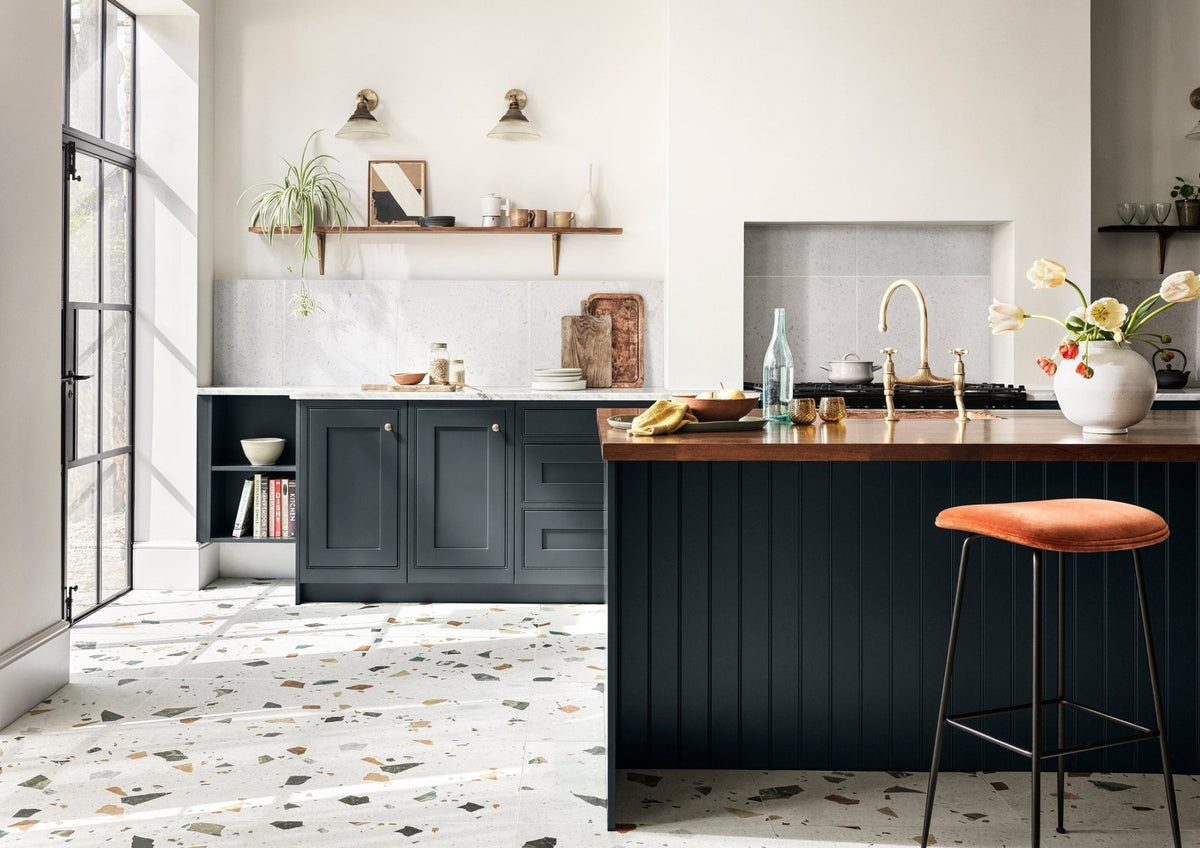
How to update your kitchen floor
with tile style & durability
 Our Cabana Porcelain Sicily kitchen floor tiles showcase bold pattern and Mediterranean influence to add personality underfoot.
The kitchen remains the hardest-working room in any home. From morning coffee spills to evening dinner prep, your kitchen floor endures more daily punishment than any other surface. That’s precisely why flooring tiles for kitchen spaces must strike the perfect balance between style, durability, and safety.
A tiled kitchen floor, correctly specified and installed, can last 15 to 25 years or more. This makes your choice of floor tile one of the most significant long-term design decisions you’ll make during a renovation.
In this guide:
Key points
- Durability: Porcelain is typically the best all-round choice for UK kitchens due to exceptional durability and low porosity (<0.5% water absorption).
- Safety: Look for R10 or R11 rated tiles for essential slip resistance in busy family kitchens.
- Trends: Spring trends include large-format porcelain, stone/wood effects, and patterned feature zones.
- Performance: Professional installation and underfloor heating compatibility are critical for long-term performance.
Introduction: why flooring tiles matter in your kitchen
 Our Nina Campbell La Moulade Chocolate tiles combine rich hues with timeless pattern for elegant, inviting kitchens.
In modern UK kitchen design, where open-plan living and breakfast islands have become the norm, flooring plays a crucial role in visually zoning these multi-functional spaces. The right floor tiles can create a sense of flow between cooking, dining, and living areas.
At Hyperion Tiles, we specialise in premium porcelain, ceramic, natural stone, wood and wood effect floors. Throughout this guide, you’ll discover how to choose the right materials for your lifestyle and explore practical installation tips.
Top kitchen flooring tile trends now

Spring and summer 2026 bring a fresh wave of design direction to UK kitchens. We’re seeing a shift towards warmer neutrals, tactile textures, and nature-inspired palettes.
- Large-format porcelain: Tiles in 600x600mm and 600x1200mm sizes create seamless surfaces with fewer grout lines.
- Stone effect porcelain: Limestone, terrazzo, and marble effects deliver organic beauty without the maintenance of real stone.
- Wood effect planks: Capture the warmth of wood while being water-resistant and scratch-proof.
- Patterned tiles: Geometric and Victorian-style patterns are perfect for defining feature zones.
How to choose the best flooring tiles for your kitchen

Material choice should be led by how you use your kitchen. Here’s a quick comparison:
| Material | Best For | Key Benefits |
|---|---|---|
| Porcelain | High traffic, families | Dense, water-resistant (<0.5% absorption), scratch-proof. |
| Ceramic | Lighter use, walls | Cost-effective, easier to cut, endless colours. |
| Natural Stone | Luxury aesthetics | Unmatched beauty. Requires sealing and maintenance. |
Natural stone options
 Our Metropolitan Slate Parquet Riven Finish tiles recreate natural slate with a practical porcelain finish.
For luxury projects, natural stone tiles like limestone, marble, travertine, and slate deliver unmatched organic beauty. However, they require sealing to prevent stains.
Slip resistance matters
 Our Frammento Multi Terrazzo Effect Porcelain Tile offers a contemporary look with a durable matt finish.
Look for tiles with R10 or R11 slip ratings. Matt and lightly textured finishes provide security underfoot in busy kitchens without sacrificing style.
Budget considerations

Tile size, layout and room proportions

The size and layout of your tiles dramatically affect the room's feel. Large-format tiles visually expand smaller kitchens by reducing visual clutter. Plank-style layouts offer flexibility: herringbone adds interest, while straight lay creates clean lines. Consider terracotta tiles for a more rustic, textured layout.
Tile colours and patterns that work best

- Light floors: Bounce light around in small rooms (e.g., white or cream tiles).
- Mid-tones: Practical for families as they hide crumbs and dirt (e.g., grey or wood effect).
- Dark floors: Create drama and contrast in modern schemes (e.g., slate effect).
 Stylish pattern: Tree Soul Grey Chevron Matt tiles combine wood aesthetics with porcelain performance.
Co-ordinating wall tiles & feature areas

Your floor provides the foundation, but wall tiles complete the picture. Consider using matt floor tiles alongside a similar tone in your splashback tiles to create cohesion.
Practical installation tips for kitchen floor tiles
Investing in professional installation protects your material investment.
Subfloor Prep: Ensure the surface is level and structurally sound. Use backer boards or self-levelling compounds if needed.
Adhesive: Use flexible adhesive compatible with underfloor heating.
Expansion Joints: Essential in large open-plan spaces to prevent cracking.
Maintenance and care
Porcelain floors are remarkably low-maintenance.
Weekly: Vacuum/sweep and mop with a pH-neutral cleaner.
Spills: Wipe acids (wine, tomato sauce) promptly to protect grout.
Protection: Use felt pads under furniture to prevent scratching.
Styling ideas: matching tiles with cabinets and worktops
- Classic: Light stone effect tiles with white shaker cabinets.
- Modern: Concrete effect porcelain with handleless charcoal units.
- Rustic-Luxe: Warm wood effect planks with cream cabinets and brass hardware.
- Open Plan: For homes with patios, co-ordinating outdoor porcelain tiles creates stunning inside-out continuity.
Ready to find your perfect kitchen floor? Explore our full range of Kitchen Floor Tiles or visit our showrooms in Ascot and Marlow.
Share:
Tiles: Bathroom tiles ideas & options for every home
Marble with bathroom tiles: how to create a designer look