 BEAUTY IN EVERY DETAIL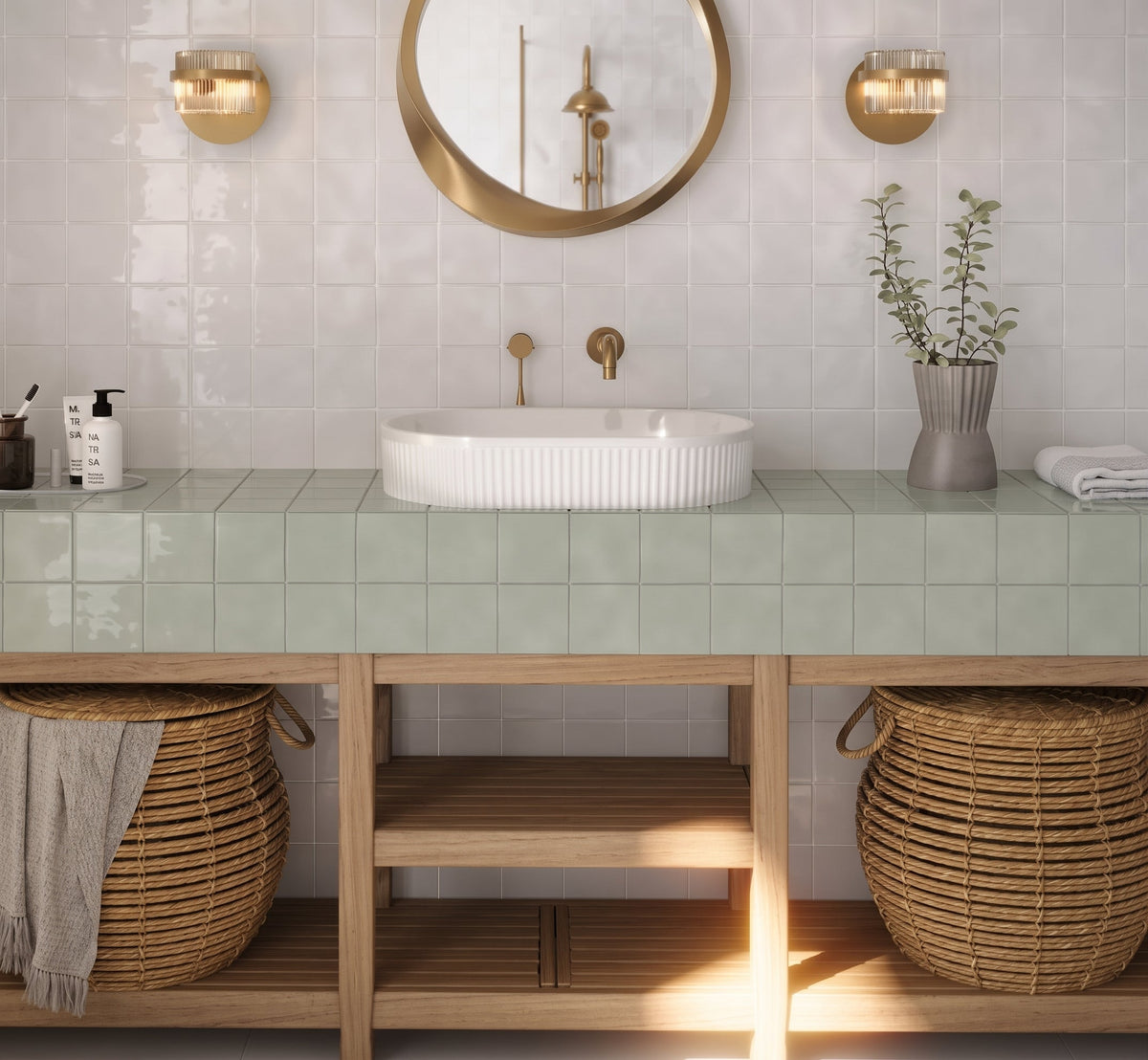
The biggest bathroom tile ideas for 2026 lean into warm neutrals, tactile natural stone, terrazzo-effect porcelain and confident colour, with large-format slabs and micro-mosaics both having a moment. Whether you want a calm spa-like retreat or a bold statement bathroom, the trend is towards fewer, better-chosen tiles used with intention rather than a mix of everything at once.
Key Points
- Warm neutrals, tactile stone, terrazzo-effect porcelain and confident colour lead bathroom tile trends for 2026.
- Large-format tiles reduce grout lines, while mosaics work best as focused features.
- Porcelain is the most practical all-round choice; natural stone adds unique character but needs sealing.
- Tile colour, finish and layout should be chosen together to suit the room’s light, size and everyday use.
We've pulled together 50 bathroom tile ideas for 2026, grouped by trend, colour, material and layout, so you can find a direction that suits your space and budget.
What are the top bathroom tile trends for 2026?
These are the directions we're seeing most in 2026 bathroom designs:
- Warm, honed natural stone over glossy finishes
- Terrazzo-effect porcelain for a softer, speckled look
- Large-format slabs to minimise grout lines
- Micro-mosaics as a feature rather than a whole room
- Marble-effect porcelain in bold, veined colourways
- Curved and Crittall-style black grid detailing
- Deep, saturated colour on walls and floors alike
- Textured, tactile finishes you can feel as well as see
- Chequerboard floors in soft, muted tones
- Handmade terracotta for warmth underfoot

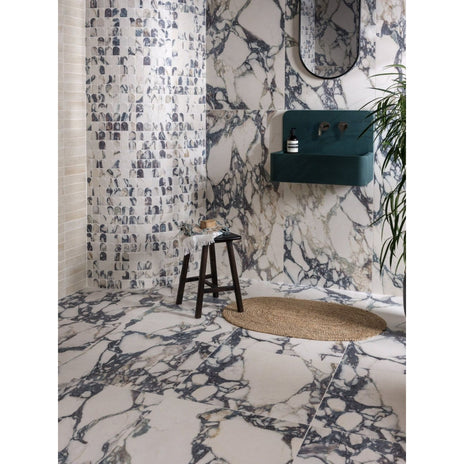
For a bathroom with a touch of luxury, marble-effect porcelain makes an elegant choice. Our Ca' Pietra Savoy Novo combines dramatic Calacatta Viola-inspired veining with a sophisticated matt finish, while the generous 60 x 60cm format creates a clean, contemporary look. These porcelain tiles are suitable for both bathroom walls and floors.
Which colours work best for bathroom tiles in 2026?
Colour is doing a lot of the work in 2026 bathrooms. Popular choices include:
- Warm white and soft cream for a timeless base
- Taupe and warm greige for a cosier neutral
- Sage and forest green for a calming, natural feel
- Charcoal and soft black for drama in smaller doses
- Terracotta and rust tones for warmth
- Dusky blue and petrol for a moodier scheme
- Marble-veined neutrals that read as almost plain from a distance
- Two-tone chequerboard combinations for playful floors

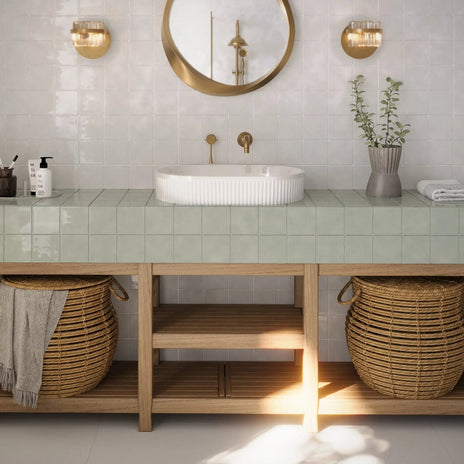
Soft sage green brings a calming, nature-inspired feel to bathroom walls. With its classic 10 x 10cm format, gloss finish and subtle zellige-inspired variation, our Waxman Ceramics Remy Sage Square adds character and gentle movement while working beautifully with warm woods, brass and neutral sanitaryware. Made from durable glazed ceramic, it is designed for internal walls.
Which tile materials suit a bathroom best?
Material choice affects look, feel, water resistance and budget. Here's how the main options compare:
| Material | Water resistance | Durability | Typical cost | Best for |
|---|---|---|---|---|
| Porcelain | Excellent | Very high | £–££ | Floors, walls, wet rooms and showers |
| Marble | Good (needs sealing) | Medium–high | ££–£££ | Feature walls and low-traffic floors |
| Limestone | Good (needs sealing) | Medium | ££ | Honed floors and calm neutral schemes |
| Slate | Excellent | High | ££ | Shower floors and dark feature walls |
| Terracotta | Fair (needs sealing) | Medium | ££ | Warm-toned floors in period homes |
More ideas by material:
- Honed marble for a soft, non-reflective finish
- Tumbled limestone for an aged, characterful look
- Riven slate for grip and texture on shower floors
- Handmade terracotta hexagons for period bathrooms
- Polished porcelain for a brighter, light-bouncing scheme
- Matt porcelain for a contemporary, non-slip finish
- Stone-effect porcelain where real stone isn't practical
- Mixed materials, such as a stone floor with porcelain walls, for contrast

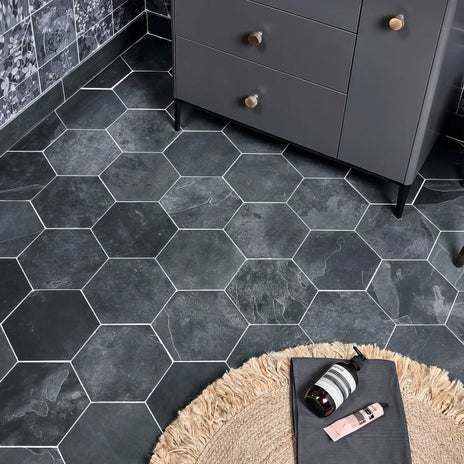
For a bathroom with a more natural, tactile feel, consider the depth and texture of real slate. Our Ca' Pietra Metropolitan Slate Hexagon features a distinctive hexagonal format and textured riven finish, bringing variation and character to walls and floors. Its dark natural tones make an especially striking backdrop when paired with lighter sanitaryware and warm timber details.
What tile sizes and layouts work well in a bathroom?
Format and layout can change how a bathroom feels as much as colour does:
- Large-format slabs (120 x 60cm and above) for a seamless look
- The same tile on floors and walls to make a small room feel bigger
- Hexagon tiles as a feature floor or shower base
- Herringbone and parquet-style plank tiles for a wood-look floor
- Brick-bond metro tiles for a classic, timeless wall
- Picket and fish-scale shapes for a softer, decorative edge
- Vertical stacking to draw the eye upwards in low rooms
- Diagonal laying to make a narrow floor feel wider

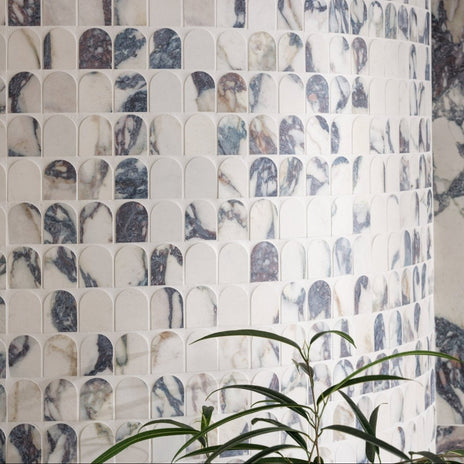
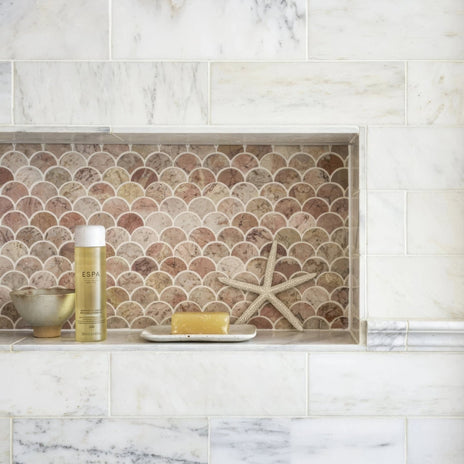
Introduce a softer, more decorative feel with a scallop-shaped mosaic. Made from natural marble with a honed finish and softly bevelled edges, our Fired Earth Aegean Pink Scallop Mosaic combines delicate pink tones with subtle orange and grey veining. The distinctive shape makes it particularly effective as a feature wall or shower detail.
How can tiles make a small bathroom feel bigger?
If your bathroom is compact, tile choice matters even more:
- Choose large-format tiles to reduce the number of grout lines
- Stick to light, warm neutrals rather than very dark tones
- Run the same tile continuously from floor to wall
- Pick a satin or gloss finish to bounce light around
- Avoid busy patterns on both floors and walls at once
- Use a light grout colour close to the tile itself
What are the best feature-tile ideas for 2026?
A single feature area is an easy way to bring in a trend without overwhelming the room:
- A patterned floor with plain walls
- A mosaic-lined shower niche
- A tiled bath panel in a contrasting colour
- A tiled feature wall behind the vanity or mirror
- Terrazzo-effect flooring paired with plain walls
- Zellige-inspired glazed tiles for a handmade, imperfect look
- A tiled splashback that continues upwards as a mini feature wall
- Contrasting grout to outline a pattern deliberately

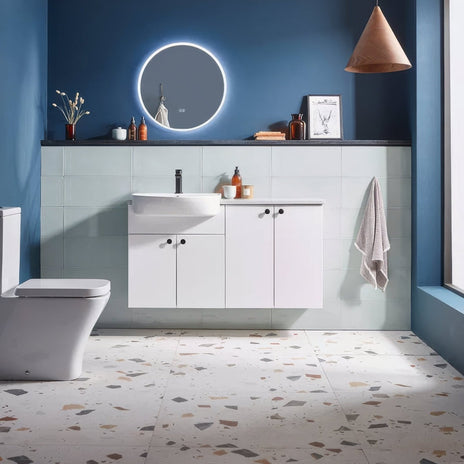
A geometric terrazzo-inspired design is an easy way to add pattern without making a bathroom feel too busy. Our Piazza Porcelain Geo Pearl is made from porcelain with a matt finish, offering a durable and versatile surface for walls and floors. Its soft pearl-toned palette makes it easy to pair with both contemporary and more traditional bathroom schemes.
💡 Design Tip: Order tile samples and view them in the bathroom at different times of day. Warm and cool lighting can change how colour, veining and surface texture appear.
Frequently asked questions
What colour goes with grey bathroom tiles?
Grey tiles pair well with warm whites, soft blush pink, sage green and brushed brass or matt black fittings. Warm-toned greys suit timber vanity units, while cool greys work best with crisp white sanitaryware and chrome.
What colour goes with beige bathroom tiles?
Beige tiles suit warm neutrals such as cream, taupe and soft terracotta, plus deeper accents like olive green or chocolate brown. Brushed brass and warm wood tones lift a beige scheme rather than cooling it down.
How can I make a small bathroom look bigger with tiles?
Use large-format tiles to minimise grout lines, choose light or reflective finishes, and run the same tile from floor to wall to remove visual breaks. Laying tiles vertically or on a diagonal can also help.
How much does it cost to tile a small bathroom?
As a rough UK guide, tiling a small bathroom typically costs between £800 and £2,500 including tiles, adhesive, grout and labour, depending on your tile choice and how much of the room is tiled. Natural stone and large-format porcelain sit at the higher end.
How can I make my bathroom feel like a spa?
Stick to a calm, limited colour palette, choose matt or honed natural stone or stone-effect porcelain, add warm lighting, and bring in natural textures such as wood and woven baskets alongside your tiles.
What's the best way to keep bathroom tiles looking their best?
Wipe tiles down with a mild, pH-neutral cleaner and a soft cloth, avoid abrasive scourers and harsh acids on natural stone, ventilate the room well after showers, and reseal natural stone periodically to protect against moisture.
Ready to start planning? Browse our marble tiles, mosaic tiles and large floor tiles collections for more bathroom tile ideas.
Share:
Wet Room Tiles: The Complete Guide
15 Bathroom Floor Tile Ideas for 2026 (UK Guide)