 BEAUTY IN EVERY DETAIL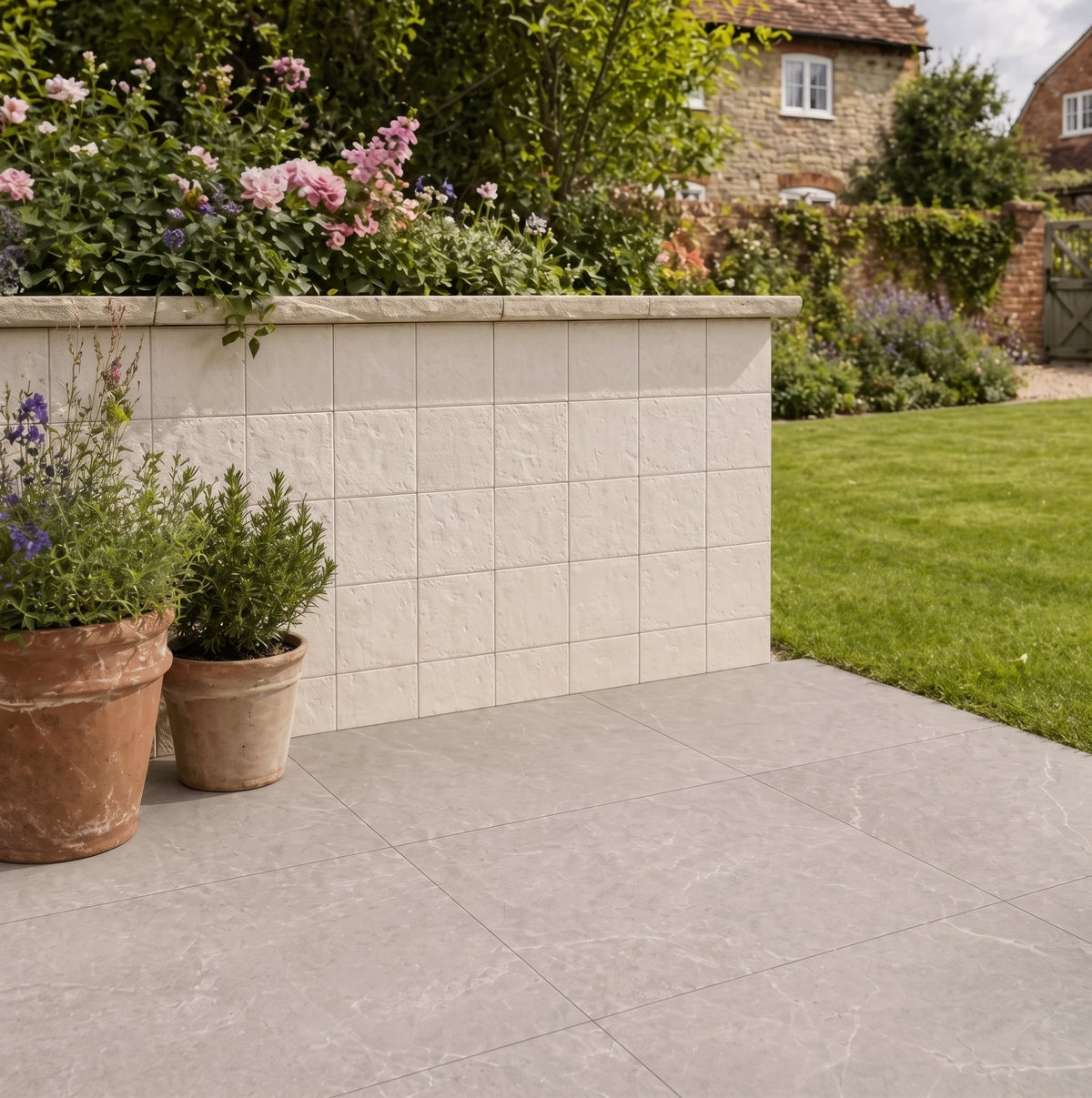
Key Points
- 20mm outdoor porcelain paving is a popular choice for landscapers in 2026 — frost-proof, fade-resistant and virtually maintenance-free.
- Natural stone provides unmatched authenticity and character for period properties, while porcelain wins on everyday practicality.
- Always prioritise an R11 anti-slip rating — essential for secure footing in the damp and frosty British climate.
- The “inside-out” look — running matching indoor and outdoor tiles through bi-fold doors — remains one of the most requested design schemes.

Create flawless transitions through bi-fold doors. Combine our Rimini Grey (60x120cm) porcelain matt on a patio floor with our Urban Taupe porcelain matt wall tiles for cohesive architectural flow.
There was a time when a British patio meant riven concrete slabs and little else. Not any more. Outdoor tiles — porcelain paving in particular — have transformed how we design gardens, terraces and courtyards, bringing the same considered, designer looks we expect indoors out into the open air. If you’re planning a patio, garden path or a full outside-in scheme through bi-fold doors, this guide covers everything you need to choose with confidence.

Generous slab sizes like our Bourgogne Grey (80x80cm) porcelain tiles minimise grout lines, making outdoor spaces feel instantly broader and more luxurious.
Why Porcelain Has Taken Over the Patio
Ask any landscaper what they’re laying at the moment and the answer is almost always outdoor porcelain paving. It’s frost-proof, fade-resistant, non-porous and virtually maintenance-free. Unlike natural stone it won’t harbour algae or need annual sealing, and unlike timber decking it won’t rot, splinter or warp. A quick sweep and the occasional wash keeps it looking showroom-fresh for decades.

Enjoy the beauty of stone without the upkeep. Our Quintili Sand (60x90cm) porcelain tiles offer a pristine, fade-resistant surface that looks exceptional year after year.
Porcelain Paving vs Natural Stone
Natural stone still has a rightful place, especially around period and cottage properties where sandstone, limestone and slate feel entirely at home, offering genuine one-of-a-kind character. The trade-off is maintenance: stone is porous, so it needs sealing and is more prone to moss and staining in our damp climate. Porcelain wins on practicality; stone wins on authenticity.

For authentic heritage character, nothing beats natural stone. Our Buscot Limestone Paving (Tumbled & Etched Finish) matched beautifully with our Buscot Limestone Etched Bullnose Coping.
| Feature | Porcelain Paving | Natural Stone Paving |
|---|---|---|
| Maintenance | Very low (sweep and occasional wash) | Moderate to high (requires regular sealing) |
| Porosity & Staining | Non-porous; highly resistant to stains and algae | Porous; susceptible to moss and weather staining |
| Durability | Frost-proof, fade-resistant, won’t warp | Durable, but can weather and change over time |
| Aesthetic | Vast variety (stone, wood, concrete effects) | Unmatched authenticity; one-of-a-kind character |
Slip Ratings and the British Climate

Achieve a long-lasting deck look without the rot. Our Southwold Sycamore wood-effect porcelain matt planks bring organic warmth in a durable, slip-resistant format.
Outdoors, grip matters most. Look for an R11 anti-slip rating — the standard for external porcelain — which gives dependable footing even in wet, frosty weather. All genuine outdoor paving should also be frost-proof and rated for external use.

Safety meets style. Our Pebble Beach Taupe (60x30cm) porcelain matt tiles provide a gorgeous textured finish with the necessary grip to navigate the damp British weather safely.
⚠️ Safety Tip: Never use indoor tiles outdoors — they lack the R11 slip rating and frost-proof credentials required for external use. Always check the tile specification sheet before ordering for an outdoor project.
Sizes, Formats and the 20mm Difference
Outdoor porcelain is typically 20mm thick — twice a typical indoor tile — giving the strength to be laid on a mortar bed or raised on pedestals. The most popular format is a generous 60×90cm slab. Plank formats suit wood-effect “decking” looks, while setts and cobbles suit paths and borders.
The Inside-Out Look

A premium 20mm Minoli Norway Farge Matt porcelain installation effortlessly withstands the elements, providing a steadfast foundation for outdoor living.
Most 20mm outdoor ranges have a 9–10mm indoor twin in the same colour and finish, so you can run one continuous look from your kitchen floor straight out onto the terrace through bi-fold doors. This inside-out design integration creates a visually striking, highly shareable space — one of the most-requested schemes in our Ascot showroom.
💡 Design Tip: When planning an inside-out scheme, order both the indoor and outdoor versions from the same collection at the same time. Batch numbers can vary between orders, so buying together ensures the closest possible colour match between your kitchen floor and patio.
A Few Laying Considerations

Excellent drainage and frost-proof installation are crucial. Our new Nusa Taupe (25x25cm) glazed porcelain is perfect for technical areas, bringing resort-level sophistication to your garden.
Outdoor porcelain should be laid on a full mortar bed with the correct primer and slurry, or on adjustable pedestals for a raised deck. Falls (a slight gradient) are essential for drainage, and a porcelain-specific adhesive and grout will stand up to frost. It’s specialist work, so we’d always recommend an experienced landscaper for anything beyond a small area.

Use smaller formats like our new Tahoe White (20x20cm) to clad low garden walls, seating areas or raised planters, elevating the entire landscaping scheme.
💡 Hyperion Tip: Order cut samples before committing to a full pallet — view them outside in natural daylight at different times of day, and place them against your house brickwork, render or cladding to make sure the tone works before you buy.
Share:
The best outdoor tiles for stylish and durable patios