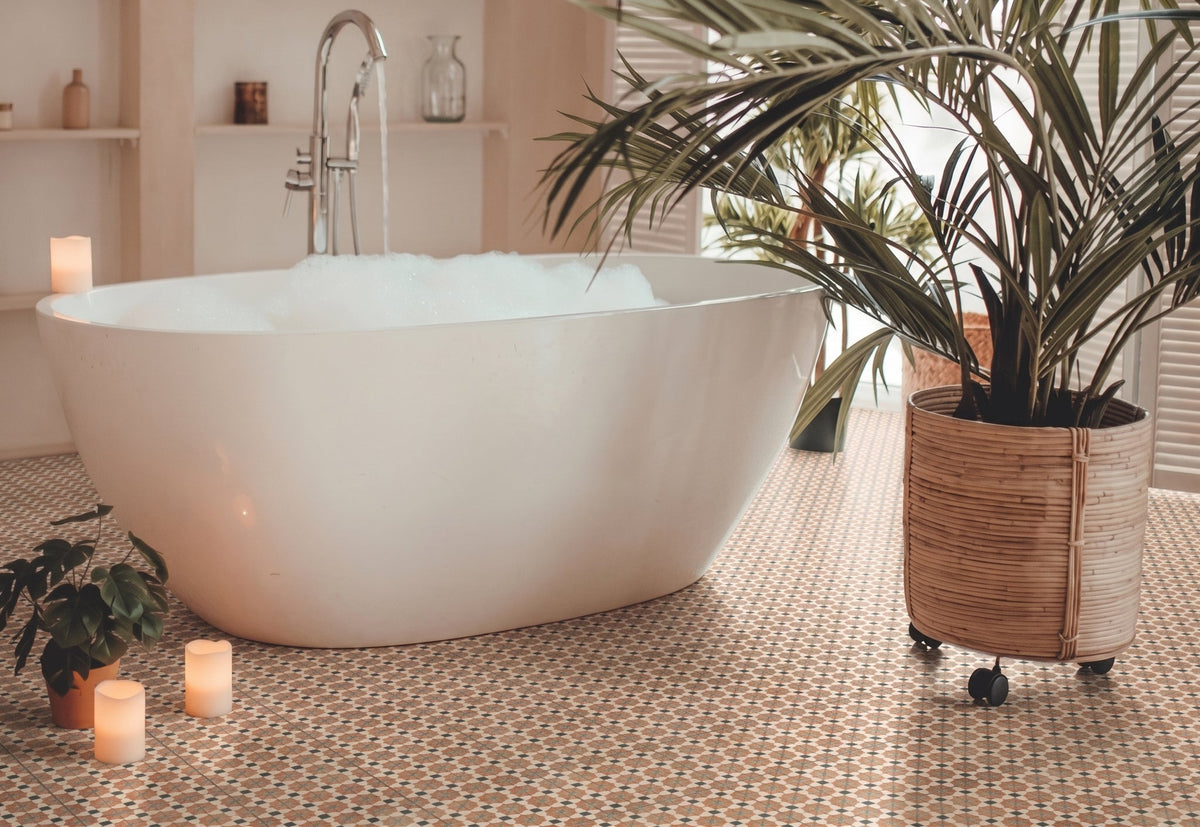
Axis Sand 60 x 120cm bathroom floor tiles stocked by Hyperion Tiles

Add minimalist styling to your bathroom with our extra-large format Axis Sand 60 x 120cm floor tiles. Made from porcelain, these are compatible with underfloor heating and and can also be used on your bathroom walls

Key points

  • Porcelain and ceramic tiles are the most popular bathroom flooring choices due to their water resistance and durability

  • Slip resistance rating (R10-R13) is crucial for bathroom safety, especially in wet areas

  • Large format tiles (600x600mm or larger) create a modern look and require fewer grout lines for easier maintenance

  • Proper waterproofing and drainage slopes are essential for long-term tile performance in bathrooms

Choosing the right tiles for bathroom flooring can transform your space from ordinary to extraordinary, but with hundreds of options available, making the perfect choice requires expert insight. The bathroom floor endures more moisture, temperature changes, and foot traffic than almost any other surface in your home, making tile selection a critical decision that impacts both safety and aesthetics.

We're tile and flooring experts who have guided countless homeowners through this important choice. The key lies in balancing three essential factors: safety, durability, and design appeal. Whether you’re creating your dream bathroom or simply updating tired flooring, understanding the various styles, materials, and technical requirements will ensure you make an informed decision that stands the test of time.

Petite Porcelain Matt Graphite bathroom floor tiles and Hollywood Porcelain Rose wall tiles stocked by Hyperion Tiles

If you love eye-catching designs, our Petite Porcelain Matt tiles (showcased here in Graphite), which are available in 11 more shades, are so versatile you can create your own arrangement style, including herringbone and brick layouts. With a mixture of light grey and dark grey hues, these bathroom tiles create a striking backdrop with our Hollywood Porcelain Rose collection on the bathroom walls

In our must-read guide, we’ll explore everything from porcelain tiles and luxury vinyl tile options to slip resistance requirements and installation considerations. We’ll also address the typical pain points that customers face, from wet feet safety concerns to maintaining that clean cut appearance while ensuring your bathroom floors remain both beautiful and functional for years to come.

Abbot 26 x 30cm bathroom floor tiles stocked by Hyperion Tiles

Looking for some monochrome mosaic magic from your bathroom floor tiles? This bathroom floor has been created using our Abbot 26 x 30cm mosaic sheets and it creates a striking contrast against the black Metro tiles on the bathroom walls

Understanding bathroom tile materials

When selecting tiles for bathroom flooring, understanding the specific qualities of different materials is fundamental to making the right choice. Each material offers distinct advantages and limitations that directly impact performance in wet environments.

Porcelain tiles represent the gold standard for bathroom floors, with water absorption rates below 0.5% making them virtually waterproof. This exceptional water resistance stems from the high-temperature firing process that creates an incredibly dense tile body. Porcelain tiles also offer frost resistance, making them suitable for all climate conditions, and their through-body colour means chips are less visible than with surface-glazed alternatives.

Vacation Porcelain Cordoba bathroom floor tiles stocked by Hyperion Tiles

For those who want to make a statement with their bathroom floor, our Vacation Porcelain Cordoba design could be perfect. With a striking pattern, these bathroom tiles can be used on the walls and floor, giving you more versatility from your design

The durability of porcelain extends beyond water resistance. Laboratory tests demonstrate that quality porcelain can be harder than granite, with PEI ratings of 4 to 5 indicating suitability for heavy residential and commercial use. This makes porcelain tiles an excellent choice for family bathrooms where durability matters as much as aesthetics.

Ceramic tiles provide a more budget-friendly option whilst still offering excellent water resistance for bathroom applications. The key distinction lies in choosing between glazed and unglazed varieties. Glazed ceramic tiles feature a protective surface layer that provides water resistance and easy cleaning, making them ideal for most bathroom areas. However, their water absorption rates typically range from 3-7%, slightly higher than porcelain but still suitable for residential bathroom use.

Natural stone tiles bring unique beauty and luxury to bathroom spaces, with marble, travertine, and slate each offering distinct characteristics. Marble provides elegant veining and timeless appeal, whilst slate offers natural texture and slip resistance. However, natural stone requires regular sealing to maintain water resistance and prevent staining. The porous nature of many natural stones means they need more maintenance than ceramic or porcelain alternatives.

Blush F006 Long Vinyl Planks on bathroom floor stocked by Hyperion Tiles

If you're looking for a waterproof bathroom floor, check out our Blush F006 Long Vinyl Planks. Perfectly compatible with underfloor heating, wood or stone effect luxury vinyl is highly popular for the home. This makes a great choice if you're looking for a bathroom floor style with an element of warmth and practicality

Luxury vinyl tile (LVT) has revolutionised bathroom flooring with completely waterproof construction and realistic stone effect appearances. Modern LVT offers convincing marble effect, wood grain, and stone textures whilst providing a warmer, softer surface than traditional ceramic tiles. The click-lock installation system makes LVT particularly attractive for DIY projects, though professional installation ensures optimal performance in wet areas.

East Java Hummingbird Marble Temple Mosaic bathroom floor tiles stocked by Hyperion Tiles

Get the benefit from the best of both worlds with natural stone tiles offering an exquisite mosaic effect. Our East Java Hummingbird Marble Temple Mosaic bathroom floor tiles create a striking design, which you can mix with a different pattern (our Plume Mosaic) for perfect pattern clashing and maximalist styling in a dream bathroom

Mosaic tiles excel in creating feature areas and providing enhanced slip resistance through increased grout lines. Available in glass, ceramic, and natural stone varieties, mosaics offer design flexibility for curved surfaces and intricate patterns. The smaller format naturally creates more grout lines, which can aid traction but requires more maintenance to keep clean.

Essential safety considerations

Ceppo Beige 60 x 120cm bathroom floor tiles stocked by Hyperion Tiles

Create a uniform design in your wet room with our Ceppo Beige bathroom floor tiles. Perfect for those who like a modern neutral palette, these porcelain tiles come in three large-format sizes and will fit seamlessly into any space

Safety represents the most critical factor when selecting bathroom floor tiles, as wet surfaces create inherent slip hazards. Understanding slip resistance ratings and choosing appropriate textures can prevent accidents whilst maintaining the aesthetic appeal of your bathroom.

Slip resistance ratings follow standardised classifications from R9 to R13, with R10 to R12 recommended for bathroom floors. These ratings measure the coefficient of friction between wet feet and the tile surface. R10 provides adequate slip resistance for most bathroom areas, whilst R11 or R12 offers extra safety for shower floors and areas with frequent water exposure.

The verification successful waiting process for slip resistance involves testing tiles at specific angles with safety footwear. Tiles achieving R11 ratings remain safe at angles up to 19 degrees when wet, whilst R12 tiles maintain safety at angles up to 27 degrees. This technical specification becomes particularly important in wet rooms or bathrooms with sloped floors.

Textured versus smooth finishes significantly impacts both safety and maintenance requirements. Textured surfaces naturally provide better grip for wet feet but can be more challenging to clean thoroughly. Smooth, polished surfaces offer easier maintenance but require careful consideration of slip resistance ratings. Modern manufacturing techniques now produce tiles with subtle textures that provide safety without compromising the clean appearance many homeowners desire.

Wet area requirements vary throughout the bathroom space. Shower floors demand the highest slip resistance, typically R11 or R12, whilst areas around bathtubs and the general bathroom floor can safely use R10 rated tiles. Entrance zones where people stepping from outside may track moisture also benefit from enhanced slip resistance.

Anti-slip treatments can improve existing smooth tiles, though these should be applied professionally to ensure even coverage and maintain appearance. However, selecting appropriately rated tiles during initial installation proves more effective than retrofitting solutions.

Accessibility considerations become increasingly important as we plan for ageing in place. Tiles with good slip resistance benefit users with mobility aids, whilst level thresholds and appropriate drainage slopes enhance wheelchair accessibility. The extensive range of modern slip-resistant tiles means safety doesn’t require compromising on style.

Foundry Novo Porcelain Navy wall tiles plus patterned bathroom floor tiles stocked by Hyperion Tiles

Add style to your wet room with our Foundry Novo Porcelain Navy wall tiles, which work just as well for bathroom floor tiles. Designed in a rich, dark colour palette, these ultra-durable tiles will create a striking design

Choosing the right tile size and layout

Tile size and layout patterns dramatically influence both the visual impact and practical performance of your bathroom floor. Understanding how different formats affect the overall space helps create the perfect balance between aesthetics and functionality.

Large format tiles measuring 600x600mm or larger have become increasingly popular for creating contemporary bathroom designs. These tiles minimise grout lines, resulting in a cleaner appearance that’s easier to maintain. The reduced number of joints also means fewer areas where moisture can penetrate, enhancing the overall waterproofing of your bathroom floor.

Large format tiles create an airy feel in smaller bathrooms by reducing visual breaks across the floor surface. However, proper drainage slopes become more critical with larger tiles, as each tile covers more surface area. Professional installation typically proves necessary to achieve the precise falls required for effective water management.

Medium tiles in 300x300mm or 400x400mm formats offer traditional appeal whilst remaining manageable for DIY installation. These sizes provide excellent versatility for various bathroom layouts and work particularly well in period properties where maintaining character is important. The moderate number of grout lines offers good slip resistance whilst keeping maintenance requirements reasonable.

Small and mosaic tiles excel in areas requiring enhanced grip and design flexibility. The increased number of grout lines naturally improves traction, making smaller formats ideal for shower floors and wet room applications. Mosaic tiles also accommodate curved surfaces and complex layouts that larger formats cannot achieve.

Plank tiles represent a trending option that mimics wood flooring whilst providing bathroom-suitable performance. These rectangular formats, typically measuring 150x600mm or 200x1200mm, create visual length that can make narrow bathrooms appear wider. Stone effect LVT planks offer particular appeal for those seeking warmth and texture without natural wood’s moisture sensitivity.

Layout patterns significantly influence the perceived size and character of your bathroom. Straight lay patterns create clean, contemporary appearances that suit modern design schemes. Diagonal layouts can make small bathrooms appear larger but require more cutting and waste. Herringbone patterns add visual interest and work particularly well with plank formats, though they demand precise installation to achieve professional results.

The choice between various styles ultimately depends on your bathroom’s size, style, and intended use. Family bathrooms often benefit from larger formats for easier cleaning, whilst guest bathrooms might accommodate more decorative small tile patterns.

Design and aesthetic options

Folio Marble Honed Finish 61 x 61cm bathroom floor tiles stocked by Hyperion Tiles

Our Folio Marble Honed 61 x 61 cm bathroom tiles are ideal for underfloor heating. Made from natural stone, these offer a sophisticated finish which can be used on walls and floors. Shown here as floor tiles, these feature delicate veining and provide a calming backdrop against the vivid patterned wallpaper

Modern bathroom floor tiles offer an unprecedented range of design possibilities, from realistic stone effects to bold contemporary patterns. Understanding current trends and timeless classics helps create a bathroom that reflects your personal style whilst maintaining long-term appeal.

Stone effect tiles dominate contemporary bathroom design, offering the luxury appearance of natural materials without the maintenance demands. Marble effect porcelain captures the elegant veining of Carrara marble whilst providing superior water resistance and durability. These tiles create sophisticated neutral tones that complement various design schemes whilst adding visual texture and depth.

Travertine effect tiles provide earthy warmth with subtle colour variation that suits both traditional and contemporary settings. The natural stone appearance adds character whilst the porcelain construction ensures practical performance. Slate effect options offer dramatic texture and natural slip resistance, perfect for creating spa-like atmospheres in modern bathrooms.

Wood effect porcelain brings unexpected warmth to bathroom environments, with realistic grain patterns and colour variations that mimic natural timber. These tiles work particularly well in family bathrooms where the softer aesthetic creates a more welcoming environment. The porcelain construction provides complete water resistance whilst maintaining the visual appeal of natural wood.

Contemporary wood effects include grey-washed oak, rich walnut tones, and weathered driftwood appearances. The plank format naturally elongates spaces, making narrow bathrooms appear more spacious whilst adding visual interest through the linear pattern.

Contemporary concrete and industrial looks appeal to those seeking minimalist aesthetics. These tiles typically feature subtle colour variation in neutral tones, creating sophisticated backgrounds for modern fixtures and fittings. The understated appearance works particularly well in urban loft conversions and contemporary new builds.

Classic and traditional patterns remain popular for period properties and those preferring timeless appeal. Victorian geometric patterns, Art Deco designs, and encaustic cement tile effects add character whilst providing practical flooring solutions. These patterns work particularly well as feature areas combined with plain tiles for the main floor area.

Popular colour trends for 2025/6

Earthenware Porcelain Coral 5 x 25cm floor tiles stocked by Hyperion Tiles

Our Earthenware Porcelain Coral tiles resemble the tactile style you can expect from traditional pottery. In this wet room, these bathroom tiles offer a rustic finish, which can be used on walls and floors for a versatile style

Colour selection significantly influences the overall atmosphere and perceived size of your bathroom space. Current trends favour sophisticated palettes that create calming, spa-like environments whilst offering flexibility for changing décor.

Warm neutrals continue dominating bathroom design, with beige, cream, and soft grey tones providing timeless appeal. These colours work particularly well in smaller bathrooms as they reflect light effectively whilst creating serene atmospheres. Light grey tiles offer modern sophistication whilst maintaining warmth, making them perfect for contemporary family bathrooms.

Bright, bold tiles are making a significant comeback for 2025, with colourful styles creating dramatic focal points in bathroom design. Vibrant blues, emerald greens, and rich terracottas add personality whilst maintaining sophistication when used thoughtfully. These colours work particularly well as feature walls or accent areas combined with neutral floor tiles.

Earth tones connect bathroom spaces with nature, using terracotta, ochre, and sage green to create grounding, peaceful environments. These colours pair beautifully with natural materials and work especially well in bathrooms with natural light. The organic palette creates harmony whilst adding visual warmth to what can otherwise feel like cold spaces.

Classic white and light colours remain essential for maximising light in smaller bathrooms. Pure white tiles create clean, fresh appearances that make compact spaces feel larger and brighter. However, consider practical implications, as light colours may show water marks and require more frequent cleaning to maintain their pristine appearance.

Technical installation requirements

Proper installation forms the foundation of long-lasting bathroom tile performance. Understanding technical requirements ensures your beautiful new tiles provide years of reliable service whilst maintaining their appearance and safety characteristics.

Substrate preparation represents the most critical aspect of successful tile installation. Concrete screed provides the ideal base for ceramic and porcelain tiles, offering stability and moisture resistance. Existing timber floors require careful assessment and typically need overlay boards to provide adequate stability and prevent tile cracking.

When tiling over existing tiles, the substrate must be thoroughly cleaned, tested for adhesion, and possibly roughened to ensure proper bonding. However, the additional height may create issues with door clearances and fixture connections that require professional assessment.

Waterproofing systems protect the structure beneath your tiles from moisture damage. Tanking membranes provide comprehensive protection, particularly important in wet rooms and shower areas. Liquid waterproofing offers flexibility around complex shapes and penetrations, whilst sheet membranes provide reliable coverage for larger areas.

Critical waterproofing areas include all wall and floor junctions, around baths and showers, and any areas where water may penetrate. Professional installation ensures these systems integrate properly with drainage and provide long-term protection for your property.

Drainage slopes require precise calculation and execution to prevent water pooling on the bathroom floor. Building regulations typically require minimum falls of 1:80 toward drains, though steeper slopes may be necessary in shower areas. Large format tiles make achieving these slopes more challenging but not impossible with proper planning.

Proper drainage prevents water accumulation that can lead to hygiene issues, slip hazards, and long-term moisture damage. Professional installers use laser levels and precise measurement to ensure water flows efficiently whilst maintaining level tile surfaces.

Expansion joints accommodate natural building movement that could otherwise crack rigid tile installations. These joints are particularly important in larger bathrooms, around heating systems, and where different materials meet. Modern sealants provide waterproof expansion joints that maintain their flexibility over time.

Underfloor heating compatibility requires careful consideration of maximum surface temperatures and tile thermal properties. Most ceramic and porcelain tiles work well with underfloor heating systems, providing comfortable warm surfaces that prevent condensation and improve user comfort. However, the heating system must be properly commissioned and controlled to prevent thermal shock that could crack tiles.

The tile thickness affects heat transfer efficiency, with thinner tiles responding more quickly to temperature changes. Professional installation ensures proper integration between heating systems and tile installations for optimal performance and longevity.

Grout selection and maintenance

Portare Perola Porcelain Satin 59.5cm sq bathroom floor tiles stocked by Hyperion Tiles

Made in porcelain with a contemporary satin finish, our Portare Perona bathroom tiles, 59.5 sq cm, will pair perfectly with any colour scheme

Grout selection significantly impacts both the appearance and long-term performance of your bathroom floor tiles. Understanding different grout types and maintenance requirements helps maintain hygiene and appearance whilst preventing moisture-related problems.

Epoxy versus cement-based grouts offer different performance characteristics suited to various applications. Epoxy grouts provide superior stain resistance and waterproofing, making them ideal for high-use family bathrooms and areas exposed to frequent moisture. The chemical resistance prevents discolouration from cleaning products and bathroom chemicals.

Cement-based grouts cost less but require regular sealing to maintain water resistance. However, modern cement grouts with polymer additives offer improved performance whilst remaining more economical for larger installations. The choice often depends on budget considerations and expected usage levels.

Grout colour choices influence both aesthetics and maintenance requirements. Matching grout to tile colour creates seamless appearances that make spaces appear larger, whilst contrasting grout highlights tile patterns and adds visual interest. Light-coloured grouts show dirt more readily but create brighter, more open appearances.

Darker grouts hide minor staining better but can make spaces feel smaller. Neutral grey tones often provide the best compromise, offering reasonable stain resistance whilst maintaining design flexibility. Consider that grout colour significantly affects the overall appearance, sometimes more than the tile choice itself.

Grout line width recommendations typically specify 2-3mm minimum for floor tiles to accommodate natural size variations and ensure proper adhesion. Wider joints provide better accommodation for building movement and tile size tolerances but create more surface area requiring maintenance.

Rectified tiles with precise edges can accommodate narrower grout lines for more contemporary appearances. However, extremely narrow joints may not provide adequate space for proper grout application, potentially leading to performance issues.

Antimicrobial additives help prevent mould and bacteria growth in grout lines, particularly important in humid bathroom environments. These additives provide ongoing protection whilst maintaining grout flexibility and appearance. The investment in antimicrobial grout often proves worthwhile in family bathrooms and areas with limited ventilation.

Sealing requirements vary depending on grout type and bathroom conditions. Cement-based grouts typically require sealing every 12-18 months to maintain water resistance, whilst epoxy grouts may not require sealing. Regular inspection helps identify when resealing becomes necessary to maintain protection.

Cost considerations and budget planning

Understanding the full cost implications of bathroom floor tile projects helps make informed decisions that balance quality, performance, and budget constraints. Costs vary significantly depending on tile quality, installation complexity, and additional requirements.

Tile costs breakdown varies considerably across different quality levels and materials. Budget ceramic options start from £20 per m², offering adequate performance for light residential use. Mid-range porcelain tiles from £40 per m² provide enhanced durability and design options suitable for most family bathrooms.

Premium tiles exceeding £70 per m² include luxury natural stone, designer porcelain collections, and specialty products with unique characteristics. These tiles often justify their cost through superior durability, distinctive appearance, or specific performance benefits.


Teddy Bear F102 XL Vinyl Planks stocked by Hyperion Tiles

Our Teddy Bear F102 XL luxury vinyl planks give you an wood effect without the worry. Fully waterproof, we have an extensive range of LVT and LVP, which is also stain resistant and will help you create the perfect bathroom floor

Luxury vinyl tile costs typically range from around £50-£60 per m², offering excellent value considering the waterproof performance and easy installation. Stone effect LVT provides realistic appearances at fraction of natural stone costs whilst eliminating ongoing maintenance requirements.

Installation costs vary significantly between DIY and professional installation. Professional installation typically adds around £40 per m² depending on complexity, substrate preparation requirements, and local labour rates. Complex layouts, waterproofing requirements, and underfloor heating integration increase installation costs but ensure proper performance.

DIY installation can reduce costs but requires proper tools, skills, and understanding of waterproofing requirements. Mistakes in bathroom installations can prove expensive to rectify and may compromise long-term performance.

Additional materials include adhesives, grout, trims, and waterproofing membranes that typically add 15-25% to tile costs. Quality adhesives and waterproofing systems prove critical for bathroom applications and shouldn’t be compromised to save money.

Finishing trims and transition strips ensure professional appearances and protect tile edges from damage. These components often cost more than expected but significantly impact the overall installation quality.

Long-term value considerations favour quality tiles and professional installation despite higher initial costs. Properly installed porcelain or ceramic tiles can last 20-30 years with minimal maintenance, whilst budget alternatives may require replacement within 10-15 years.

The durability and maintenance requirements significantly impact lifetime costs. Premium tiles often prove more economical over their lifespan when considering cleaning time, maintenance materials, and replacement frequency.

Where to save versus where to invest requires strategic thinking about bathroom usage and visibility. High-traffic areas and wet zones justify premium tiles for safety and durability, whilst hidden areas might accommodate budget options. Feature walls and entrance areas create maximum visual impact and deserve investment in distinctive tiles.

Family bathrooms with heavy use benefit from investing in slip-resistant, durable tiles that maintain their appearance despite daily wear. Guest bathrooms with light use might accommodate more decorative but less durable options.

Maintenance and longevity tips

Proper maintenance significantly extends the life and appearance of bathroom floor tiles whilst maintaining hygiene and safety standards. Understanding appropriate cleaning methods and maintenance schedules prevents common problems and preserves your investment.

Daily cleaning routines should use pH-neutral products specifically designed for bathroom tiles. Porcelain and glazed ceramic tiles require only mild detergent and water for regular cleaning, whilst natural stone needs specialised stone cleaners to prevent etching and damage.

Avoid abrasive cleaners that can scratch glazed surfaces or acidic products that damage natural stone. Regular removal of soap residue and mineral deposits prevents buildup that becomes increasingly difficult to remove over time.

Deep cleaning schedules should include monthly grout cleaning and quarterly detailed tile cleaning to maintain hygiene and appearance. Steam cleaning effectively removes embedded dirt from textured surfaces whilst sanitising grout lines. However, ensure adequate ventilation during deep cleaning to prevent moisture accumulation.

Seasonal maintenance might include resealing natural stone tiles and inspecting grout lines for deterioration. Early identification of maintenance needs prevents minor issues developing into major problems requiring expensive repairs.

Grout care requires regular attention to maintain waterproofing and appearance. Clean grout lines weekly with appropriate cleaners and inspect for cracks or discolouration that indicate maintenance needs. Resealing should occur every 12-18 months for cement-based grouts, or when water no longer beads on the surface.

Professional grout cleaning services can restore heavily soiled or discoloured grout lines that resist normal cleaning methods. This investment often proves more economical than complete grout replacement whilst maintaining the original tile installation.

Preventing common problems involves addressing issues promptly before they become major concerns. Water damage typically results from failed grout or sealant allowing moisture penetration behind tiles. Regular inspection and prompt repair prevent structural damage and costly remediation.

Cracking usually indicates substrate movement or thermal expansion issues that require professional assessment. Discolouration might result from inappropriate cleaning products, water quality issues, or natural stone characteristics requiring specific maintenance approaches.

When to call professionals includes situations involving structural concerns, widespread tile failure, or complex repairs requiring specialised skills. Attempting difficult repairs without proper knowledge and tools often worsens problems and increases eventual repair costs.

Professional assessment proves valuable when considering major cleaning, restoration, or partial replacement projects. Expert evaluation helps determine whether restoration or replacement provides better long-term value whilst ensuring proper execution of any remedial work.

Common mistakes to avoid

Understanding frequent installation and selection errors helps prevent costly problems that compromise safety, appearance, and longevity. Learning from others’ mistakes proves far less expensive than correcting your own errors after installation.

Choosing inappropriate tiles for wet areas represents perhaps the most serious safety concern. Smooth, polished tiles may look stunning but create dangerous slip hazards when wet. Always verify slip resistance ratings match the intended use area, particularly for shower floors and areas around baths.

Similarly, using wall tiles on floors compromises durability and safety. Wall tiles typically lack the thickness and breaking strength required for floor applications and may crack under foot traffic or furniture weight.

Inadequate waterproofing leads to moisture penetration that can cause structural damage, mould growth, and tile failure. Comprehensive waterproofing extends beyond just wet areas to include all potential moisture exposure zones. Professional waterproofing systems provide peace of mind and protect your property investment.

Skipping waterproofing to save costs often proves extremely expensive when remedial work becomes necessary. The relatively small additional cost of proper waterproofing provides enormous protection against potentially catastrophic moisture damage.

Poor planning creates numerous practical and aesthetic problems that could be easily avoided. Ordering insufficient tiles means potential colour matching issues when purchasing additional materials from different batches. Always order 10-15% extra tiles to accommodate cutting waste and future repairs.

Failing to plan tile layouts before starting installation can result in awkward cuts, poor symmetry, and unprofessional appearances. Professional installers always plan layouts to minimise cuts and create balanced, attractive installations.

Ignoring building codes can create legal and safety issues that require expensive corrections. Local building regulations specify requirements for bathroom installations, including waterproofing standards, drainage slopes, and accessibility provisions.

Building control approval may be required for major bathroom renovations, particularly those involving structural changes or drainage modifications. Consultation with local authorities prevents compliance issues that could affect property sales or insurance claims.

Cutting corners on preparation inevitably leads to performance problems that become apparent after installation completion. Inadequate substrate preparation causes tile cracking, lippage, and premature failure that requires complete reinstallation to correct.

Proper preparation includes ensuring level, stable substrates, appropriate adhesive selection, and correct mixing procedures. The time invested in thorough preparation pays dividends in installation quality and long-term performance.