

Key points
-
Wall and floor tiles require different specifications - wall tiles must be more durable and slip-resistant while wall tiles can prioritise aesthetics
-
Porcelain tiles offer superior durability and water resistance for both walls and floors, making them ideal for high-traffic and wet areas
-
Large format tiles (600mm+ and 1000mm+) create seamless looks and reduce grout lines, perfect for modern open-plan spaces
-
Effect tiles like marble, wood, and stone provide natural beauty without the maintenance challenges of genuine materials
-
Proper installation and quality adhesives are crucial for long-term performance, especially in moisture-prone areas like bathrooms and kitchens

If you love natural stone, you'll adore our Avalon Tumbled Rosso and Crema Marble tiles which, in this kitchen, create a striking chequerboard pattern on the floor. With delicate veining, these tiles feature a tumbled finish
Choosing the right wall floor tile can transform your space from ordinary to stunning, but with thousands of options available, many customers find themselves overwhelmed by the decision. As tile experts with extensive experience guiding homeowners through renovations, we understand the confusion surrounding materials, sizes, finishes, and installation requirements.
The key to successful tile selection lies in understanding the fundamental differences between wall and floor applications, knowing which materials suit your specific needs, and recognising how factors like room size, style preferences, and budget influence your choices. This comprehensive guide will walk you through everything from technical specifications to design trends, ensuring you make confident decisions that deliver both beauty and durability for years to come.
Whether you’re planning bathroom tiles for a wet room, creating feature walls in your kitchen, or designing an open-plan living space, this expert advice will help you navigate the most comprehensive ranges available and select tiles that perfectly suit your project requirements.

Understanding the difference between wall and floor tiles
The distinction between wall tile and floor tiles goes far beyond aesthetics – it’s rooted in fundamental performance requirements that ensure safety and longevity. Floor tiles must withstand significantly higher loads, resist abrasion from foot traffic, and provide adequate slip resistance, while wall tiles can prioritise visual appeal and lighter construction.
Technical specifications form the backbone of this differentiation. Floor tiles typically require a PEI (Porcelain Enamel Institute) rating of at least Class 3 for residential use, indicating their ability to withstand moderate to heavy traffic. Wall tiles often carry lower PEI ratings since they don’t experience the same wear patterns. Additionally, floor tiles must meet specific slip resistance standards, particularly in wet areas like bathrooms, where a DCOF (Dynamic Coefficient of Friction) rating of 0.42 or higher ensures safety.
Load-bearing capacity represents another crucial difference. Floors must support the weight of furniture, appliances, and constant foot traffic, requiring tiles with greater structural integrity and thickness. Most floor tiles measure 8-12mm thick, while wall tiles can be as thin as 6-8mm. This thickness difference affects not only durability but also installation methods and adhesive requirements.
Moisture resistance standards become particularly important in wet rooms and bathrooms. While both wall and floor tiles need water resistance, floors face additional challenges from standing water and require tiles with lower water absorption rates. Porcelain tiles, with absorption rates below 0.5%, excel in these demanding environments.
The cost implications of choosing dual-purpose tiles versus separate wall and floor options often surprise customers. Using floor-rated tiles throughout can simplify ordering and create visual continuity, but may increase material costs. However, this approach eliminates the risk of mismatched shades and ensures uniformity in maintenance requirements.
Understanding these technical differences helps prevent costly mistakes, such as installing wall tiles on floors, which can lead to cracking, staining, or safety hazards. Professional advice becomes invaluable in navigating these specifications while balancing performance, aesthetics, and budget considerations.
Essential tile materials: ceramic vs porcelain vs natural stone

Our Petite Porcelain Gloss Olive collection looks just as striking as a wall tile as it does on a bathroom floor. In an on-trend colour-way, these porcelain tiles create a striking backdrop to this freestanding bath
The choice between ceramic, porcelain, and natural stone fundamentally shapes your project’s performance, appearance, and maintenance requirements. Each material offers distinct advantages, and understanding these differences ensures you select the optimal solution for your specific application.
Ceramic tiles represent the most accessible entry point into quality tiling. Manufactured from clay and fired at temperatures around 1000°C, ceramic tiles offer excellent versatility and affordability. Their water absorption rates typically range from 3-7% for semi-vitreous varieties, making them suitable for dry wall applications and light-traffic floors. The extensive range of colours, patterns, and finishes available in ceramic makes them ideal for creating vibrant patterned bathroom tiles or classic subway designs.
Porcelain tiles take ceramic technology to the next level, fired at higher temperatures (1200°C+) using finer clay particles. This process creates an ultra-dense material with water absorption below 0.5%, making porcelain suitable for all applications from feature walls to high-traffic floors. The superior durability of porcelain tiles translates to longer lifecycles and better value despite higher initial costs.

Our Essence White tiles 60 x 60cm feature a matt finish making it the perfect choice for contemporary styling in the kitchen. Suitable for both floors and walls, this design is highly durable and low maintenance
Natural stone options including marble, travertine, and slate provide unmatched beauty and uniqueness. Each piece carries distinctive characteristics that no manufactured tile can replicate. However, natural stone requires more sophisticated installation and maintenance approaches. Marble typically rates 3-4 on the Mohs hardness scale (ranking minerals from softest to hardest), making it softer than porcelain but perfect for creating luxurious feature walls when properly sealed.
Vitrified ceramic occupies the middle ground between standard ceramic and porcelain, offering enhanced durability through additional firing processes. These tiles provide better water resistance than standard ceramic while maintaining cost advantages over full porcelain, making them increasingly popular for bathroom walls and medium-traffic floors.
|
Material |
Water Absorption |
Typical Thickness |
Best Applications |
Maintenance Level |
|---|---|---|---|---|
|
Ceramic |
3-7% |
6-10mm |
Wall tiles, light floors |
Low |
|
Porcelain |
<0.5% |
8-12mm |
All applications |
Very Low |
|
Natural Stone |
Variable |
10-20mm |
Feature walls, floors |
High |
|
Vitrified Ceramic |
1-3% |
8-10mm |
Bathrooms, moderate traffic |
Low-Medium |
The performance comparison reveals why porcelain tiles dominate contemporary installations. Their combination of durability, water resistance, and design flexibility makes them suitable for wet rooms, kitchens, and high-traffic areas where other materials might struggle.
Popular tile effects and finishes for modern homes
Contemporary tile design has revolutionised how we achieve natural beauty without the associated maintenance challenges. Today’s 'effect' tiles deliver stunning visual impact while maintaining the practical benefits of engineered materials, giving homeowners access to luxury aesthetics at accessible price points.

If you love the look of real marble but not so much the upkeep, why not consider marble effect tiles for a luxury bathroom? This striking pink shade comes complete with distinctive veining for a marble effect. The Lux Noor Peach Marble tiles are made from porcelain with a gloss finish
Marble effect tiles lead the popularity charts, particularly Carrara and Calacatta patterns that capture the classic veining of Italian marble. These porcelain alternatives provide the elegant appearance of natural stone without concerns about etching, staining, or sealing requirements. The most comprehensive ranges now include multiple vein directions and slab-effect designs that create seamless installations across large surfaces.
Wood effect planks have transformed floor tile aesthetics, with formats like 150mm x 900mm and 200mm x 1200mm delivering convincing grain patterns and natural colour variations. Advanced digital printing creates textures so realistic that the tiles closely mimic genuine timber, complete with knots, grain patterns, and weathered effects. These tiles particularly excel in kitchens and bathrooms where real wood would struggle with moisture exposure.
Stone effect and concrete effect tiles cater to industrial and rustic design trends. Split-face textures, brushed finishes, and weathered appearances create authentic stone aesthetics without the weight, cost, or installation complexity of genuine materials. These tiles work exceptionally well for feature walls and contemporary minimalist spaces.

Our stone effect tile collection includes Komodo Porcelain White. This style has been inspired by the the beauty of multi-coloured slate with a contemporary modern honed finish
Metro or subway tiles continue their timeless appeal, with traditional 75mm x 150mm and 100mm x 200mm formats remaining popular for bathroom tiles and kitchen backsplashes. Modern interpretations include bevelled edges, handmade effects, and contemporary colour palettes that update this classic style.
Solid colour options address the growing demand for minimalist aesthetics. Clean whites, sophisticated greys, and bold accent colours in matt finishes create contemporary spaces that emphasise form and proportion. These tiles work particularly well in mosaic tiles arrangements or as backdrop for statement fixtures.
The contemporary twist on traditional patterns includes geometric shapes, hexagonal formats, and arabesque designs that add visual interest without overwhelming spaces. These patterned bathroom tiles create focal points while maintaining practical performance in wet environments.
Surface finishes range from high-gloss polished finishes that reflect light and create spacious feelings, to matt finishes that provide subtle elegance and better slip resistance. The choice between finish gloss levels significantly impacts both aesthetics and practical performance, particularly in floors where slip resistance becomes crucial.
Choosing the right tile size and format

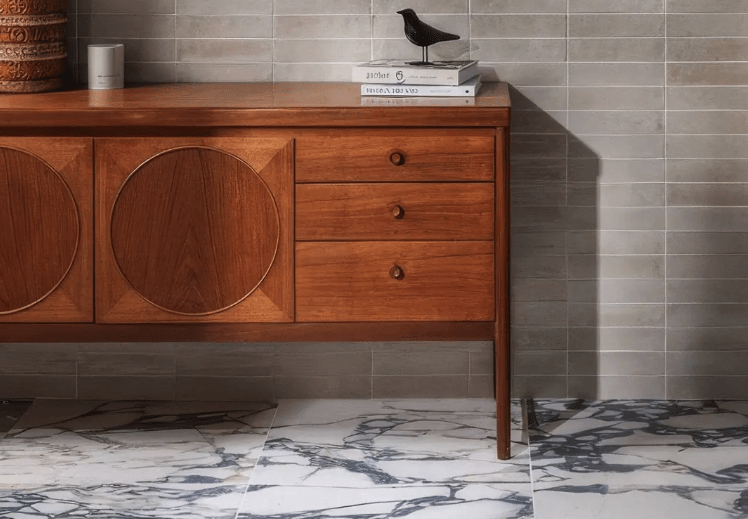
Our Foundry Novo Porcelain Linen wall tiles offer a subtle contrast with the marble effect floor tiles. The contemporary neutral tones in both bring this creative design together
Tile size selection dramatically influences both the visual impact and practical performance of your installation. Understanding how different formats work in various spaces helps create the desired aesthetic while ensuring functional success.
Small format tiles under 300mm excel in detailed applications and spaces requiring flexibility. Mosaic tiles, typically 25mm to 50mm squares, enable intricate patterns and work exceptionally well on curved surfaces or feature walls. These smaller formats also suit traditional styles and period renovations where authenticity matters. The numerous grout lines created by small tiles can enhance grip in wet areas but require more intensive maintenance.
Standard sizes between 300mm and 600mm represent the versatile workhorses of tile installations. Formats like 300mm x 300mm, 400mm x 400mm, and 600mm x 300mm suit most residential applications and provide balanced proportions in typical room sizes. These dimensions work equally well for wall tiles and floor applications, offering cost-effective solutions with proven performance.
Large format tiles from 600mm to 1000mm create increasingly popular modern aesthetics. Sizes like 600mm x 600mm, 800mm x 800mm, and 600mm x 1200mm reduce grout lines for easier maintenance and create seamless surfaces that enhance contemporary design. However, these formats require more precise installation and level substrates to prevent lippage – the uneven alignment that creates trip hazards.
XXL tiles exceeding 1000mm make dramatic design statements perfect for open-plan living areas. Formats like 1200mm x 600mm, 1000mm x 1000mm, and even 1500mm x 750mm create striking surfaces with minimal interruption. These statement pieces particularly suit large spaces where their scale complements room proportions.

Our Hope Green Hexagon Gloss Ceramic Wall tiles offer a contemporary twist to any interior wall. As different tile shapes become increasingly popular, hexagonal designs are one such example. Showcased here with a gloss finish to reflect the light, these are made from glazed ceramic
Specialty shapes including hexagonal, arabesque, and geometric patterns add unique character to installations. These formats work particularly well for feature walls or accent areas where their distinctive appearance creates focal points without overwhelming the overall design.
The relationship between tile size and room dimensions requires careful consideration. Small bathrooms benefit from medium format tiles (300mm-450mm) that avoid overwhelming the space while minimising busy grout patterns. Large rooms accommodate bigger formats that emphasise their scale and create sophisticated aesthetics.
Installation complexity increases with tile size, as larger formats demand specialised handling, levelling systems, and experience with weight distribution. Professional installation becomes increasingly important with formats exceeding 600mm, where improper technique can lead to lippage and premature failure.
Installation considerations for wall and floor applications

Our Buscot Porcelain Parquet Textured stone effect tiles offer the beauty of natural stone without the maintenance. This is ideal for kitchens (and bathrooms) where accidental cooking spills can be wiped away (and moisture levels may be high). With a texture finish, these stone effect porcelain tiles have been installed in a herringbone pattern
Successful tile installation depends on proper preparation, appropriate materials, and understanding the different requirements for wall and floor applications. The distinction between these applications affects everything from substrate preparation to adhesive selection and finishing techniques.
Substrate preparation forms the foundation of lasting installations. Wall substrates typically involve plasterboard, cement board, or masonry, each requiring specific preparation approaches. Plasterboard needs priming with suitable sealers, while cement board provides excellent moisture resistance for wet rooms. Floor substrates demand level, structurally sound concrete or screeds with minimal deflection under load.
Adhesive selection must match both the tile material and application. Flexible adhesives accommodate movement in wall installations, particularly important with larger format tiles that create greater stress. Rapid-set options suit floor installations where quick return to service matters, while waterproof formulations become essential in wet areas like shower enclosures and around baths.
Professional tilers emphasise substrate preparation as the most critical factor in preventing failures. Uneven surfaces, inadequate priming, or moisture-related issues cause more installation problems than any other factor. Investment in proper preparation typically costs less than dealing with failures later.
Grout specifications differ significantly between wall and floor applications. Wall grout can prioritise aesthetics and flexibility, while floor grout must withstand cleaning regimes and potential chemical exposure. Colour matching considerations affect long-term appearance, as grout lines significantly influence the overall visual effect.
Expansion joints become crucial for large format installations or areas subject to thermal movement. These joints prevent stress buildup that can crack tiles or cause de-bonding. Professional guidelines specify joint placement based on tile size, substrate type, and environmental conditions.
The decision between professional installation and DIY depends on project complexity, tile size, and substrate conditions. Tiles under 400mm in straightforward applications suit confident DIY enthusiasts with proper tools. However, large format tiles, natural stone, or challenging substrates typically justify professional installation costs through improved outcomes and warranty protection.
Quality control during installation involves regular checking for level, plumb, and consistent joint widths. Specialised tools like levelling systems help achieve professional results, particularly with large format tiles where even small variations become visible.
Maintenance and longevity of wall floor tiles

Our Infusion Lousa Patterned tiles are ultra durable in porcelain with a pretty pattern, which will instantly transform a neutral kitchen colour scheme. With a matt finish, these resemble pretty encaustic designs and can be used on walls as a splashback too
Proper maintenance significantly extends tile life and preserves appearance, with different materials requiring specific care approaches. Understanding these requirements helps maintain the beauty and functionality of your tile investment for decades.
Cleaning matters
Daily cleaning routines should match tile materials and finishes. Porcelain tiles tolerate most household cleaners, while natural stone requires pH-neutral products to prevent etching or damage. Matt finishes hide minor scratches and water spots better than polished finishes, but polished surfaces often clean more easily with a soft cloth and minimal effort.
Regular cleaning prevents the buildup of soap scum, limescale, and dirt that can permanently stain grout or damage tile surfaces. Simple daily maintenance typically involves wiping surfaces with appropriate cleaners and ensuring adequate ventilation in wet areas to prevent mould development.
Grout tips
Grout maintenance represents the most critical aspect of long-term tile care. Sealing schedules vary by grout type and exposure conditions, with bathroom applications typically requiring annual sealing in wet areas. Quality grout can last 10-15 years before requiring replacement, but regular maintenance extends this lifespan considerably.
Stain removal techniques depend on grout type and stain nature. Biological stains from mould respond to antimicrobial treatments, while mineral deposits require different approaches. Prevention through adequate ventilation and regular cleaning proves more effective than remedial treatments.
Preventing common issues involves understanding potential problems before they occur. Efflorescence – white mineral deposits that appear on tile surfaces – typically results from moisture penetration or substrate issues. Addressing the root cause prevents recurrence more effectively than simply cleaning visible symptoms.
Tile displacement or cracking in high-moisture areas often indicates substrate movement or inadequate waterproofing. Early intervention can prevent extensive damage, but these issues typically require professional assessment to identify underlying causes.
Long-term care considerations include refinishing options for natural stone and maintaining slip-resistance on floor tiles. Stone surfaces may benefit from professional restoration every 10-15 years, while textured floor tiles require attention to prevent slip resistance degradation from cleaning product buildup.
Quality installations with appropriate materials typically deliver warranty expectations of 20-30 years for porcelain installations, 15-20 years for ceramic, and 20+ years for natural stone with proper maintenance. The grout system usually requires attention before the tiles themselves, making maintenance focus crucial for longevity.
Cost-effective solutions for different room applications

Our Petite Porcelain Gloss White tiles are sleek and brick-shaped, offering a clean, timeless look, but you can add a contemporary twist if you lay them vertically as showcased in this kitchen. If you pick white, this colour will break up darker colours in your heart of the home and it's ideal if you want to define the worktop area
Strategic tile selection balances performance requirements with budget constraints, ensuring you achieve desired aesthetics without overspending. Understanding cost structures and application-specific requirements helps maximise value across different room types.
Budget-friendly ceramic options provide excellent value for bathroom tiles and kitchen applications. Quality ceramic ranges offer attractive designs, reliable performance, and easy maintenance at accessible price points. These tiles work particularly well for rental properties or first-time buyers who prioritise functionality over premium aesthetics.
Contemporary ceramic collections include convincing stone effect and marble effect options that deliver high-end appearance without premium costs. Advanced manufacturing techniques have dramatically improved budget tile quality, making it possible to achieve stylish results with careful selection.
Mid-range porcelain selections represent the sweet spot for most homeowners, balancing durability benefits with reasonable costs. These ranges typically include large format options, premium effects, and comprehensive technical performance suitable for all applications.
The value proposition of mid-range porcelain becomes clear when considering lifecycle costs. Higher durability, lower maintenance requirements, and extended lifespan often justify the initial premium over ceramic alternatives. This price bracket includes many tiles suitable for both walls and floors, simplifying selection and potentially reducing overall project costs.
Premium natural stone and designer tiles cater to luxury installations and feature areas where unique appearance justifies higher investment. These materials typically offer superior aesthetics, exclusivity, and potential property value enhancement.
Strategic use of premium tiles as accents or feature walls allows budget-conscious customers to incorporate luxury elements without excessive costs. Mixing accent tiles with neutral bases creates visual interest while controlling expenses.
Cost-saving strategies extend beyond material selection to installation approaches. Larger format tiles reduce labour costs through faster installation, while neutral base colours with accent borders provide visual interest at lower costs than patterned tiles throughout.
Total project budgeting must include adhesives, grout, tools, and potential professional installation costs. These ancillary costs typically add 30-50% to material costs, varying based on substrate conditions and installation complexity. Quality adhesives and grout prove worthwhile investments that prevent future problems and associated repair costs.
Planning for contingencies protects against unexpected costs from substrate issues, size variations, or breakage during installation. Ordering 10-15% extra material ensures consistent batch colours and provides replacements for future maintenance needs.
Share:
Tiles for your bathroom walls: picking perfect designs for your home
Wall tiles for bathrooms: Follow our guide to durable, stylish options