


Table of Contents
- Consider Your Choices For Each Room
- Weigh Up Flooring Options
- Assess Your Budget And Installation
- Think Long-Term For Your Investment
Quick Summary
| Takeaway | Explanation |
|---|---|
| Choose Flooring Based on Room Requirements | High-traffic areas benefit from durable materials like luxury vinyl and porcelain tiles, while moisture-prone zones need options like engineered wood or waterproof vinyl. |
| Budget for Total Costs, Not Just Materials | Consider installation fees, maintenance, and long-term value; cheaper initial choices may lead to higher costs later. |
| Assess Longevity and Maintenance Needs | Floor materials vary in lifespan; hardwood can last 50+ years, while laminate lasts 15-25 years. Accounting for maintenance is essential for evaluating value. |
| Think About Aesthetic and Environmental Impact | Flooring selections influence home atmosphere and can reduce your carbon footprint; sustainable options like bamboo and reclaimed wood are increasingly popular. |
| Consider Resale Value and Market Appeal | High-quality flooring can increase property value by up to 5-10%. Neutral, timeless designs typically retain appeal across trends. |
Consider Your Choices for Each Room
Selecting the right flooring isn’t a one-size-fits-all decision. Each room in your home presents unique challenges and requirements that demand careful consideration. Understanding how different flooring materials perform in specific environments will help you make informed choices that balance aesthetics, functionality, and long-term durability.
High-Traffic Areas: Durability Matters
Hallways, entryways, and living rooms experience the most foot traffic and require flooring that can withstand constant use. Luxury vinyl tiles and porcelain tiles emerge as top contenders for these spaces. These materials offer exceptional resistance to wear and tear, making them ideal for homes with children, pets, or frequent entertainment.
Consider the traffic patterns in your home. A busy family entrance needs a different flooring approach compared to a formal living room. According to The Spruce, porcelain tiles can withstand up to 50,000 footsteps before showing significant wear, making them an excellent choice for areas with constant movement.
Moisture-Prone Zones: Strategic Selection
Bathrooms, kitchens, and laundry rooms require flooring that can resist moisture and potential spills. Self Build UK recommends engineered wood or luxury vinyl flooring for these spaces due to their superior moisture resistance. Ceramic tiles and modern waterproof vinyl planks also provide excellent protection against water damage.
When choosing flooring for moisture-prone areas, consider not just water resistance but also slip resistance. Textured surfaces can prevent accidents in wet environments, adding an essential safety layer to your flooring selection.
Comfort and Aesthetics: Bedroom and Living Spaces
Bedrooms and living areas offer more flexibility in flooring choices, allowing you to prioritise comfort and aesthetic appeal. Engineered hardwood, carpet, and high-quality laminate can create warm, inviting spaces that reflect your personal style. Soft underlay can enhance comfort in bedrooms, providing additional cushioning and sound insulation.
Remember that flooring is an investment in your home’s comfort and value. As Home & Garden experts suggest, choosing the right flooring can increase your property’s market value by up to 5%, making it a strategic decision beyond mere aesthetics.
By carefully matching flooring materials to each room’s specific requirements, you’ll create a harmonious, functional living environment that looks beautiful and performs exceptionally well under daily use. Take time to assess each space’s unique demands, and don’t hesitate to mix flooring types throughout your home to achieve the perfect balance of style and practicality.
Weigh Up Flooring Options
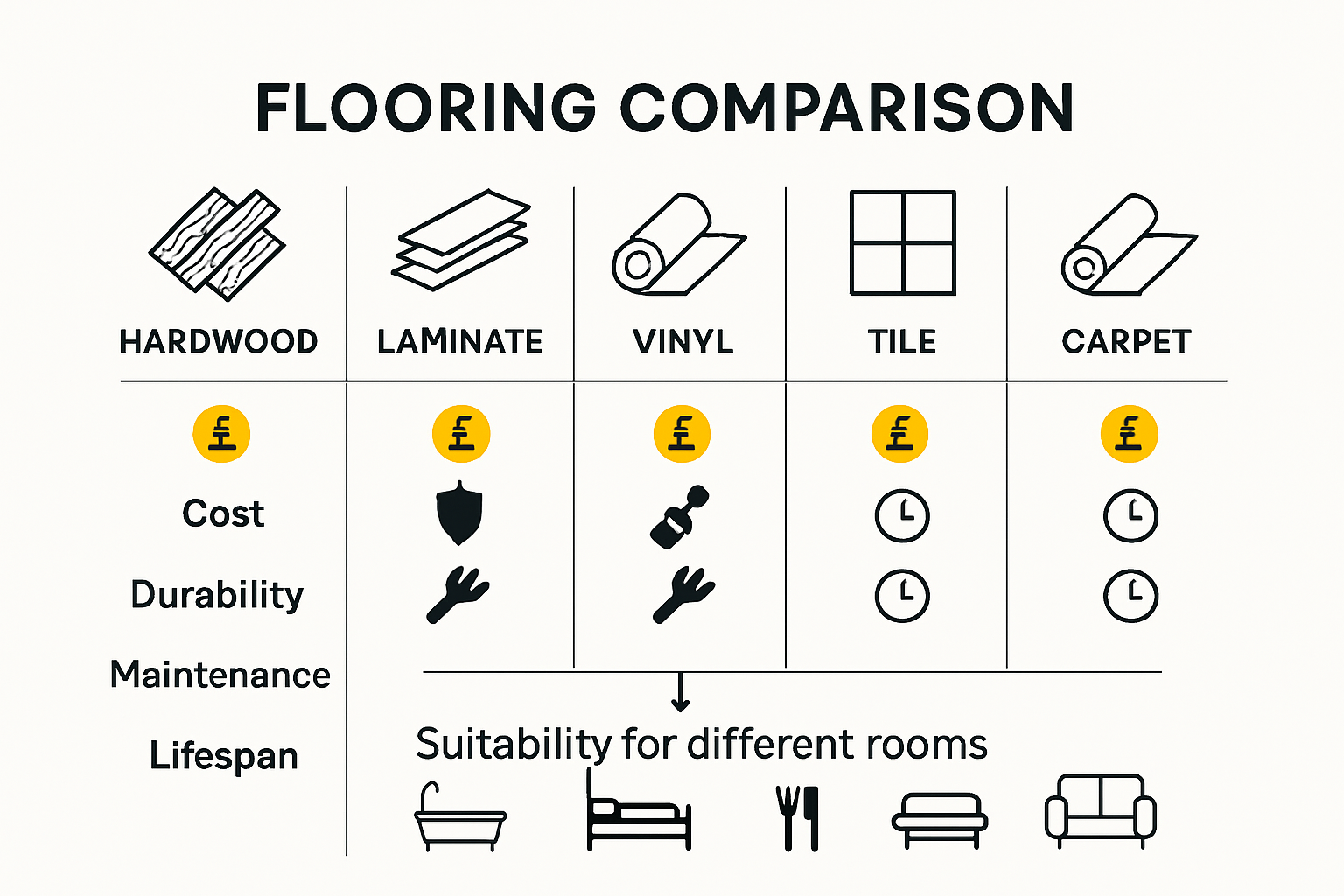
Choosing the right flooring involves more than aesthetic preferences—it requires a comprehensive evaluation of multiple factors that impact your home’s functionality, comfort, and long-term value. Understanding the nuanced characteristics of different flooring materials will empower you to make an informed decision that aligns with your lifestyle, budget, and design aspirations.
Cost and Installation Considerations
Flooring expenses extend beyond initial purchase prices. The total investment includes materials, professional installation, potential subfloor preparation, and long-term maintenance costs. According to Checkatrade, installation prices can vary dramatically: laminate might cost £10-£20 per square metre, while engineered wood could range from £30-£60 per square metre.
According to Mordor Intelligence, soft floor coverings like luxury vinyl tiles (LVT) now represent 52% of the UK floor covering market, indicating their growing popularity due to cost-effectiveness and ease of installation. DIY-friendly options like click-lock laminate can significantly reduce overall expenses by eliminating professional installation fees.
Performance and Durability Metrics
 Each flooring material offers distinct performance characteristics that determine its suitability for specific environments. Resand UK reports that laminate flooring typically maintains its quality for 15-25 years with proper maintenance, making it an attractive long-term investment for budget-conscious homeowners.
Consider these critical performance factors:
- Wear Resistance: Porcelain tiles and luxury vinyl tiles excel in high-traffic areas
- Moisture Tolerance: Engineered wood and waterproof vinyl perform best in humid environments
- Impact Resilience: Harder surfaces like ceramic and porcelain withstand heavy use more effectively
Aesthetic and Environmental Impact
Flooring is not merely a functional element but a significant design component that influences your home’s overall atmosphere. Wood flooring, particularly engineered varieties, continues to be favored in premium residential settings for its timeless aesthetic and potential property value enhancement.
Environmental consciousness is increasingly influencing flooring choices. Sustainable options like bamboo, cork, and reclaimed wood are gaining popularity. Wood Options Magazine suggests these materials can reduce carbon footprint while providing unique, attractive design solutions.
Remember that no single flooring option is universally perfect. Your ideal choice will emerge from carefully balancing practical requirements, aesthetic preferences, budget constraints, and long-term performance expectations. Take time to explore samples, request professional consultations, and consider how each option integrates with your specific living environment.
By approaching flooring selection as a strategic investment rather than a purely cosmetic decision, you’ll create living spaces that are both beautiful and brilliantly functional.
Assess Your Budget and Installation
Budgeting for flooring involves more than simply selecting a material—it requires a comprehensive understanding of direct costs, installation complexities, and long-term value considerations. Smart homeowners approach flooring projects by evaluating not just the initial expense, but the comprehensive financial implications of their choices.
Material and Labour Cost Breakdown
Flooring expenses encompass multiple components beyond the raw material price. According to Self Build UK, labour costs can significantly impact your total investment. Installation expenses vary dramatically: carpet installation might cost around £136.63 for a 20m² area, while natural stone tiling could reach £854.33 for the same space.
Easter Flooring provides a comprehensive breakdown of material costs in the UK market:
- Laminate flooring: £15 to £24.99 per square metre
- Carpet: £3 to £60 per square metre
- Vinyl flooring: £10 to £45 per square metre
- Luxury vinyl tiles (LVT): £15 to £60 per square metre
Installation Method Considerations
Your chosen installation approach dramatically influences overall project costs. Gallagher Carpets emphasises that homeowners should consider three primary installation strategies:
- DIY Installation: Lowest cost, requires significant technical skill
- Hybrid Installation: Partial professional support, moderate cost
- Full Professional Installation: Highest upfront cost, guarantees quality
Each method carries unique advantages and potential risks. DIY approaches might save money but could compromise long-term floor performance if executed incorrectly. Professional installations provide expertise but at a higher initial investment.
Long-Term Value and Hidden Costs
Budget-conscious homeowners must look beyond immediate expenses. Factor in maintenance requirements, durability, and potential replacement timelines. A slightly more expensive flooring option might prove more economical if it offers extended lifespan and minimal maintenance needs.
Consider additional cost factors such as:
- Subfloor preparation
- Underlayment requirements
- Potential structural modifications
- Future repair or replacement expenses
Tips for budget-conscious flooring selection include requesting multiple quotes, understanding material warranties, and comparing long-term performance metrics. Remember that the cheapest option isn’t always the most cost-effective solution.
By approaching your flooring project with a holistic financial perspective, you’ll make an informed decision that balances immediate affordability with enduring quality and home value. Take time to research, compare options, and consult professionals who can provide tailored advice for your specific space and requirements.
Think Long-Term for Your Investment
Flooring represents more than a surface to walk on—it’s a significant investment in your home’s comfort, functionality, and future market value. Understanding the long-term implications of your flooring choice goes beyond immediate aesthetics, requiring careful consideration of durability, maintenance, and potential return on investment.
Lifespan and Durability Expectations
Different flooring materials offer vastly different longevity profiles. Teka Flooring indicates that hardwood flooring stands out as the most enduring option, potentially lasting over 50 years with meticulous care. Resand UK reports that engineered wood provides a robust alternative, maintaining quality for 20-30 years while offering greater stability against temperature and humidity fluctuations.
Comparative lifespan expectations reveal critical investment insights:
- Hardwood: 50+ years
- Engineered Wood: 20-30 years
- Luxury Vinyl Tile (LVT): 10-20 years
- Laminate: 15-25 years
Maintenance and Replacement Costs
The true cost of flooring extends far beyond initial installation. Property Investment Experts suggest calculating a comprehensive maintenance budget that includes cleaning supplies, potential repairs, and eventual replacement. Some materials require more frequent and expensive maintenance, which can significantly impact long-term value.
Consider these maintenance factors:
- Cleaning Requirements: Hardwood needs specialized cleaning products
- Repair Complexity: Ceramic tiles offer easy individual tile replacement
- Refinishing Potential: Hardwood can be sanded and refinished multiple times
Property Value and Aesthetic Longevity
Flooring choices directly influence your home’s market appeal and potential resale value. Real Estate Valuation UK reports that high-quality, well-maintained flooring can increase property value by up to 5-10%. Classic materials like hardwood and natural stone tend to maintain aesthetic appeal across changing design trends.
Strategic considerations for long-term value include:
- Selecting neutral, timeless designs
- Choosing materials compatible with multiple design styles
- Prioritizing quality over trendy but short-lived aesthetics
Investing in flooring isn’t just about immediate appearance—it’s about creating a durable, adaptable foundation for your living space. By thinking strategically about materials, maintenance, and potential future requirements, you’ll make a choice that serves your home beautifully for decades.
Remember that the cheapest option is rarely the most economical in the long run. A slightly higher initial investment in quality materials and professional installation can yield significant returns through reduced maintenance costs, enhanced durability, and improved property value.
Frequently Asked Questions
How do I choose the right flooring for high-traffic areas?
Selecting durable materials like luxury vinyl tiles or porcelain tiles is recommended for high-traffic areas to withstand constant use and wear.
What flooring options are best for moisture-prone zones like bathrooms and kitchens?
For moisture-prone zones, engineered wood, ceramic tiles, and waterproof vinyl flooring offer excellent resistance to water damage and spills.
How much should I budget for flooring installation?
Budgeting should include material costs, installation fees, and potential long-term maintenance; installation can vary dramatically based on material and method.
What are the long-term maintenance costs associated with different flooring materials?
Maintenance costs vary; hardwood may need refinishing and specific cleaning supplies, while laminate and ceramic tiles generally require less upkeep, making them more cost-effective in the long run.
Transform Your Home with the Perfect Flooring!
Choosing the right flooring for your home can often feel like navigating a maze of options, especially when you consider the durability needed for high-traffic areas or the moisture resistance required for bathrooms and kitchens. At Hyperion Tiles, we understand that each room’s unique demands often lead to overwhelming choices. But fear not! Our extensive catalogue of tiles and flooring solutions is designed to relieve your stress and elevate your living spaces.
With a plethora of styles tailored to every room—from elegant floor tiles that can withstand constant foot traffic, to chic mosaics perfect for your bathroom, we’ve got you covered. Enjoy promotions, trade discounts, and a commitment to customer satisfaction with free shipping on orders over a certain threshold! Why wait? Visit us at https://hyperiontiles.co.uk today and start transforming your home into a beautifully designed space that reflects your style and meets your practical needs. Explore now and feel the difference a well-chosen floor can make!
Share:
How to Integrate Tiles: A Complete Guide for 2025
Popular Materials for Tiles in 2025: Your Guide