


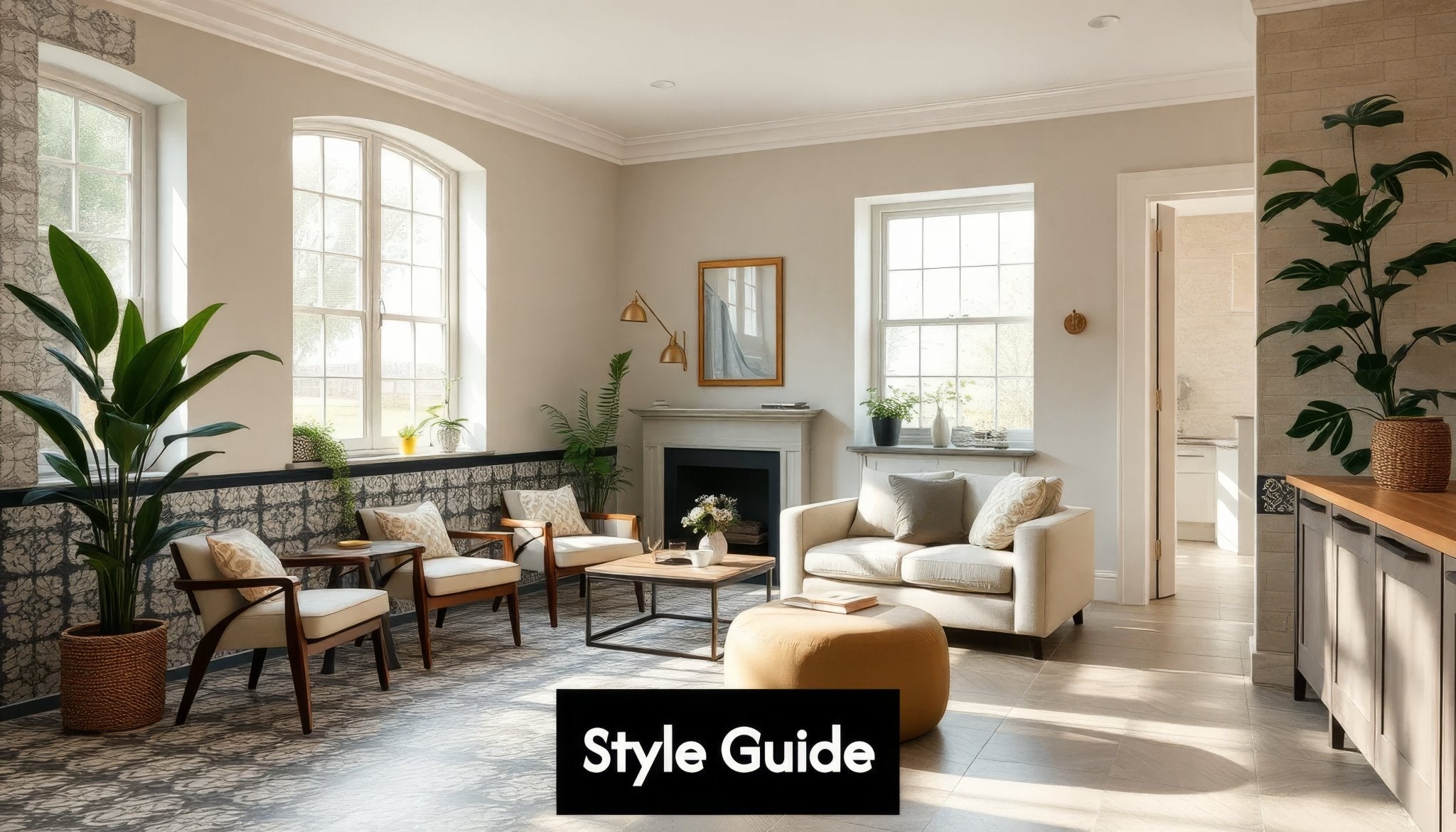

The debate between classic and modern tiles is heating up in home design circles. Large-format tiles are set to dominate the UK market, with projections indicating a rise to USD 1.14 billion by 2025. But here’s the kicker: many homeowners still underestimate the impact of their tile choices. The real twist? Balancing timeless elegance with modern functionality could be the key to creating enduring, stylish spaces.
Table of Contents
- Exploring Classic Tile Heritage
- Discovering Modern Tile Trends
- Comparing Durability And Maintenance
- Choosing Tiles For 2025 Homes
Quick Summary
| Takeaway | Explanation |
|---|---|
| Embrace Size with Large-Format Tiles | Large-format tiles are gaining popularity for their luxurious appearance and practical benefits, such as fewer grout lines which reduce maintenance efforts. |
| Leverage Sustainability in Selection | Eco-friendly tiles made from recycled materials are trending for 2025. Consider their manufacturing processes and durability as key factors in your selection. |
| Balance Trends with Timelessness | Incorporate trending tile styles in manageable ways, like feature walls or backsplashes, while using classic options for more permanent installations. |
| Prioritise Material Durability | Choose tile materials based on the demands of each specific space—modern porcelain offers superior durability for high-traffic areas, while classic options can enhance aesthetic appeal in lower-traffic settings. |
| Test Samples Before Commitment | Always sample tiles in your own space to see how they look under different lighting conditions, ensuring the final choice aligns with your preferred style and functionality. |
Exploring Classic Tile Heritage
The story of classic tiles weaves through the fabric of British architectural history, representing centuries of craftsmanship and artistic expression. When we look at the floors and walls of historic buildings, we’re seeing more than just decorative elements—we’re witnessing a tangible connection to our past.
The Ancient Foundations
Long before the modern era of mass-produced tiles, artisans were crafting remarkable works that have stood the test of time. The foundations of Britain’s classic tile heritage can be traced back to Roman influence. Between the 1st and 5th centuries AD, Romans introduced sophisticated tiling techniques to Britain, establishing a distinctive heritage that set British tiling apart from Mediterranean styles. The surviving examples from this period reveal extraordinary craftsmanship and ingenuity that influenced generations to come, according to Heritage Crafts.
Roman mosaics found in villa excavations across Britain showcase intricate geometric patterns and figurative scenes that required immense skill to create. These early examples demonstrate how tiles weren’t merely functional but served as a medium for artistic expression and status display.
Medieval Magnificence
The medieval period marked a significant evolution in British tiling traditions. From the mid-12th century, a notable revival in English tilemaking produced a remarkable diversity of methods and styles. This renaissance introduced several distinctive techniques including medieval inlaid tiles (commonly known as encaustic tiles), stamped tiles, and opus sectile work.
The earliest encaustic tiles in Britain appeared in the mid-13th century, evolving from earlier mosaic floor tiles. Initially, these decorative masterpieces were confined to monastic buildings and royal residences, heavily influenced by techniques imported from France. The distinctive characteristic of these tiles was their two-tone appearance achieved by inlaying a contrasting clay into the body of the tile before firing, creating patterns that wouldn’t wear away with use.
Tile pavements became prominent features in high-status buildings until their popularity declined by the mid-16th century, as noted by Historic England. Churches, cathedrals, and grand houses across Britain still display these remarkable floor tiles, offering us a window into medieval craftsmanship.
Victorian Revival and Beyond
The Gothic Revival of the 1830s and 1840s sparked renewed interest in classic tile techniques, particularly encaustic tiling. Victorian England embraced these traditional designs with enthusiasm, adapting them for contemporary tastes while honouring their historical roots.
Herbert Minton and other manufacturers industrialised the production of encaustic tiles, making them more accessible and fuelling their popularity in both public buildings and private homes. This era saw classic tiles adorning hallways, bathrooms, and fireplaces across the country, establishing patterns and styles we now recognise as quintessentially British.
The craft experienced another revival in the late 20th century, primarily for restoration projects aimed at preserving Britain’s architectural heritage, according to Heritage Crafts. This renewed appreciation for traditional techniques ensured that the knowledge and skills required to create authentic classic tiles weren’t lost to time.
When comparing classic vs modern tiles, it’s this rich historical context that gives classic designs their enduring appeal. Unlike contemporary mass-produced tiles, classic varieties carry centuries of cultural significance and craftsmanship in every piece.
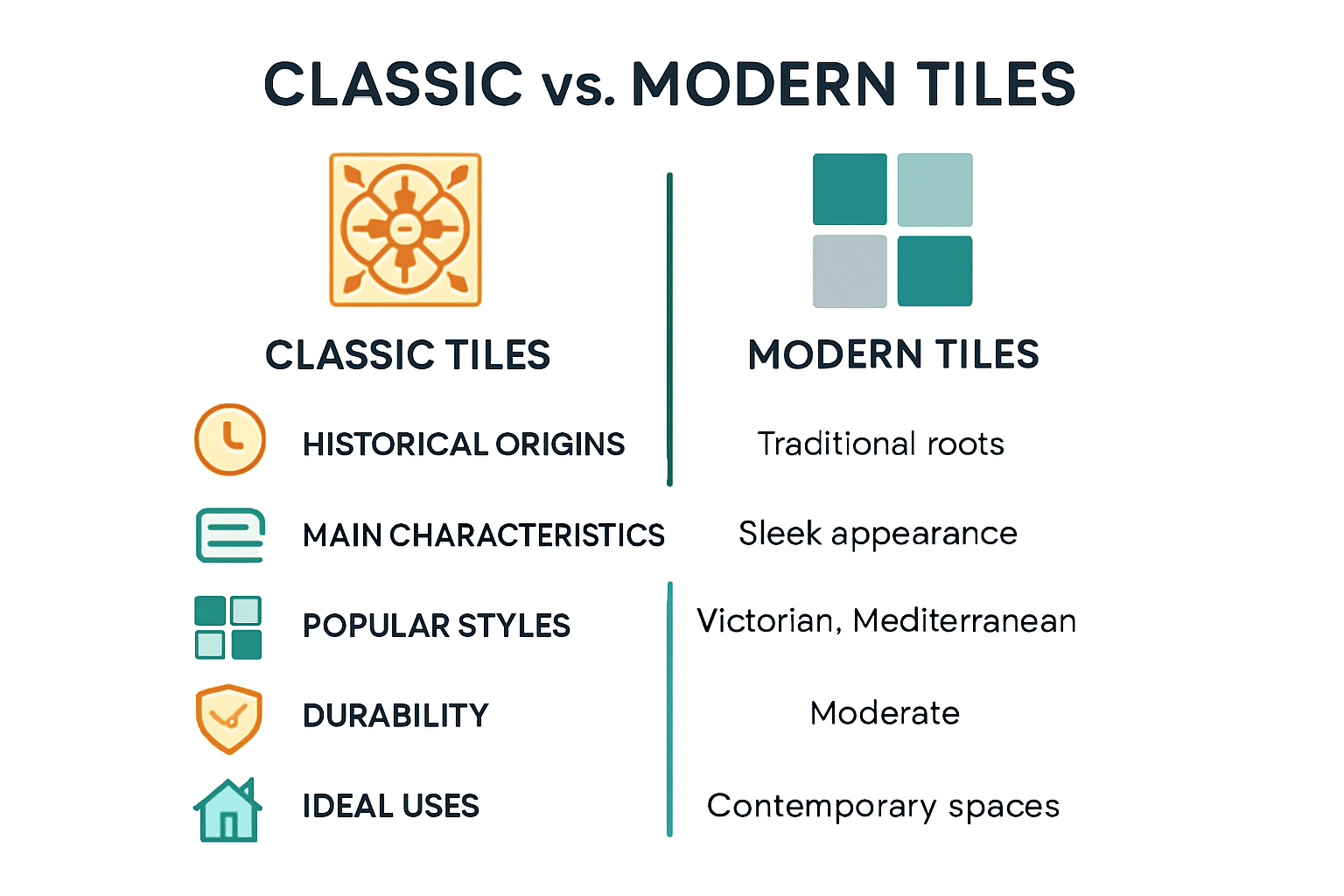
The heritage of classic British tiles continues to influence designers and homeowners today. The patterns, techniques, and aesthetic principles developed over centuries provide a foundation for modern interpretations, allowing contemporary spaces to connect with historical traditions while meeting present-day needs and tastes.
Understanding this heritage doesn’t just enhance appreciation for classic tiles—it provides valuable context for anyone considering the classic vs modern tiles debate in their own home. Classic tiles aren’t simply an aesthetic choice; they’re a connection to centuries of British craftsmanship and artistic tradition.
Discovering Modern Tile Trends
While classic tiles connect us to our architectural heritage, modern tile trends showcase how this ancient material continues to evolve through technological innovation and contemporary design sensibilities. Today’s tiles offer solutions that address practical challenges while satisfying our aesthetic appetites in ways previous generations couldn’t have imagined.
Size Revolution: The Rise of Large-Format Tiles
One of the most dramatic shifts in modern tiling has been the move toward larger dimensions. Gone are the days when small square tiles dominated every bathroom and kitchen. According to Data Insights Market, large-format tiles are becoming increasingly popular in the UK for 2025, creating a more seamless and luxurious appearance in both residential and commercial spaces.
These expansive tiles—sometimes measuring 120x120cm or even larger—reduce the number of grout lines visible in a space, creating cleaner visual planes that make rooms appear more spacious. This aesthetic advantage comes with practical benefits too. Fewer grout lines mean less opportunity for mould and grime to accumulate, making large-format tiles easier to maintain than their smaller counterparts.
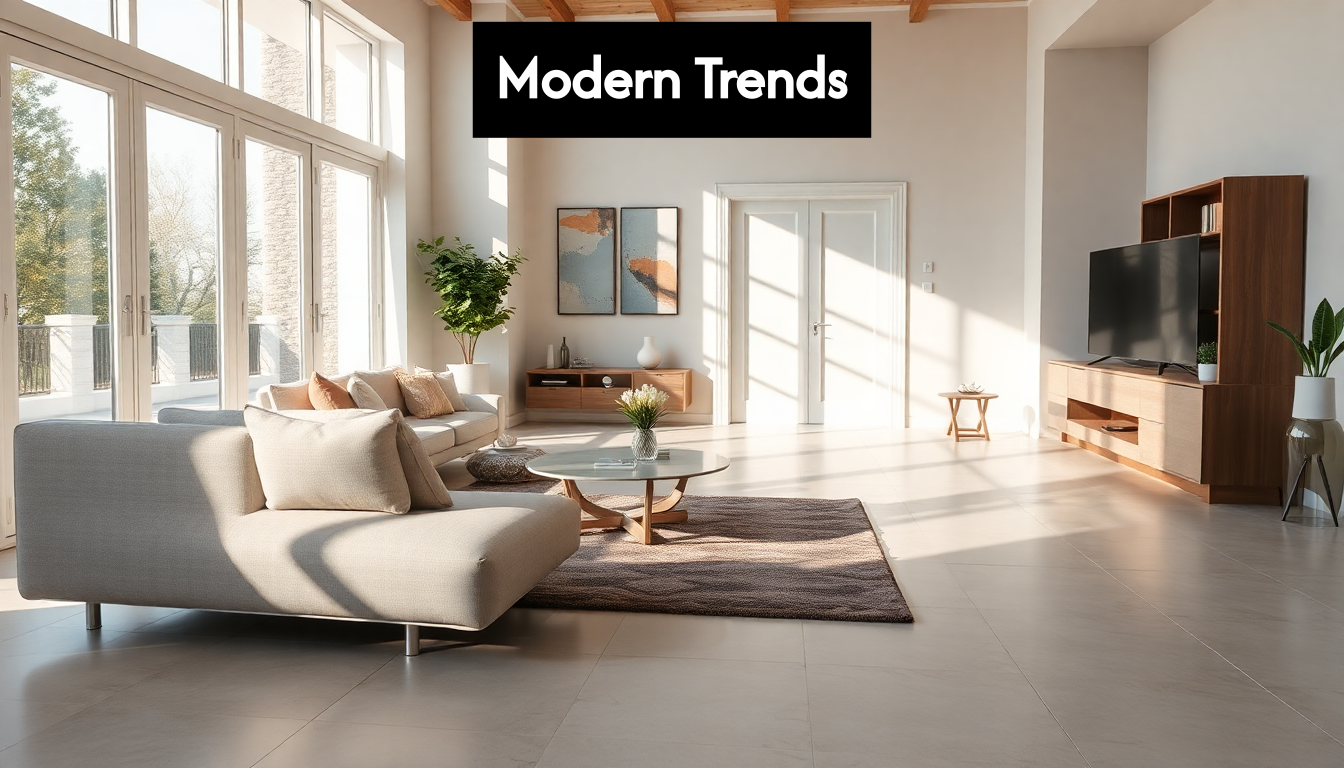
Designers and homeowners are embracing these oversized options for statement walls, shower enclosures, and floor installations. The dramatic scale allows the material’s natural beauty or designed pattern to take centre stage without the visual interruption of numerous grout lines. Additionally, the installation process can be more efficient with fewer pieces to place, though proper subfloor preparation becomes even more crucial with larger tiles.
Technological Transformation: Digital Printing and Beyond
Perhaps nothing has revolutionised modern tiles more profoundly than digital printing technology. This innovation has fundamentally changed what’s possible in tile design, allowing manufacturers to create astonishingly realistic replicas of natural materials and entirely new artistic expressions.
Digital printing enables tiles to mimic the appearance of expensive or impractical materials with remarkable accuracy. Stone-look tiles can reproduce the exact veining patterns of rare marble varieties without the maintenance headaches or environmental impact of quarrying. Wood-look tiles offer the warmth and texture of timber with superior durability and water resistance.
Beyond imitation, this technology opens doors to creative expression that wasn’t previously possible. Manufacturers can now produce custom, personalised tile designs to match specific needs, as highlighted by Data Insights Market. Photographic images, complex illustrations, or abstract designs can be printed onto ceramic surfaces with exceptional detail and colour accuracy. This capability has transformed tiles from merely functional elements to potential art pieces within a space.
Sustainability Focus: Eco-Friendly Innovations
As environmental consciousness grows among consumers, the tile industry has responded with sustainable alternatives that reduce ecological impact without compromising on style or performance. Eco-friendly tiles made from recycled materials and produced using sustainable manufacturing processes are rising in popularity as UK consumers become more environmentally conscious, according to Data Insights Market.
Recycled glass tiles transform waste material into lustrous surfaces for backsplashes and decorative accents. Porcelain tiles manufactured with reclaimed industrial waste reduce the demand for virgin materials while maintaining durability and aesthetic appeal. Some manufacturers have even developed tiles that actively improve indoor air quality by breaking down pollutants.
Water conservation during manufacturing has become another priority, with closed-loop systems that recycle processing water and reduce consumption. Energy-efficient kilns and production facilities further reduce the carbon footprint associated with tile production.
The classic vs modern tiles distinction becomes particularly relevant when considering sustainability. While classic production methods often relied on local materials and traditional craftsmanship—which had inherent environmental benefits—modern manufacturing can achieve greater resource efficiency at scale when properly implemented.
These contemporary tile trends reflect broader shifts in design priorities: the desire for cleaner aesthetics, technological advancement, and environmental responsibility. For homeowners navigating the classic vs modern tiles decision, understanding these innovations provides crucial context. Modern tiles aren’t merely departures from tradition but responses to evolving needs and values.
As we continue exploring the comparison between classic and modern approaches, these technological and design developments form an essential part of the conversation. They demonstrate how tiles remain a relevant, versatile, and innovative material despite their ancient origins.
Comparing Durability and Maintenance
When choosing between classic and modern tiles, durability and maintenance requirements often become deciding factors. These practical considerations can significantly impact the long-term satisfaction with your tiling choice, affecting both aesthetics and functionality over time.
Material Composition and Longevity
The fundamental durability of any tile begins with its material composition. Both classic and modern tiles can offer exceptional longevity, but they achieve this through different means.
Traditional ceramic tiles have stood the test of time, with examples in historic buildings remaining intact after centuries of use. These classic options typically feature a porous clay body covered with a protective glaze. The durability of these tiles stems from their relatively simple composition and time-tested manufacturing techniques.
Modern porcelain tiles, in contrast, are engineered for performance. According to Designing Buildings, porcelain tiles are made from a denser clay and fired at much higher temperatures than standard ceramic tiles. This manufacturing process results in a harder surface with enhanced durability compared to traditional ceramic options. The density of porcelain makes it less subject to wear and tear while providing superior water resistance properties.
This distinction becomes particularly relevant in high-traffic areas or moisture-prone environments. Modern porcelain’s technical advantages might make it the more practical choice for busy family bathrooms or commercial spaces, while classic ceramic tiles might suffice in lower-traffic residential settings where their aesthetic qualities can take precedence.
Resistance to Damage and Wear
Resistance to everyday damage factors significantly into the classic vs modern tiles debate. Different tile types handle potential sources of damage in varying ways.
Classic encaustic cement tiles, with their distinctive patterns created using different coloured clays, offer a unique aesthetic but require more careful treatment. Their patterns run through the entire tile rather than just appearing on the surface, which means they can maintain their appearance even as they wear. However, they’re more vulnerable to staining without proper sealing and regular maintenance.
In contrast, modern tile manufacturing techniques have produced options with exceptional resistance to common damage sources. According to Hyperion Tiles, porcelain and ceramic tiles are highly favoured in the UK for their durability and low maintenance requirements. Modern porcelain, in particular, offers excellent resistance to scratching, staining, and moisture penetration due to its dense composition.
Modern technological advances have also addressed specific durability concerns in innovative ways. Specialised surface treatments can enhance slip resistance without compromising clean ability. UV-resistant glazes prevent fading in tiles used in sunlit areas. These targeted solutions to specific durability challenges represent a significant advantage of modern tile technology.
Cleaning and Long-term Care Requirements
The maintenance demands of different tile types can vary considerably, affecting the long-term satisfaction with your choice.
Classic natural stone tiles like marble or limestone offer timeless beauty but typically require more attentive care. They need regular sealing to prevent staining and specific cleaning products that won’t damage their delicate surfaces. Their porosity makes them vulnerable to acid etching from common substances like lemon juice or vinegar.
By contrast, most modern porcelain and ceramic tiles need minimal maintenance beyond regular cleaning with standard household products. As noted by Tiling Courses UK, porcelain tiles are made from a denser clay fired at higher temperatures, giving them enhanced durability and making them particularly easy to maintain over time.
Grout represents another maintenance consideration in the classic vs modern tiles comparison. Traditional cement-based grouts used with classic tiles can be prone to staining and may require periodic resealing. Modern epoxy grouts offer superior stain resistance and durability, though they come with a higher initial cost and more challenging installation.
The practical implications of these maintenance differences shouldn’t be underestimated. A low-maintenance modern tile might be the prudent choice for busy households or rental properties, while the added care requirements of classic options might be entirely manageable for homeowners who value their distinctive aesthetic qualities.
Ultimately, the durability and maintenance comparison between classic and modern tiles isn’t simply about identifying which is “better” but rather about matching the performance characteristics to your specific needs. By considering the location, expected traffic, exposure to moisture and staining agents, and your willingness to perform regular maintenance, you can make an informed choice that balances aesthetic preferences with practical considerations.
Choosing Tiles for 2025 Homes
As we look to the future of home design, the classic vs modern tiles debate takes on new dimensions. The choices we make for our 2025 homes reflect not only current aesthetic preferences but also emerging lifestyle needs and wider societal trends. Let’s explore how to navigate these considerations to make tile selections that will remain relevant and satisfying in the years ahead.
Market Trends and Future Direction
Understanding the trajectory of the tile market provides valuable context for forward-looking choices. According to Mordor Intelligence, the UK Ceramic Tiles Market is expected to reach USD 1.14 billion in 2025 and grow at a CAGR of 2.91% to reach USD 1.32 billion by 2030. This growth is being driven by increasing urbanisation and construction activities across the country, signalling continued innovation and investment in the sector.
One trend that shows no signs of slowing is the dominance of large-format tiles. As reported by H.E. Smith, large-format tiles will continue to dominate in 2025, offering clean lines and fewer grout joints. These spacious tiles create a more seamless and luxurious look while providing practical benefits in terms of installation and maintenance.
While following trends can help ensure your home feels current, balancing trendy elements with timeless design principles is key to creating spaces that won’t quickly feel dated. Consider incorporating trending tile styles in ways that can be updated more easily—perhaps as a feature wall or backsplash—while using more classic options for larger, more permanent installations.
Sustainability as a Selection Criterion
Perhaps the most significant shift in tile selection for 2025 homes is the growing importance of sustainability considerations. Environmental impact is no longer an afterthought but a primary selection criterion for many homeowners.
Eco-friendly tiles are trending for 2025 homes, made from recycled materials and produced using sustainable manufacturing processes, according to Data Insights Market. These options particularly appeal to environmentally conscious homeowners who want their design choices to align with their values.
When evaluating the sustainability of tile options, consider multiple factors beyond just the material composition. Look at the manufacturing process, including water usage and energy consumption. Consider the durability and expected lifespan—a tile that needs replacement after a few years creates more waste than one that lasts for decades. Transportation impact matters too, with locally produced tiles generally having a lower carbon footprint than imported varieties.
The good news for homeowners is that the increasing demand for sustainable options means you no longer need to compromise on aesthetics or performance to make eco-friendly choices. Many of the most innovative and beautiful tiles on the market now also boast impressive environmental credentials.
Practical Selection Strategies
Beyond trends and sustainability, practical considerations remain essential when choosing tiles for 2025 homes. Here’s a strategic approach to making selections you’ll be happy with for years to come:
Start by considering the specific demands of each space. High-traffic entryways need supremely durable options, while guest bathrooms might prioritise style over extreme wear resistance. Kitchen backsplashes must withstand cooking splashes and frequent cleaning, while feature walls have fewer functional demands.
Think about your home’s architectural character and how your tile choices will complement it. A sleek, contemporary home might be enhanced by modern large-format porcelain, while a period property might benefit from tiles that reference historical styles, even if they incorporate modern manufacturing advantages.
Consider your long-term plans for the property. If you’re likely to sell within a few years, more neutral, broadly appealing tile choices might be prudent. For a forever home, you can select more distinctive options that perfectly match your personal aesthetic, knowing you’ll enjoy them for many years.
Sample tiles in your actual space before making final decisions. Lighting conditions dramatically affect how tiles look, and what appears perfect in a showroom might look entirely different in your home. Most suppliers will provide sample tiles, allowing you to test options in different lighting and alongside other materials in your space.
Finally, don’t overlook installation quality. Even the most beautiful and durable tiles will disappoint if poorly installed. Budget for professional installation by experienced tilers who understand the specific requirements of your chosen tile type.
By balancing current trends with timeless principles, prioritising sustainability, and taking a thoughtful approach to selection, you can navigate the classic vs modern tiles decision successfully for your 2025 home. The result will be spaces that feel both current and enduring, meeting your practical needs while expressing your personal style.
Frequently Asked Questions
What are the main differences between classic and modern tiles?
Classic tiles often feature traditional designs and materials, reflecting historical craftsmanship, while modern tiles incorporate innovations like large formats, digital printing, and sustainability-focused manufacturing processes.
Why are large-format tiles becoming popular in 2025?
Large-format tiles are gaining traction due to their ability to create seamless, spacious visuals with fewer grout lines, which also reduces maintenance efforts and enhances aesthetic appeal in both residential and commercial spaces.
How do the durability and maintenance of classic and modern tiles compare?
Classic tiles may require more frequent maintenance and are more susceptible to staining, while modern tiles, especially porcelain, offer enhanced durability, water resistance, and easier cleaning with minimal upkeep requirements.
What factors should I consider when choosing tiles for my home in 2025?
When selecting tiles, consider the specific needs of each space (traffic, moisture levels), sustainable options, the architectural style of your home, and the importance of sampling the tiles in your own lighting conditions before making a decision.
Transform Your Space with Timeless Style and Modern Functionality
As you’re grappling with the classic vs modern tiles debate, it’s essential to choose options that not only reflect your aesthetic but also meet practical needs for your home. Whether you’re drawn to the timeless elegance of classic tiles or the innovative designs of modern alternatives, Hyperion Tiles offers an extensive range to suit every preference and purpose.
Discover our curated collections featuring large-format tiles that promise luxurious visuals and easy maintenance—perfect for busy households. With category-specific selections ranging from bathrooms to kitchens, you can find exactly what you need, backed by our price matching guarantee and free shipping on orders over a certain threshold. Don’t wait to elevate your home; visit Hyperion Tiles today and begin your journey toward creating spaces that are both stylish and functional. Your dream renovation starts now!
Share:
Discover Key Factors Affecting Tile Prices in 2025
How to Integrate Tiles: A Complete Guide for 2025